




Freight forwarders managing usa to india shipping routes must accurately evaluate laboratory testing expenditures while complying with the India BIS Import Certification Mandate, a core regulatory rule that defines product testing and certification standards for all eligible imported goods. Recent expansion in bilateral cross-border cargo volume has brought more American-manufactured industrial and electronic products into Indian markets, making third-party lab testing cost budgeting a vital part of route profitability management. Many cross-border logistics practitioners overlook variable testing fees and hidden compliance expenses, leading to budget overruns and reduced profit margins on USA-to-India shipments. This article analyzes key cost components, influencing factors, common budgeting errors, and practical estimation strategies for BIS-compliant lab testing, supporting global forwarders in optimizing cost control and standardized compliance operations.
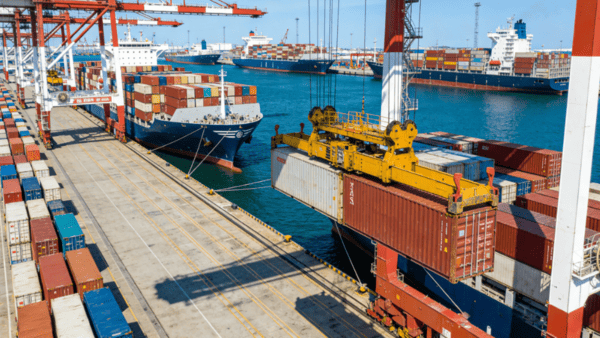
What falls under BIS laboratory testing costs for usa to india cargo?
BIS laboratory testing costs cover all professional inspection and verification fees charged by BIS-authorized institutions to confirm whether USA-origin goods meet India’s mandatory import quality specifications. These fees support technical testing, sample analysis, document validation, and official compliance reporting required by local trade regulations.
BIS testing pricing follows category-specific standards that differ from general commodity inspection charges, with variations tied to product complexity, testing item quantities, and institutional qualification grades. According to ITC Trade Map 2025 data, electrical machinery, electronic components, and industrial equipment exported from the United States to India constitute a large share of BIS-regulated import commodities, all requiring formal third-party laboratory verification before certification review.
Standard BIS compliance testing expenditures consist of multiple modular charges, including fixed basic testing fees, extended item fees, sample processing fees, official report filing charges, and scheduled service surcharges. Each cost module fluctuates with product attributes and service timelines, which makes refined classified estimation a necessary practice for forwarding teams handling diverse shipments.
Why does precise lab cost estimation support route operational stability?
Precise estimation of BIS lab testing costs helps forwarders stabilize operational profitability on USA-to-India routes by mitigating unplanned compliance spending that affects overall service margins. It also enables logistics providers to deliver transparent, data-backed quotations for overseas exporters and Indian importing clients.
A common mistake is categorizing BIS testing fees as fixed, insignificant auxiliary expenses, a practice that results in incomplete quotation frameworks and post-service financial disputes with cooperative clients. In the competitive USA-India cross-border logistics sector, transparent and detailed compliance cost accounting serves as one of the commonly adopted approaches to enhance long-term client cooperation stability. Forwarders should note that unplanned testing-related expenditures contribute substantially to margin shrinkage on small-batch, high-frequency cross-border shipments.
According to Drewry 2024 global logistics cost benchmark data, certification and compliance auxiliary expenses account for 7% to 12% of the total operational cost for India-bound industrial cargo shipments. Forwarders relying on rough estimation methods may encounter margin compression or client dissatisfaction due to inconsistent pricing. Structured lab cost budgeting supports balanced service competitiveness and sustainable route operation.
Which key variables shape BIS lab testing pricing for american shipments?
A combination of operational and technical variables determines final BIS testing pricing for USA-origin cargo, forming a tiered pricing system for different product categories and compliance scopes. Familiarity with these variables allows forwarders to conduct targeted and accurate budget planning.
Product complexity and testing scope: High-precision electronic components, low-voltage electrical equipment, and industrial alloy materials require expanded testing scopes and strict technical verification procedures. These product types generate higher laboratory fees compared with basic mechanical parts and low-risk consumer commodities. Most industrial products manufactured in the United States require full standard compliance testing, which raises baseline service costs.
Laboratory authorization tier and credibility: BIS authorizes testing institutions with graded qualification levels, corresponding to tiered service pricing structures. Fully accredited national laboratories in India deliver widely recognized test reports for American cargo with relatively standard mid-to-high pricing, while conditionally accredited institutions offer lower rates with additional official review restrictions for final reports.
Service timeline and delivery requirements: Conventional standard testing procedures require seven to ten working days with baseline service charges. Expedited processing for time-sensitive shipment schedules incurs additional surcharges ranging from 25% to 40% of standard testing fees. Such variable charges are often excluded from initial budget drafting by junior operational staff.
Shipment batch size and sample volume: Centralized testing for large-volume batch shipments qualifies for conditional preferential pricing from authorized laboratories. Small-batch and scattered USA-origin shipments carry relatively higher unit testing costs due to fixed operational overheads for each independent verification case.
Regulatory updates and supplementary testing needs: BIS has updated multiple industrial product standards from 2024 to 2026, introducing new performance and safety testing indicators for several imported commodity categories. Existing test reports that fail to align with updated rules require supplementary testing, which creates incremental compliance costs for affected shipments.
How do forwarders implement classified BIS testing cost estimation?
Classified cost estimation frameworks enable forwarders to calculate BIS lab testing expenditures for different USA-to-India cargo types with improved accuracy and reduced budget deviation. This method aligns with the differentiated compliance rules enforced for various regulated product groups.
Classify cargo by BIS compliance risk tier: The recommended approach is to sort USA-origin shipments into high-risk, medium-risk, and low-risk tiers based on the official BIS regulatory catalogue. High-risk electrical and electronic goods require full-item testing with comprehensive cost coverage, while low-risk industrial accessories only need targeted partial-item verification to control overall spending.
Select laboratories with matching accreditation scope: Operational teams should partner with testing institutions holding valid BIS authorization matching specific product categories. Blind cooperation with overqualified high-cost laboratories or underqualified low-cost institutions creates unnecessary financial waste and compliance risks.
Separate fixed operational costs from variable costs: Teams can categorize basic testing fees and official report filing fees as fixed expenditures, while tagging expedited service fees, supplementary testing charges, and sample logistics costs as variable expenditures. Dual accounting modes reserve flexible budget space for special shipment scenarios.
Negotiate batch-based preferential pricing: Forwarders maintaining stable bulk shipment volumes for USA-to-India routes can negotiate annual cooperative pricing with accredited laboratories. Continuous order accumulation helps secure 10% to 18% tiered discounts on annual cumulative testing expenses, supporting long-term cost optimization.
Reserve reasonable budget margin for compliance risks: Industry practitioners commonly reserve a 5% to 8% flexible cost margin for each testing project. This buffer covers potential supplementary testing, standard adjustment adaptation, and unplanned operational fees to prevent overall budget overruns.
What routine estimation flaws affect BIS compliance budgeting accuracy?
Most budget inaccuracies for BIS testing services derive from standardized operational misunderstandings prevalent among practitioners managing USA-to-India routes. Identifying and avoiding these routine flaws improves the stability of financial planning for compliance projects.
Overlooking hidden auxiliary compliance fees: A common mistake is focusing solely on core technical testing fees while neglecting supporting expenditures including sample delivery, report courier service, official system filing, and data synchronization charges. These scattered auxiliary fees accumulate noticeably on small-batch shipment projects.
Applying unified pricing for differentiated cargo types: Many forwarding teams adopt uniform testing cost standards for all BIS-regulated commodities. This practice ignores pricing gaps between high-precision industrial equipment and basic raw materials, resulting in either insufficient budget allocation or non-competitive client quotations.
Disregarding supplementary costs from regulatory updates: Iterations of BIS industrial standards in recent years have added new testing indicators for multiple American export product lines. Teams that fail to reserve funds for updated compliance items face unplanned cost increases after testing initiation.
Excluding expedited service costs for urgent orders: According to UNCTAD 2025 maritime trade statistics, time-sensitive cross-border shipments account for a notable share of USA-to-India freight volume. Budget frameworks that exclude expedited testing surcharges create passive profit losses during actual project execution.
How to build long-term BIS testing cost control mechanisms?
Sustained cost optimization for BIS laboratory testing relies on systematic institutional adjustment rather than temporary single-order budget tuning. Structured cost control systems help forwarders retain stable profit margins amid evolving Indian regulatory requirements.
Establish long-term institutional laboratory cooperation: The recommended approach for forwarders with steady USA-to-India shipment volumes is to sign annual framework agreements with two to three BIS-accredited laboratories. Long-term partnerships stabilize unit pricing and unlock tiered batch discount policies to reduce average compliance costs.
Develop internal categorized cost databases: Teams can record actual testing expenditures for different American commodity categories and update data synchronously with BIS rule revisions. A standardized internal database improves the efficiency and consistency of daily budget estimation and client quotation work.
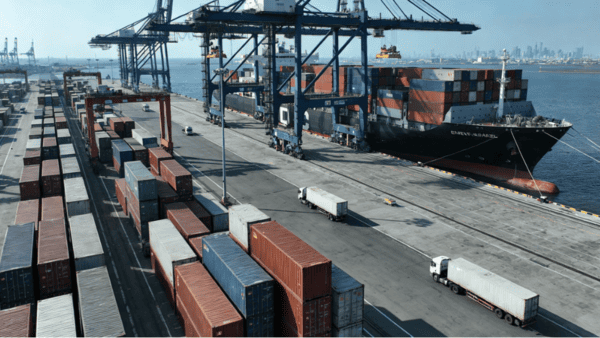
Optimize order scheduling for centralized testing: Integrating scattered small-batch orders into unified batch testing cycles reduces repeated sample preparation and institutional setup costs. Scientific scheduling minimizes resource waste caused by fragmented verification procedures.
Confirm updated compliance standards before shipment: Forwarders should communicate with overseas manufacturers and exporters to confirm the latest BIS testing scopes and technical requirements before cargo dispatch. Pre-shipment standard verification reduces rework testing costs arising from outdated product parameters and non-compliant test documents.
Within the expanding landscape of bilateral trade between the United States and India, refined estimation and systematic management of laboratory testing costs serve as core foundations for compliant and sustainable freight operations under the India BIS Import Certification Mandate. By correcting routine budgeting deviations, adopting categorized estimation workflows, and establishing long-term cooperative cost control systems, global forwarders can reduce unnecessary compliance expenditures, maintain stable quotation competitiveness, and support steady business development on the USA-to-India cross-border logistics route.
Last
Preventing destination customs seizures by verifying correct India mandatory BIS industrial import standard certification mandate
India BIS Import Certification Mandate acts as the core regulatory threshold for all commercial industrial and electronic goods en
Next
Advising overseas industrial buyers on rising delivery costs driven by the EU CBAM heavy manufacturing carbon tariff
Global industrial procurement and cross-border delivery expenses see continuous upward adjustments as the EU CBAM Carbon Tariff en

