




Global freight forwarders managing EU-bound industrial cargo must accurately assess overlooked financial risks shaped by updated EU CBAM Supply Chain Reporting Rules, which redefine carbon-related import tax calculation logic for cross-border industrial commodity shipments. In recent years, the European Union has gradually tightened emission verification standards for steel, aluminum, cement and other high-carbon goods, creating hidden tax burdens that many logistics operators fail to integrate into routine shipment costing frameworks. These hidden charges mainly derive from incomplete emission data disclosure, inconsistent supply chain reporting and non-compliant documentation under official CBAM regulatory systems.
What hidden import tax costs arise from EU CBAM reporting compliance gaps?
Unresolved compliance gaps under EU CBAM Supply Chain Reporting Rules generate unbudgeted import tax surcharges that raise overall landed costs for EU industrial imports across global supply chains. These hidden expenses cover carbon adjustment increments, administrative penalties and mandatory corrective settlement fees.
Most freight forwarding enterprises calculate client quotation costs based on conventional customs duties, ocean freight fees and standard VAT charges, while overlooking variable carbon tax increments triggered by CBAM compliance status. Such variable costs fluctuate significantly according to verified supply chain emission values, declaration data accuracy and supporting document completeness. For industrial shippers transporting bulk high-carbon commodities to EU markets, unplanned cost increments may squeeze operational profit margins and undermine long-term fixed-price cooperation contracts.
According to ITC Trade Map 2025 industrial trade statistics, approximately 32% of non-tariff cost increments for EU industrial imports between 2024 and 2025 stem from CBAM reporting inconsistencies, rather than traditional tariff policy adjustments. The data indicates that standardized reporting errors serve as a major factor driving hidden expenditure growth for cross-border industrial trade.
Forwarders should note that EU customs authorities have phased out fixed carbon tax rate applications for CBAM-covered commodities after the 2026 full enforcement launch. Current tax calculation mechanisms rely entirely on granular supply chain emission data submitted through official CBAM declaration channels, making data accuracy a core variable affecting final carbon tax liabilities.
How do inaccurate supply chain reports affect CBAM tax calculation outcomes?
Incomplete or inconsistent supply chain emission reports interfere with standard tax computation algorithms adopted by EU customs and fiscal authorities. Non-compliant data submissions often trigger upward tax adjustment mechanisms and compulsory cost rectification procedures for inbound industrial shipments.
A common mistake is that frontline forwarding staff adopt generic default emission factors to accelerate CBAM declaration processes for urgent client shipments. Generic factor usage received flexible policy tolerance during the CBAM transitional period, but the 2026 official compliance phase imposes strict restrictions on such practices. Current regulatory requirements prioritize facility-specific and batch-based emission data to support credible tax assessment, while generic data tends to overestimate actual carbon output and bring extra tax burdens for importers.
Partial emission scope disclosure represents another prevalent reporting defect in daily forwarding operations. Many compliance teams only submit verified scope 1 direct production emissions while excluding scope 2 indirect energy consumption emissions. According to European Commission 2025 updated CBAM fiscal guidelines, incomplete scope disclosure prompts customs systems to adopt conservative industry benchmark values for supplementary calculation, which lifts carbon tax obligations artificially for non-compliant declaration records.
Minor commodity classification deviations also produce measurable hidden tax costs. Each CBAM-regulated product category corresponds to independent carbon tax calculation benchmarks and assessment brackets. Mismatched CN code classification leads to inappropriate tax bracket matching, generating excess tax payments that are difficult to recover fully through post-clearance amendment applications.
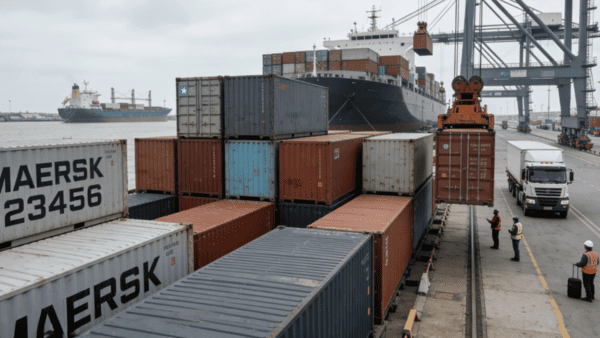
What mainstream hidden CBAM cost categories disturb forwarding operational profitability?
Multiple types of implicit CBAM-related import costs influence forwarding profit margins and client pricing strategies under current EU regulatory mechanisms. Most of these variable costs are not included in traditional freight costing models widely used in the logistics industry.
The recommended approach is one of the commonly adopted operational methods to integrate potential CBAM hidden expenses into pre-shipment cost forecasting systems. This practice helps reduce post-clearance financial disputes and unplanned operational losses while supporting transparent client quotation mechanisms.
Excessive carbon adjustment tariff payouts: Imprecise supply chain emission reporting causes EU customs systems to apply relatively high carbon adjustment rates compared with actual shipment carbon output. According to European Commission 2025 CBAM fiscal monitoring data, shipments with inconsistent emission declarations generate tariff overpayments ranging from 2% to 6% of total cargo value on average. Such excess charges constitute non-recoverable hidden costs for importers and their cooperative forwarding service providers.
Administrative fees for compliance rectification: Submissions with data inconsistencies under EU CBAM Supply Chain Reporting Rules require formal amendment reviews and compliance verification procedures. Each rectification application generates corresponding administrative processing fees, and cumulative costs become notable for forwarders managing large-volume EU shipment portfolios. Repeated revisions also increase internal labor and time costs for compliance teams.
Storage and demurrage increments from clearance delays: Reporting non-compliance triggers cargo inspection holds and extends terminal dwelling cycles. According to UNCTAD 2025 maritime logistics reports, CBAM-related clearance delays bring additional port handling costs ranging from 12% to 18% compared with standard clearance scenarios. These incidental charges belong to unbudgeted hidden expenditures for cross-border logistics operations.
Retroactive tax settlements from regular audits: EU customs authorities conduct quarterly targeted audits on historical CBAM shipment records. Undeclared emission items or underreported carbon volumes identified in audits require supplementary tax settlements plus low-rate adjustment interest. These retroactive liabilities create unplanned financial pressure for forwarders and long-term industrial clients.
How can forwarders evaluate CBAM hidden tax risks in advance?
Proactive risk evaluation enables forwarders to optimize client pricing frameworks, stabilize profit margins and form transparent cost accounting mechanisms for EU-bound industrial cargo. Data-driven prediction models replace empirical estimation and improve compliance cost controllability.
Forwarders should note that conventional freight costing software lacks embedded CBAM carbon tax variable modules, creating systematic blind spots in pre-shipment financial assessment. Customized compliance forecasting workflows serve as necessary supplements for accurate cost budgeting.
Implement multi-level emission data verification: Validate facility-specific emission data provided by upstream manufacturers before formal CBAM declaration. Cross-check submitted indicators with official EU ETS industry benchmarks to reduce overestimated emission data and lower excess tax risks.
Build scenario-based cost simulation frameworks: Establish internal simulation tools to calculate carbon tax liabilities under different emission level scenarios. This method supports flexible client quotation formulation and helps reserve reasonable cost buffer for variable tax changes under EU CBAM Supply Chain Reporting Rules.
Carry out periodic compliance cost analysis: Organize monthly reviews on CBAM tax fluctuation data of recent shipments to summarize recurring reporting errors causing hidden costs. Targeted workflow revisions help reduce repetitive financial losses and improve long-term cost control stability.
Optimize contractual responsibility clauses: Clarify data provision liabilities and variable tax adjustment rules in client service agreements. Standardized contractual terms reduce financial disputes arising from data inconsistencies from upstream suppliers.
What daily operational errors raise CBAM hidden tax liabilities?
Recurring operational errors in supply chain data collection and compliance management push up implicit CBAM tax risks for global freight forwarders. Most of these problems originate from outdated workflows designed for pre-CBAM trade environments.
A common mistake is that many forwarding teams regard CBAM documentation as a routine administrative procedure rather than a core financial control link. Operational staff often prioritize clearance efficiency while ignoring data precision, which exerts direct impacts on final carbon tax expenditure.
Mechanistic reuse of historical shipment data: Applying emission data from previous shipments without real-time supplier confirmation generates outdated declaration records. Industrial production carbon emission levels change with energy structure adjustment and production efficiency optimization, making static historical data unsuitable for current tax calculation scenarios.
Decentralized supply chain data collection: Unorganized supplier communication mechanisms lead to incomplete emission data sets. Missing partial emission indicators trigger conservative tax assessment modes in EU customs systems and increase overall import costs.
Absence of pre-submission internal audits: Skipping internal data verification before official declaration raises the probability of inconsistent report content. Unchecked errors lead to post-clearance rectification demands, audit costs and cumulative hidden tax increments.
Disregard of regulatory benchmark updates: EU carbon emission calculation benchmarks and tax parameters receive quarterly routine revisions. Failure to update declaration standards in line with new rules causes non-compliant submissions and inappropriate tax assessment under updated EU CBAM Supply Chain Reporting Rules.

How to optimize workflows to mitigate CBAM hidden import tax risks?
Scientific workflow optimization helps reduce reporting errors, stabilize carbon tax expenditure and lower unplanned hidden import costs for EU industrial cargo shipments. Systematic compliance integration improves the predictability of forwarding operational costs.
The recommended approach is to embed CBAM financial compliance management into daily operational processes instead of handling reporting work as an independent periodic task. Integrated management modes help reduce manual errors and improve overall cost accounting accuracy.
Build long-term supplier data cooperation mechanisms: Establish stable real-time data sharing channels with overseas manufacturers to obtain up-to-date batch emission records. Timely data synchronization reduces outdated reporting content and lowers the probability of tax overestimation.
Adopt professional CBAM tax calculation modules: Access or embed dedicated carbon tax calculation tools into existing freight management systems. These modules adjust tax prediction results dynamically based on the latest EU benchmarks and verified emission data, improving quotation rationality.
Adopt dual-layer document verification mechanisms: Set up primary operational inspection and secondary compliance audit links for all CBAM declaration documents. Dual verification effectively eliminates data gaps and classification errors that trigger hidden tax liabilities.
Strengthen team financial compliance training: Provide regular training for operational and sales teams on the correlation between reporting quality and shipment costs. Financial-oriented compliance awareness helps improve staff attention to data accuracy in daily reporting work.
In this era of continuous carbon trade policy iteration, standardized implementation of EU CBAM Supply Chain Reporting Rules assists global freight forwarders in controlling hidden import tax costs, maintaining stable client pricing systems and cultivating sustainable operational competitiveness in European industrial cross-border trade markets.
Last
Integrating automated HS code alerts to manage EU CBAM carbon supply chain customs reporting rules seamlessly
Modern global freight forwarding teams rely on precise commodity classification and real-time regulatory updates to fully comply w
Next
Avoiding european border penalties by mastering the new EU CBAM supply chain documentation reporting rules today
Global freight forwarders navigating European trade lanes must fully comply with updated EU CBAM Supply Chain Reporting Rules to m

