




Suez Canal Transit Fee Adjustment has triggered widespread cost restructuring across Asia-Europe liner shipping networks, compelling global freight forwarders to reassess long-term contract profitability amid fluctuating maritime operational expenses. As a vital shortcut waterway connecting Asian manufacturing bases and European consumption markets, the Suez Canal handles over 12% of global trade volume and nearly 30% of containerized Asia-Europe cargo movements, based on UNCTAD 2024 maritime transport statistics. Gradual and multi-layered transit fee revisions released by the Suez Canal Authority (SCA) have altered stable cost benchmarks for multi-year forwarding service contracts, driving industry-wide demands for systematic margin recalculation and business strategy iteration.
What Are the Key Changes in the Latest Suez Canal Transit Fee Adjustment?
The 2024–2026 Suez Canal Transit Fee Adjustment integrates routine tariff increments and temporary preferential schemes to balance canal operational revenue and shipping industry recovery. Verified by UNCTAD 2025 maritime regulatory reports and official SCA public announcements, the updated policy adopts differentiated pricing standards for distinct vessel types and sailing routes, differing notably from single-standard annual tariff revisions implemented in previous years.
Starting from January 15, 2024, the SCA enforced a structured base tariff adjustment for mainstream maritime cargo vessels. Container ships, liquid bulk carriers and vehicle carriers receive a 15% transit fee increase, while dry bulk carriers and general cargo vessels face a 5% tariff uplift. This industry-wide adjustment has reshaped the baseline operational costs for all Asia-Europe shipping services adopting Suez Canal routing.
To mitigate cargo volume declines caused by persistent Red Sea navigation uncertainties, the SCA launched a time-limited preferential policy in May 2025. The policy offers a 15% transit fee discount for container ships with net tonnage exceeding 130,000 tons, with a valid period of 90 days, aiming to encourage more vessels to resume Suez Canal transit instead of taking detour routes.
Supplementary service fee rules were also updated in 2024 to standardize on-site canal operational services. The SCA introduced a mandatory fixed mooring and lighting service fee of $3,500 per transiting vessel, alongside a $5,000 supplementary charge for vessels that refuse mandatory mooring service arrangements. These auxiliary operational fees are frequently overlooked in conventional long-term contract pricing models.
In addition, the SCA extended preferential toll policies for chemical and liquid cargo vessels operating on US Gulf-Asia routes until the end of 2026. The combination of base tariff hikes, temporary discounts and extended preferential terms has formed a multi-dimensional tiered tariff system linked to vessel category, tonnage and sailing timeline.
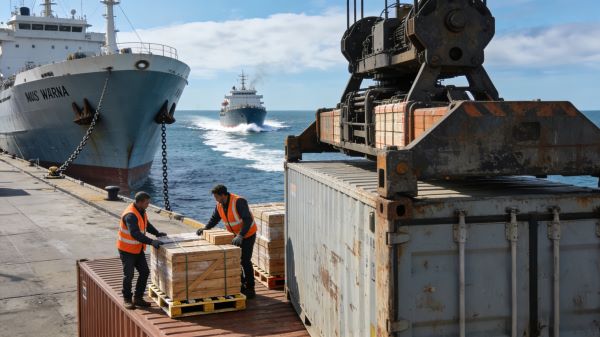
Why Do Long-Term Asia-Europe Contract Margins Face Severe Compression?
Long-term Asia-Europe shipping forwarding contracts rely on stable and predictable fixed cost structures, which have been disrupted by the irregular, multi-dimensional Suez Canal Transit Fee Adjustment. Most global forwarding enterprises sign 1–3 year fixed-price or semi-indexed service agreements with cargo owners during annual shipping season negotiations, with pricing frameworks formulated based on historical canal tariff levels and steady maritime cost expectations.
Mismatched cycle between contract pricing and policy adjustment
A prominent structural contradiction lies in the inconsistent update frequency between long-term contract pricing cycles and short-term canal tariff revisions. According to mid-year 2025 Freightos Baltic Index (FBX) industry survey data, over 68% of medium and large global forwarding firms have signed fixed-rate Asia-Europe long-term contracts without embedded floating adjustment clauses for canal fee fluctuations. Under such agreement terms, forwarders bear extra transit fee costs with limited room to transfer cost pressure to shippers during valid contract periods.
Differentiated cost pressure across cargo segments
Forwarders should note that the tiered adjustment mechanism creates uneven margin compression for different cargo categories. Containerized general cargo, which constitutes mainstream Asia-Europe trade volumes, is affected by both base tariff increments and uncertain temporary discount validity. Specialized cargoes including chemical and liquefied goods follow separate extended preferential schedules, creating obstacles for unified cost accounting and profit estimation.
Small and medium-sized forwarders with single-route business layouts are more vulnerable to such policy changes. These enterprises lack sufficient cargo scale and bargaining power to obtain bundled preferential policies from carrier companies, resulting in higher unit operational costs compared with large integrated forwarding groups.
Superimposed risks amplify operational cost burdens
In recent years, recurring security uncertainties in the Red Sea region have prompted partial vessel detours via the Cape of Good Hope. Flexible SCA tariff adjustments further complicate cross-route cost comparison and route selection planning. Per 2025 Drewry shipping cost analysis data, updated canal auxiliary fees and temporary service charges have lifted variable operational costs per Asia-Europe container shipment by an average of 3.2%, steadily eroding gross profit margins of existing long-term contracts.
How Can Forwarders Recalculate Long-Term Contract Margins Accurately?
Accurate margin recalculation under the revised Suez Canal tariff framework requires forwarders to deploy multi-dimensional dynamic accounting systems that cover fixed base tariffs, time-limited preferential policies and auxiliary service charges. Traditional static annual cost calculation methods fail to reflect real-time operational profits, making standardized process optimization a necessary step for sustainable business operation.
Classify ongoing contracts based on vessel and cargo attributes: Forwarders need to sort all valid long-term Asia-Europe contracts by cargo type, vessel net tonnage and sailing route to match corresponding 2024–2026 SCA tariff standards. Large container ships above 130,000 net tons qualify for 90-day 2025 discount policies, liquid bulk vessels follow extended preferential rules, and general dry bulk vessels apply the 5% base tariff increment. This refined classification reduces systematic cost calculation deviations.
Incorporate auxiliary canal fees into full-cost accounting: The recommended approach is to integrate mandatory mooring fees, lighting service charges and non-compliance supplementary fees into per-shipment marginal cost statistics. Many conventional long-term contracts only include basic transit tolls in pricing systems, excluding auxiliary service expenditures that create invisible profit losses ranging from $3,000 to $6,000 per vessel transit.
Adopt segmented calculation for cross-period contracts: A common mistake is applying unified static tariff standards to long-term contracts that cover multiple policy adjustment windows. Forwarders can divide contract terms into distinct stages corresponding to 2024 base tariff hikes, 2025 temporary discount implementation and 2026 extended preferential policy periods, so as to capture phased cost fluctuations and achieve precise margin assessment.
Calibrate margin data with authoritative industry indices: Forwarders can leverage real-time FBX Asia-Europe freight rate indices and quarterly UNCTAD canal operational cost monitoring data to verify recalculated margin results. Cross-referencing with public authoritative industry data helps reduce subjective estimation errors and supports reliable internal decision-making and external customer communication.
What Contract Strategy Adjustments Suit the New Tariff Environment?
Simple passive margin recalculation cannot address long-term operational risks brought by continuous Suez Canal policy updates. Forwarders need to optimize long-term contract frameworks to adapt to the flexible and adjustable canal tariff mechanism, balancing customer cooperation stability and operational risk control.
Embed floating tariff adjustment clauses in new contracts: Forwarders should add standardized Suez Canal fee fluctuation adjustment terms in newly signed multi-year Asia-Europe contracts. Agreements can stipulate proportional service fee revisions when official SCA tariff adjustments exceed 3%, which helps transfer partial policy cost risks and stabilize basic profit space.
Optimize contract term structures to mitigate cycle risks: The recommended approach is to replace overly fixed 3-year long-term contracts with flexible 1+2 year segmented cooperation frameworks. The first year adopts fixed pricing terms, while subsequent years allow annual margin review and moderate price adjustment based on prevailing SCA tariff policies and shipping market conditions.
Implement segmented pricing for diversified cargo businesses: A common mistake is applying unified pricing schemes to all Asia-Europe cargo categories. Forwarders can formulate differentiated pricing systems for container cargo, chemical cargo and dry bulk cargo in accordance with tiered SCA preferential policies, realizing refined profit management for segmented business lines.
Negotiate cost-sharing mechanisms with core carrier partners: For bulk long-term contract businesses with stable cargo volumes, forwarders can cooperate with core carriers to negotiate customized canal transit cost-sharing schemes. Joint bearing of incremental policy costs helps reduce single-party operational pressure and build stable long-term cooperative risk-resistance mechanisms.
How to Forecast Future Margin Fluctuations of Asia-Europe Routes?
Future profit margins of Asia-Europe long-term forwarding contracts will remain closely linked to iterative Suez Canal policy adjustments and global shipping market dynamics. According to 2025 WTO global trade outlook data, Asia-Europe container trade volume is projected to maintain a steady annual growth rate of 4.1% in the following two years, supporting stable operational demand for Suez Canal transit services, while flexible tariff policies will stand as a key variable affecting forwarding business profits.
Track continuity and iteration of SCA tariff policies
Forwarders need to focus on two core policy trends for margin forecasting. First, the continuity of temporary preferential measures: the 2025 90-day discount policy for large container ships and the 2026 extended preferential terms for chemical vessels will undergo regular official reviews, and policy adjustments may trigger cost changes for relevant shipping businesses. Second, the possibility of new supplementary fee rules: the SCA has consistently optimized canal service charging standards in recent years, with potential new operational or environmental service fees to be introduced in response to industry changes.
Evaluate market competition impacts on profit space
Market competition dynamics will continue to affect margin stability across Asia-Europe routes. Preferential canal tariff policies have guided more vessels to switch back from Cape of Good Hope detour routes to Suez Canal transit, gradually increasing route capacity supply and intensifying market competition. Such market changes may limit the growth space of market freight rates, creating dual operational pressure of rising costs and steady revenue for forwarders with rigid contract pricing terms.
Establishing a regular monthly SCA policy monitoring and margin early-warning mechanism is one of the commonly adopted operational measures for forwarders to maintain sustainable profitability of long-term Asia-Europe contract businesses amid evolving industry policies.
In summary, the ongoing Suez Canal Transit Fee Adjustment has reshaped the long-term cost calculation logic for Asia-Europe shipping forwarding contracts, requiring global freight forwarders to phase out traditional static profit assessment models. Through refined full-cost accounting, flexible contract clause optimization and continuous policy trend monitoring, forwarders can effectively mitigate policy-related operational risks, stabilize long-term contract margins, and sustain steady competitiveness in the evolving global maritime freight market.
Last
How ocean liner alliances pass down operational cost hikes from a recent Suez Canal passage waterway transit fee annual adjustment
Suez Canal Transit Fee Adjustment for the 2024–2025 operational cycle has lifted baseline waterway access expenditures for contain
Next
Attracting ESG focused brand clients by offering a reliable paperless green sustainable bill of lading authentic Green BL certification
What core value does Green Bill of Lading (Green BL) Certification deliver for ESG client acquisitionGreen Bill of Lading (Green B

