




Rigorous house bill of lading data auditing acts as a vital pre-loading measure to mitigate automated port loading bans while complying with standard japan afr filing requirements for Japan-bound container shipments. Many global forwarding providers face terminal cargo rejection due to uncorrected house bill inconsistencies, even when master bill data remains accurate. Such automated port restrictions originate from Japan Customs’ tightened pre-departure data validation protocols operated via the domestic NACCS system.
What triggers automated origin port loading bans for Japan bound cargo?
Automated origin port loading bans for Japan-destined containers are system-driven restrictions triggered by inconsistent or non-compliant house bill data that fails to meet japan afr filing requirements. Carriers and terminal operators enforce these bans to align vessel loading workflows with Japanese customs pre-screening protocols. The control mechanism targets data irregularities that weaken cross-border cargo security and compliance verification procedures.
Terminal automation platforms maintain real-time data synchronization with Japan’s AFR electronic system to verify all manifest submissions prior to vessel loading. Any detected mismatch between house bill content and official AFR formatting or content standards will activate automated loading blockages. This preventive mechanism reduces post-loading compliance risks and minimizes vessel delay incidents at Japanese discharge ports.
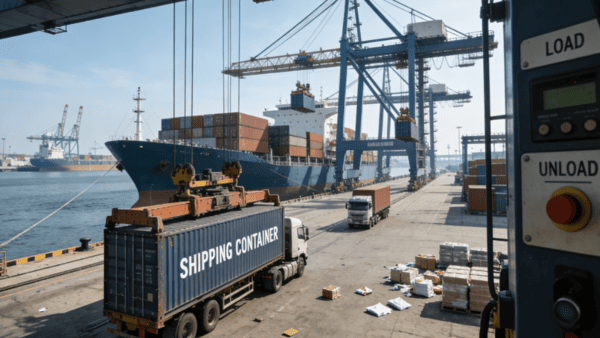
According to UNCTAD 2024 maritime trade review data, roughly 38 percent of pre-departure loading disruptions on Japan shipping routes relate to unrectified house bill data discrepancies. These operational interruptions contribute to terminal congestion and raise administrative and handling costs for both carriers and forwarding enterprises.
Why do house bill inconsistencies violate Japan AFR compliance rules?
House bill datasets represent granular sub-manifest records that require full logical alignment with master bill data under official japan afr filing requirements. Japanese customs authorities treat unaligned house bill entries as potential data misrepresentation risks that compromise national cargo security screening frameworks. Uniform data consistency standards therefore apply to all subordinate shipping documents.
What core logical alignment rules govern AFR house bill data?
Japan AFR regulatory frameworks mandate complete data synchronization between master bills and corresponding house bills across all mandatory submission fields for valid pre-departure filing. Key consistent fields cover cargo descriptions, six-digit HS commodity codes, shipper and consignee particulars, container specifications, and gross weight metrics. Unilateral house bill data adjustments without synchronized master bill updates constitute non-compliant filing conduct.
A common mistake is modifying house bill cargo weight or packaging details for internal booking management while retaining unchanged AFR submission records. Many junior documentation practitioners underestimate system data matching capabilities of Japanese customs platforms, leaving hidden compliance hazards that trigger automated port loading controls.
How do formatting errors cause system-level loading restrictions?
Structural formatting deviations on house bills interfere with the automated data parsing logic of Japan’s NACCS platform, resulting in system-flagged non-compliance even when factual cargo information remains correct. AFR protocols define unified specifications for character usage, field sequencing, and industry abbreviation adoption for all manifest documents. Irregular house bill formatting disrupts system data recognition and initiates pre-loading prohibition workflows.
Forwarders should note that terminal loading management systems prioritize AFR data validation results before granting approval for physical container stowage. Format-induced parsing failures generate formal loading block records that remain active until full data rectification and official re-verification completion.
What operational losses result from unaddressed house bill errors?
Uncorrected house bill discrepancies that trigger origin port loading bans bring cascading operational and financial losses for forwarding businesses serving Japan trade lanes. Such disruptions extend beyond immediate stowage failures to affect subsequent customs clearance arrangements and overall supply chain stability. Timely pre-filing data auditing serves as a practical method to control these avoidable losses.
How do loading bans disrupt routine shipping schedules?
Automated loading bans lead to last-minute cargo stowage cancellation or offloading rearrangement, causing vessel slot occupation conflicts and schedule adjustment demands. Containers with loading restrictions need arrangement on subsequent vessel voyages, extending overall cargo transit cycles. Such irregular schedule changes disturb batch cargo planning and weaken service stability for downstream clients.
According to Freightos Baltic Index 2024 logistics cost analytics, schedule delays stemming from AFR-related house bill inconsistencies raise per-container operational expenditures for forwarders, including terminal storage fees and document amendment charges. Accumulated incremental costs compress profit margins for conventional Japan-bound freight services.
What long-term compliance impacts do repeated violations create?
Recurring house bill-associated AFR non-compliance incidents accumulate negative records on enterprise customs compliance profiles. Japanese customs authorities enhance document inspection frequencies for market players with continuous pre-departure data violation records. Intensified inspection procedures extend clearance cycles and lower cargo release efficiency.
The recommended approach is one of the commonly adopted industry practices, which involves establishing standardized pre-loading house bill auditing workflows to reduce repeated compliance errors. Proactive data verification assists enterprises in maintaining steady credit standings within Japanese customs supervision systems.
What key house bill fields require mandatory AFR pre-loading auditing?
Targeted pre-loading auditing focuses on high-risk house bill fields that frequently trigger system non-compliance alerts under japan afr filing requirements. Systematic verification of these core fields mitigates most automated loading ban risks at origin terminals. Each verification item corresponds to key validation checkpoints embedded in official AFR screening mechanisms.
Cargo description consistency verification: Cross-reference house bill cargo narratives with master bill entries to maintain consistent commodity terminology, attribute definition, and packaging specification descriptions. Remove ambiguous wording and unapproved abbreviations that fail NACCS system parsing standards.
HS code standardization auditing: Verify six-digit HS codes displayed on house bills match official AFR submission records and master bill data precisely. Revise customized code adjustments for internal booking use that conflict with Japanese customs commodity classification standards.
Party information full alignment check: Confirm consistent presentation of shipper, consignee, and notify party legal names and registered addresses across all document layers. Rectify truncated address content and alternative name expressions unrecognized by Japanese customs databases.
Weight and volume data calibration: Align house bill gross weight, net weight, and cargo volume figures with master bill records and formal AFR filing data. Standardize decimal precision and unit formatting to fit official system recognition specifications.
Container and seal data matching: Ensure container numbers, seal identification codes, and container type specifications remain consistent across house bills, master bills, and AFR electronic filings. Eliminate manual transcription errors generated during document data entry procedures.
How to implement systematic house bill auditing before vessel loading?
Standardized pre-loading house bill auditing workflows enable forwarding teams to eliminate data discrepancies and maintain consistent compliance with japan afr filing requirements. Layered verification mechanisms balance operational efficiency and compliance accuracy, adapting to time-sensitive terminal loading schedules. Structured auditing frameworks reduce manual oversight and lower the occurrence of automated system rejection cases.
Execute pre-submission primary self-auditing: Require documentation staff to conduct field-by-field self-verification for completed house bills prior to formal AFR submission. Prioritize inspection of high-error fields summarized in enterprise compliance databases to intercept basic data inconsistencies at early stages.
Conduct cross-layer bill data comparison: Implement mandatory cross-check workflows between master bills and house bills to identify logical data conflicts. Flag unilateral field modifications without synchronized updates across associated shipping document sets.
Adopt official template formatting validation: Inspect all house bill layouts against the latest Japan AFR standardized formatting templates. Remove customized spacing arrangements, irregular line breaks, and non-compliant symbols that deviate from official system parsing rules.
Complete pre-loading final compliance review: Perform comprehensive data auditing within 24 hours ahead of vessel departure to confirm overall data integrity. Rectify newly adjusted field content and secure full alignment with submitted AFR official records.
What auditing habits help avoid recurring AFR loading penalties?
Stable standardized auditing routines reduce repetitive house bill errors that induce origin port loading bans under japan afr filing requirements. Most compliance penalties arise from irregular operational habits rather than insufficient regulatory understanding. Consistent verification practices enhance long-term pre-departure compliance capabilities for forwarding teams.
How to eliminate asynchronous data revision risks?
Asynchronous data revision serves as a common hidden factor behind AFR loading disruption incidents. Operational teams often revise house bill details for internal booking coordination and client communication without updating corresponding official AFR filing records. Unsynchronized data adjustments create subtle mismatches that pass initial submission checks but get detected during terminal pre-loading screening.
Forwarders should note that the Japan AFR system retains complete historical submission records for each individual shipment. Post-submission house bill alterations without official amendment filings trigger data inconsistency alerts and automated loading prohibition orders at origin terminals.
How to standardize multi-staff collaborative auditing?
Unified team auditing standards prevent inconsistent individual operational habits from causing house bill non-compliance issues. Teams with divergent verification criteria deliver unstable compliance quality across different shipment batches. Standardized collaborative mechanisms help maintain steady overall compliance performance.
The recommended approach is one of the commonly adopted industry practices, which involves unifying internal house bill auditing checklists based on updated Japan AFR official specifications. All team members follow identical verification benchmarks to reduce discretionary operational differences and human-induced errors.
How to build long-term pre-loading AFR compliance mechanisms?
Sustained prevention of automated origin port loading bans relies on institutionalized AFR compliance systems centered on standardized house bill auditing. Continuous workflow optimization adapts to iterative Japanese customs policy updates and evolving terminal screening protocols. Systematic mechanism construction delivers stable compliance outcomes compared with occasional error remediation.
Establish AFR error case ledger management: Record all house bill-induced loading ban incidents and AFR compliance rejection records. Classify error categories and summarize targeted auditing improvement measures to support iterative internal process optimization.
Update compliance checklists dynamically: Adjust internal auditing checklists in a timely manner according to Japan Customs policy iterations and NACCS system rule upgrades. Ensure daily operational standards align with prevailing official compliance requirements.
Implement regular team compliance drills: Organize simulated error identification drills for house bill documents to improve staff sensitivity toward subtle data discrepancies. Enhance practical auditing capabilities for complex multi-bill shipment scenarios.
Connect auditing results with operational assessment: Link pre-loading auditing quality and error occurrence rates to team performance evaluation mechanisms. Encourage proactive compliance management and reduce passive error correction behaviors.
Within evolving cross-border maritime logistics environments, meticulous house bill data auditing acts as a reliable pre-loading safeguard against automated origin port loading restrictions while maintaining full compliance with standardized japan afr filing requirements. Forwarding enterprises that integrate structured auditing workflows into daily operations can mitigate pre-departure compliance disruptions, stabilize Japan-bound shipping efficiency, and deliver dependable container freight services for global trade partners.
Last
Advising marine cargo insurance underwriters on what geopolitical trade lane conditions trigger a protective carrier wrs war risk surcharge
What is WRS War Risk Surcharge? It is a conditional maritime accessorial fee charged by ocean carriers to offset incremental marin

Next
Avoiding severe customs border protection fine notifications by verifying what container manifest corrections are allowed before ams filing usa cutoffs
Understanding compliant amendment boundaries and cutoff constraints for What is AMS Filing (USA)assists global freight forwarders

