




Strict adherence to open top container protocols and standard ot lashing requirements for overheight cargo serves as a critical prerequisite to pass rigorous port marine surveyor load validation in international maritime logistics. In recent years, port inspection standards for out-of-gauge shipments have become increasingly standardized across global terminals, raising baseline compliance thresholds for forwarding practitioners. According to UNCTAD 2024 maritime safety statistics, non-compliant lashing and stowage practices contribute to a large proportion of container inspection detentions at major international ports.
What do port marine load validation inspections focus on for OT container shipments
Port marine load validation refers to professional on-site inspection conducted by certified surveyors to verify whether container stowage, cargo fixation and dimensional conditions comply with maritime safety and terminal operational standards.
Different from routine container appearance checks, load validation focuses more on mechanical stability and transportation sustainability of overheight cargo. Surveyors adopt systematic assessment standards to eliminate potential hazards that may trigger maritime accidents or terminal operational disruptions.
Forwarders should note that overheight OT container shipments undergo stricter validation scrutiny compared with standard container cargo due to exposed structural features and unconventional loading forms.
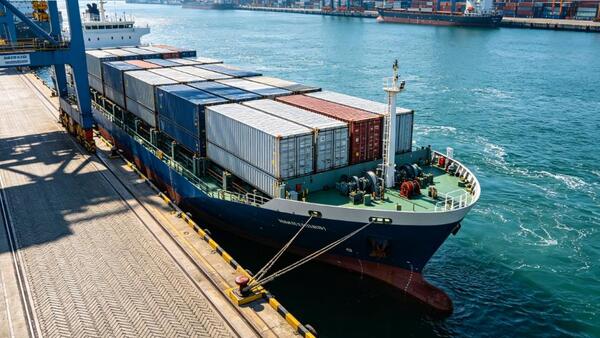
Why overheight cargo easily fails port marine survey validation
Overheight cargo loaded in open top containers faces higher inspection failure rates due to altered structural stress distribution and exposed cargo layouts that deviate from standard container shipping modes.
A common mistake is treating overheight machinery cargo the same as general dry cargo, ignoring the unique stress and vibration resistance demands of out-of-gauge shipments during long-haul voyages.
Most port surveyors prioritize hidden structural risks rather than superficial loading appearances. Minor lashing irregularities and dimensional non-compliance, which are easily overlooked in daily operations, become core audit focuses during formal validation checks.
Core risk factors leading to validation non-approval
Multiple controllable operational factors increase the difficulty for overheight OT cargo to pass port marine load validation inspections.
Unstandardized lashing force distribution: Uneven tension across lashing belts causes unbalanced cargo stress. Such unstable fixation states fail to meet dynamic load resistance standards required by port survey protocols.
Inaccurate overheight dimension declaration: Inconsistencies between declared and actual cargo height trigger inspection doubts. Surveyors will conduct re-measurement and suspend validation for dimension discrepancies.
Insufficient anti-slip base treatment: Lack of effective buffer and anti-slip structures between cargo base and container floor leads to potential sliding risks, which is a key rejection factor in load validation.
Unprotected protruding mechanical components: Exposed sharp structural parts of overheight equipment may cause container damage or cargo displacement, violating terminal safety operation specifications.
How traditional OT container protocols support survey validation compliance
Traditional open top container operational protocols summarize mature stowage and fixation experiences, forming standardized operational guidelines that match modern port survey validation systems.
The recommended approach is to integrate traditional OT container operational norms with updated ot lashing requirements for overheight cargo to build a fully compliant loading and fixation system.
Traditional protocols focus on bottom reinforcement, symmetric stress layout and multi-angle fixation, which effectively resolve common stability defects of overheight cargo. These standardized operational logics align with the core assessment criteria of most port marine surveyors.
Key advantages of traditional OT container operational norms
Traditional OT container protocols accumulate long-term maritime transportation experience and provide reliable compliance foundations for overheight cargo load validation.
Mature structural reinforcement logic: Traditional norms emphasize wooden sleeper paving and bottom load dispersion, which improve container floor bearing capacity and avoid local structural deformation.
Systematic multi-directional fixation mode: Standardized horizontal, vertical and diagonal cross lashing combinations restrict multi-dimensional displacement of overheight cargo and enhance overall stability.
Standardized dimension control awareness: Traditional OT operations reserve reasonable tolerance ranges for overheight cargo, reducing dimension deviation risks that trigger inspection failures.
Complete pre-sailing inspection mechanism: Traditional protocols include comprehensive stability checking procedures, helping eliminate hidden hazards before port validation inspections.
What lashing standards must be followed for overheight cargo validation pass
Professional ot lashing requirements for overheight cargo specify quantifiable fixation standards that adapt to port marine surveyor load validation judgment criteria.
According to UNCTAD 2024 port safety inspection reports, lashing standardization level directly correlates with the pass rate of out-of-gauge cargo port validation checks across global terminals.
Surveyors mainly verify lashing quantity, tension uniformity, fixed point firmness and protective measures. Only full compliance with industry lashing specifications can obtain formal load validation approval.
Quantifiable lashing specifications for overheight OT cargo
Forwarders need to implement refined lashing configurations to meet port survey validation requirements for overheight open top container shipments.
Symmetrical multi-group lashing layout: Arrange lashing belts and steel wires symmetrically on both sides and ends of overheight cargo to ensure balanced stress and avoid unilateral loose fixation.
Graded tension adjustment operation: Adopt segmented tension calibration methods to maintain consistent tightness of all lashing points, preventing partial stress concentration or slack failure.
Effective overheight limit fixation: Install special vertical limit lashing structures for cargo protruding above container rails to control vertical bouncing displacement in rough sea conditions.
Full coverage protective wrapping: Wrap protruding edges and rigid components with flexible buffer materials to prevent cargo abrasion and container structural damage during transportation.
How to execute pre-inspection operations to pass marine load validation
Standardized pre-inspection operations based on open top container protocols and ot lashing requirements for overheight cargo effectively eliminate compliance defects and improve inspection pass efficiency.
What pre-validation preparation steps maximize pass rate
Refined pre-inspection preparation helps forwarding teams fully meet port surveyor assessment standards and avoid unnecessary inspection delays.
Accurate dimensional re-measurement and confirmation: Recheck cargo vertical overheight value and horizontal overhang range before inspection to ensure declared data matches actual cargo conditions.
Secondary lashing tension calibration: Inspect and adjust all lashing points uniformly to eliminate loose and over-tight positions, ensuring integral fixation stability.
Hidden hazard troubleshooting for vulnerable areas: Focus on checking cargo bottom contact points and top protruding parts to reinforce insufficient protective measures.
Standardized on-site cargo arrangement: Adjust cargo placement posture to keep the center of gravity stable, avoiding tilt and eccentricity that affect survey judgment.
Complete compliance document sorting: Sort out lashing operation records, dimension declaration forms and container inspection reports to cooperate with surveyor verification efficiently.
What common operational flaws cause validation detention
Most port inspection detentions of overheight OT cargo stem from trivial operational flaws rather than large-scale non-compliance issues in overall schemes.
A common mistake is focusing on major lashing arrangement while neglecting detail optimization, which leads to surveyor doubts and secondary on-site rectification demands.

Typical detail defects in overheight cargo lashing operations
Avoiding common operational defects can effectively reduce inspection failure risks for overheight open top container shipments.
Missing local limit lashing points: Ignoring small protruding parts and local overheight areas leads to incomplete fixation, which is easily identified as unstable risk by surveyors.
Single-type lashing structure application: Relying only on flexible belts without matching steel wire reinforcement fails to resist strong sea vibration and impact loads.
Irregular base buffer placement: Disordered anti-slip pads and buffer blocks cause uneven cargo force, affecting overall stability assessment results.
Untrimmed redundant lashing materials: Scattered redundant belt residues and unorganized on-site layout reduce operational standardization and affect survey comprehensive evaluation.
What benefits does compliant lashing bring to long-term port clearance
Persistent compliance with open top container protocols and ot lashing requirements for overheight cargo standardizes enterprise shipment operations and stabilizes port clearance efficiency.
In recent years, standardized lashing and pre-inspection modes have helped many logistics enterprises reduce port inspection detention frequencies in global mainstream shipping lanes.
Long-term operational value of inspection-compliant lashing systems
Scientific and standardized lashing management creates stable operational advantages for enterprises engaged in oversized equipment transportation business.
Stable port clearance efficiency: Mature compliant lashing systems reduce on-site rectification time and ensure shipment schedules proceed as planned.
Reduce extra operational costs: Avoid detention fees, terminal reworking charges and schedule loss costs caused by inspection failures.
Optimize enterprise port credit records: Continuous inspection-compliant shipments improve enterprise credibility in port supervision systems and simplify subsequent inspection procedures.
Lower cargo damage and claim risks: High-standard lashing fixation resists complex sea conditions, maintaining intact cargo status and reducing after-sales dispute probabilities.
Enforcing standardized open top container operational protocols and strictly implementing professional ot lashing requirements for overheight cargo are essential foundations to pass rigorous port marine surveyor load validation checks. Accurate dimension control, systematic multi-angle lashing fixation, detailed protective optimization and complete pre-inspection troubleshooting can effectively eliminate compliance risks. Forwarding teams that adhere to standardized operational specifications can steadily improve port inspection pass rates, optimize cross-border transportation efficiency, and maintain reliable service competitiveness in the global oversized equipment logistics market.

Last
Helping sales teams defend spot rate validity dates when negotiating freight quotes inside an active gri general rate increase cycle
An active GRI General Rate Increase Cycle triggers volatile ocean freight pricing fluctuations that compress conventional spot rat

Next
Ensuring carrier safety clearance for heavy out of gauge industrial plant machinery by matching open top container ot lashing requirements for overheight cargo
Strict compliance with open top container ot lashing requirements for overheight cargo serves as a core operational standard to se

