




Strict flat rack container (FR) securing requirements constitute the core compliance benchmark for global forwarders to pass carrier hazardous and out of gauge (OOG) structural audits in cross-border maritime logistics. Flat rack containers serve as specialized equipment for transporting oversized, overweight, and heavy-duty cargo including construction machinery, steel fabrication structures, and industrial mechanical units. These container units lack enclosed side panels and roof structures, exposing cargo to greater structural stress and positional shift risks during ocean voyages compared to standard dry freight containers. Carrier structural audits focus on cargo securing integrity, container structural stability, and alignment with international maritime safety protocols, making standardized FR securing practices a critical prerequisite for audit clearance and voyage safety. According to UNCTAD 2024 maritime transport safety analytics, improper securing operations on flat rack units account for a notable share of non-compliant incidents in global OOG cargo shipping, serving as a primary trigger for carrier audit non-approval and maritime operational penalties.
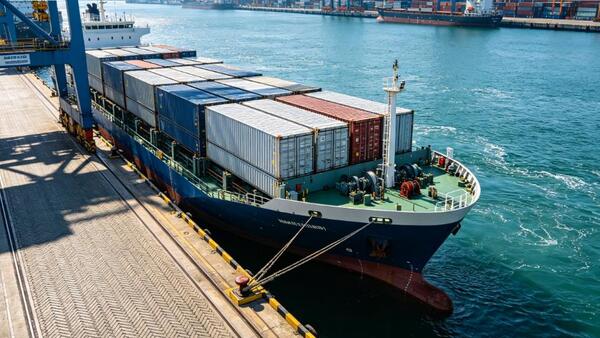
What Are Flat Rack Container (FR) Securing Requirements for Audit Compliance?
Flat rack container (FR) securing requirements refer to standardized operational and structural compliance protocols formulated by international maritime regulatory bodies and major carrier audit departments. These protocols guide the fixation of OOG and hazardous cargo on open flat rack units to mitigate cargo displacement, tilting, and container structural deformation during maritime transit. The full set of criteria covers securing equipment selection, lashing configuration, stress distribution control, and structural protection measures, forming a systematic compliance framework for carrier structural and hazardous cargo audit assessments.
Why Do FR Securing Standards Affect Carrier Audit Clearance Outcomes?
Carrier hazardous and OOG bureau structural audits prioritize two core assessment indicators: in-transit cargo stability and container structural integrity, both of which are heavily governed by professional flat rack securing operations. Unlike fully enclosed standard containers, flat rack units rely entirely on external lashing and securing configurations to fix cargo in place, with no auxiliary structural restraint from side walls or top frames. This operational characteristic makes the rationality and standardization of FR securing work a key determinant of audit compliance results and overall maritime transport safety.
Industry Compliance Data and Practical Audit Performance
A common mistake among global forwarding enterprises is prioritizing superficial cargo fixation while neglecting structural stress balance and carrier-specific securing specifications, which frequently leads to audit non-compliance. Many front-line operators apply basic steel wire binding methods that meet general transport perceptions but fail to satisfy the quantitative stress testing and structural risk evaluation criteria adopted in professional carrier audits. Per Freightos Baltic Index (FBX) 2025 maritime compliance tracking data, forwarding firms with standardized FR securing workflows maintain consistently higher carrier audit clearance rates than peers with irregular, ad-hoc securing practices.
Forwarders should note that carrier structural audit mechanisms cover multiple inspection scenarios, including single-voyage spot checks, periodic enterprise qualification reviews, and batch cargo random sampling assessments. Non-compliant FR securing records are archived in carrier enterprise credit databases, which may trigger long-term operational restrictions, adjusted freight rate terms, and suspended cooperative qualifications for forwarding entities. For hazardous OOG cargo shipments, substandard securing operations may also trigger international maritime safety penalty mechanisms, resulting in measurable legal and economic losses for logistics enterprises.
What Core Audit Risks Arise From Non-Standard FR Securing Practices?
Non-standard flat rack container securing operations induce a range of structural and safety hazards that incur explicit score deductions in carrier bureau audit frameworks and often lead to audit failure. These risk factors span cargo positional deviation, container structural damage, voyage safety threats, and hazardous cargo leakage risks, all of which are key inspection items in routine carrier audits.
Cargo lateral and longitudinal displacement risks: Flat rack containers lack enclosed structural constraints, and irregular tensioning of lashing bands or asymmetric stress distribution can cause cargo shift under vessel sway, ocean turbulence, and navigational acceleration. Minor cargo displacement may damage cargo packaging and integrity, while excessive shift can alter the container unit’s overall center of gravity and introduce vessel balance risks. Most carrier audit guidelines categorize measurable cargo displacement beyond standard tolerance ranges as a major non-compliant item that hinders audit clearance.
FR container structural deformation risks: Improper securing point selection and over-tensioning of lashing equipment often create localized stress concentration on flat rack bottom cross beams and corner castings. Flat rack containers feature lower structural load redundancy compared to standard containers, making them vulnerable to beam bending, corner casting cracking, and base plate deformation under concentrated stress. UNCTAD 2024 container damage statistics indicate that irregular cargo securing operations during loading contribute to a considerable proportion of flat rack structural damage incidents in global maritime transport.
Hazardous cargo secondary safety hazards: For hazardous goods transported via flat rack containers, insufficient securing firmness can lead to cargo collision, mechanical extrusion, and frictional abrasion during voyages. These physical interactions may damage hazardous cargo packaging, trigger chemical leakage, and raise potential combustion or explosion risks. Carrier hazardous cargo audit departments implement stringent control rules for such latent dangers, with unaddressed secondary safety risks commonly resulting in audit non-approval and temporary suspension of hazardous cargo shipping qualifications.
Long-term enterprise compliance record risks: Carrier audit departments maintain longitudinal tracking of forwarding enterprises’ historical FR securing operation records. Repeated non-standard securing behaviors are identified as systematic operational management flaws, which can cause overall enterprise qualification audit failure and constrain subsequent OOG and hazardous cargo shipping business development.
How to Implement Standardized FR Securing Requirements for Audit Compliance?
The recommended approach is to establish a full-process standardized FR securing operation system covering pre-loading due diligence, on-site standardized securing implementation, post-operation performance verification, and complete document archiving. This systematic workflow aligns fully with carrier structural and hazardous cargo audit criteria and effectively reduces human-induced compliance errors.
Conduct pre-loading cargo and container condition verification: Forwarders need to perform comprehensive inspections on flat rack structural integrity and cargo parameter matching prior to loading. Key inspection items include the structural soundness of bottom beams, corner castings, and securing lugs, alongside confirmation of cargo weight, external dimensions, center of gravity position, and hazardous cargo classification attributes. Screening out substandard containers and unreasonable loading schemes at the pre-loading stage helps avoid basic audit non-compliance issues.
Adopt differentiated securing schemes based on cargo attributes: Formulate targeted securing strategies for ordinary OOG cargo, heavy industrial equipment, and classified hazardous cargo. Heavy steel structures and engineering machinery usually require combined fixation solutions with high-tensile lashing straps, tension ratchets, and anti-slip wooden wedges. Hazardous cargo shipments require additional anti-collision buffer materials and leakage-proof auxiliary securing structures, with all operations complying strictly with IMDG Code CTU loading and securing guidelines.
Standardize securing point layout and stress balance control: All securing points must be anchored on factory-designed FR container lugs and corner castings, avoiding random lashing on container base plates and auxiliary non-load-bearing structures. A symmetrical multi-point securing layout is advised to distribute structural stress evenly, with tension differentials across individual lashing bands controlled within industry-recognized tolerance ranges to prevent localized stress concentration and structural deformation.
Deploy anti-loosening and anti-vibration auxiliary devices: Install anti-loosening buckles on all tensioning equipment to mitigate securing loosening caused by continuous vessel vibration during long-haul voyages. Lay anti-slip rubber cushioning between cargo and flat rack base surfaces to reduce frictional displacement risks. For ultra-long and ultra-wide overhanging OOG cargo, install limit protection structures at overhang sections to meet carrier structural safety audit specifications.
Perform post-loading stress testing and operational record filing: Utilize professional tension detection tools to verify the stability and firmness of all securing points upon loading completion. Capture visual documentation and record key operational details, including securing equipment models, lashing point quantities, and tension test data, to form complete compliance files. These archived materials serve as critical supporting evidence during carrier on-site audits.

What Supporting Document Standards Complement FR Securing Audit Compliance?
Carrier structural audits incorporate dual inspection dimensions of on-site securing quality and supporting document completeness. Standardized document management acts as a vital auxiliary condition for smooth audit clearance and needs to match formal flat rack container securing requirements.
Standard cargo securing operational report: The formal report should record core information including cargo specifications, FR container identification number, securing equipment type, lashing point quantity, tension parameter data, and on-site operator information. All recorded data must be authentic and consistent with on-site operational conditions to prevent information discrepancies that trigger audit inquiries.
Hazardous cargo securing compliance declaration: For shipments involving hazardous goods, forwarding entities need to issue a compliance declaration document aligned with SOLAS convention provisions. The declaration confirms that all FR securing operations adhere to international maritime hazardous cargo transport standards and eliminate foreseeable operational safety hazards.
Container structural safety inspection records: Archive pre-loading FR container structural inspection documents and post-loading structural condition confirmation forms. These records verify that securing operations do not cause structural damage to flat rack units and satisfy carrier structural safety audit benchmarks.
How to Maintain Stable Long-Term Audit Compliance With FR Securing Protocols?
Sustained carrier audit qualification requires forwarding enterprises to integrate flat rack container securing requirements into daily operational management systems, rather than adopting temporary rectification measures for individual audit checks. Institutionalized standardized management helps logistics entities maintain stable audit compliance performance and mitigate recurring maritime transport safety risks.
Forwarders should note that maritime audit specifications undergo dynamic updates alongside international safety convention revisions. In recent years, the International Maritime Organization (IMO) has updated OOG and hazardous cargo container securing guidelines multiple times, prompting major global carriers to upgrade their structural audit assessment indicators correspondingly. Forwarding teams need to track emerging industry standards continuously, organize regular professional skill training for front-line staff, and update internal operational guidelines to maintain alignment with prevailing audit requirements.
A common mistake in enterprise compliance management is overemphasizing on-site operational standardization while neglecting iterative team skill upgrading and daily operational supervision. Many front-line operators retain outdated securing methods formed by long-term empirical operations, which may cause occasional audit non-compliance incidents. Establishing routine inspection and performance assessment mechanisms for FR securing operations helps eliminate such systematic management loopholes.
Per Drewry 2025 global freight compliance research data, forwarding enterprises with standardized long-term FR securing management systems exhibit lower cargo damage rates and fewer audit non-compliance records compared to enterprises with informal operational management mechanisms, supporting more stable OOG and hazardous cargo shipping business operations.
In summary, enforcing standardized flat rack container (FR) securing requirements is a reliable approach for global forwarders to achieve consistent compliance with carrier hazardous and out of gauge bureau structural audit rules. Standardized on-site securing operations, comprehensive supporting document management, and sustainable institutionalized compliance management work in tandem to eliminate structural safety hazards, align with international maritime compliance standards, and support steady development of cross-border OOG and hazardous cargo shipping businesses for global forwarding enterprises.
Last
Overcoming acute general purpose container deficits through optimized placement workflows using alternative nor non operating reefer explanation options
A systematic non operating reefer explanation assists global freight forwarders in deploying practical mitigation strategies for r

Next
Negotiating volume service contract clauses that cap or waive mid voyage ebs fee updates under variable emergency bunker surcharge standard
The Emergency Bunker Surcharge Standard (EBS) establishes adjustable emergency fuel fee mechanisms for global container shipping t

