






Understanding the International Sea Freight Process is essential for freight forwarders aiming to streamline cargo flow, minimize disruptions, and deliver reliable services to clients across global supply chains.
What is the International Sea Freight Process, and Why Does It Matter for Forwarders?
The International Sea Freight Process refers to the coordinated sequence of steps involved in transporting goods by sea from an origin port to a destination port, encompassing documentation, booking, loading, transit, and delivery. It matters for forwarders because it directly impacts client trust, operational efficiency, and business sustainability in the global logistics industry.
According to UNCTAD 2026 data, over 80% of global merchandise trade by volume is transported via sea, with seaborne trade volume projected to grow by 0.5% in 2025 and an average annual rate of 2% from 2026 to 2030. This underscores the process’s irreplaceable role in connecting economies and markets worldwide.
For forwarders, mastering this process is not just about moving cargo—it is about navigating complexity to meet client expectations and maintain a competitive edge. Forwarders should note that the International Sea Freight Process is not a one-size-fits-all framework; it adapts to cargo types, trade routes, and regulatory requirements.
Failing to tailor approaches to these variables can lead to costly delays, customs detentions, or cargo damage, all of which harm a forwarder’s reputation and bottom line. A common mistake is overlooking the interdependence of each stage in the process.
For example, a small error in documentation during the pre-shipment phase can cascade into delays during customs clearance or delivery, highlighting the need for meticulous attention to detail at every step.
How Can Forwarders Visualize and Map Cargo Flow in the International Sea Freight Process?
Visualizing cargo flow involves mapping each stage of the International Sea Freight Process to identify bottlenecks, track cargo movement, and ensure transparency for both forwarders and their clients. This mapping helps forwarders anticipate challenges and optimize resource allocation.
The recommended approach is to break down the process into six core stages, each with distinct tasks and milestones, and use digital tools to track cargo progress in real time. This visualization not only improves operational efficiency but also allows forwarders to communicate effectively with clients about their shipment’s status.
1. Pre-Shipment Preparation: How to Lay the Groundwork for Smooth Cargo Flow?
Pre-shipment preparation is the initial stage of the International Sea Freight Process, focusing on gathering accurate information, verifying compliance, and preparing cargo for transport. It sets the foundation for all subsequent steps and requires careful planning.
Confirm Cargo Details: Forwarders must collect precise information from shippers, including commodity type, quantity, gross weight, volume, and special handling requirements (e.g., dangerous goods, perishables). A common mistake is relying on incomplete or inaccurate data, which can lead to booking errors, improper packaging, or customs delays.
Verify Compliance Requirements: Forwarders need to check import and export regulations for both the origin and destination countries, including prohibited items, documentation requirements, and special permits. For example, dangerous goods must comply with the IMDG Code 2024 amendment, while food products may require additional health and phytosanitary certificates.
Select Appropriate Packaging: The recommended approach is to use robust packaging that can withstand the rigors of sea transport, including rough handling, temperature fluctuations, and moisture. Forwarders should advise shippers on packaging based on cargo type—for instance, fragile goods need shock-absorbent materials, while bulk cargo may require specialized containers like flexitanks.
Prepare Initial Documentation: Key documents at this stage include the commercial invoice, packing list, and Shipper’s Letter of Instruction (SLI). These documents must be accurate and consistent, as discrepancies can cause delays in later stages such as customs clearance or cargo loading.
2. Booking and Carrier Selection: How to Choose Partners That Support Efficient Cargo Flow?
Booking and carrier selection involve reserving cargo space and choosing a carrier that aligns with the shipper’s needs, including cost, transit time, and cargo requirements. This stage requires balancing efficiency and cost-effectiveness while minimizing risks.
According to Freightos Baltic Index (FBX) 2026 data (as of May), global container freight rates remain volatile, with significant variations across major trade lanes. The FBX Composite Index reflects ongoing fluctuations driven by geopolitical tensions and shifting supply-demand dynamics in key markets.
Assess Carrier Options: Forwarders should evaluate carriers based on route coverage, fleet size, on-time performance (OTP), and customer service. They should also consider a carrier’s experience in handling specific cargo types (e.g., oversized cargo, project cargo) and their port call network.
Negotiate Booking Terms: The recommended approach is to negotiate booking terms that include transit time guarantees, liability coverage (in line with the Hague-Visby Rules), and flexibility for changes such as cargo volume adjustments or destination port modifications. Forwarders should note that clear booking terms help resolve disputes and clarify liability in case of delays or damage.
Confirm Booking Information: After selecting a carrier, forwarders must obtain a booking confirmation (also known as a booking note) that outlines transit details, including vessel name, voyage number, port of origin (POL), port of destination (POD), and estimated time of departure (ETD)/estimated time of arrival (ETA).
Coordinate Stakeholders: Forwarders need to communicate booking details to shippers, warehouses, and port authorities to ensure cargo is loaded onto the vessel as scheduled, avoiding last-minute delays.
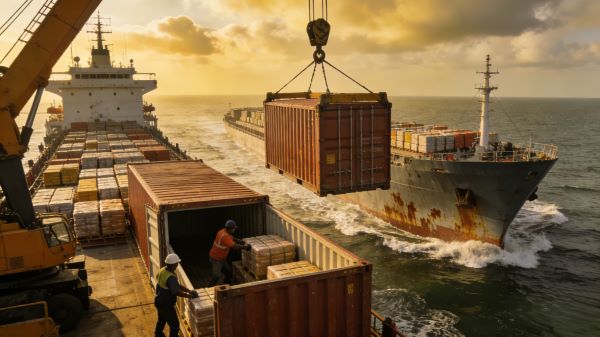
3. Cargo Pickup and Loading: How to Ensure Safe and Efficient Loading for Uninterrupted Flow?
Cargo pickup and loading involve transporting cargo from the shipper’s location to the origin port (inland haulage) and loading it onto the vessel. This stage requires careful coordination to prevent damage, delays, and additional costs.
A common mistake is failing to properly inspect cargo before loading, which can lead to damage claims or disputes between shippers, forwarders, and carriers. Forwarders should implement a comprehensive inspection process to document cargo condition and ensure it is securely fastened.
Arrange Inland Haulage: Forwarders must coordinate with local haulers to pick up cargo from the shipper’s warehouse or facility. Pickup times should align with the vessel’s loading schedule (cut-off time) to avoid rushed operations.
Inspect Cargo Condition: During pickup, forwarders should conduct a visual inspection of the cargo to check for damage, leaks, or packaging issues. Any discrepancies should be documented with photos and reported to the shipper immediately to avoid liability, using a cargo damage report if necessary.
Transport to Origin Port: Cargo should be transported to the origin port promptly, with appropriate security measures to prevent theft or damage. For dangerous goods, specialized vehicles meeting ADR (European Agreement Concerning the International Carriage of Dangerous Goods by Road) standards and trained personnel are required.
Load Cargo Onto the Vessel: Forwarders must coordinate with port stevedores to load the cargo onto the vessel. Cargo should be properly stowed to ensure even weight distribution and prevent shifting during transit (cargo stowage). Containerized cargo should be loaded into the appropriate container type (e.g., dry containers, reefer containers, open-top containers) and sealed with tamper-evident seals.
4. Documentation and Customs Clearance: What Are the Keys to Smooth Clearance and Uninterrupted Flow?
Documentation and customs clearance are critical stages of the International Sea Freight Process, ensuring cargo complies with all import and export regulations and can cross borders smoothly. Incomplete or inaccurate documentation is one of the most common causes of shipping delays.
According to WTO 2025 data, customs delays cost the global economy approximately $42 billion annually, with documentation errors accounting for nearly 62% of these delays. Forwarders play a vital role in ensuring all documents are accurate and submitted on time.
Key Documents for Customs Clearance
Prepare Core Documents: Essential documents for customs clearance include the Bill of Lading (B/L), commercial invoice, packing list, Certificate of Origin (CO), and any special permits (e.g., for dangerous or restricted items). The Bill of Lading is particularly important, as it serves as both a legal document of title to the cargo and evidence of the transport contract.
Verify Document Consistency: The recommended approach is to cross-check all documents to ensure information such as cargo description, quantity, and value is consistent across all forms. A common mistake is mismatched information between the commercial invoice and packing list, which can lead to customs detention.
Customs Submission and Follow-Up
Submit Documents to Customs: Forwarders must submit the required documents to customs authorities at both the origin and destination ports. In many cases, electronic submission through customs clearance platforms (e.g., the U.S. AES system, the EU ICS system) can speed up the clearance process.
Respond to Customs Inquiries: Forwarders should be prepared to respond to customs inquiries or requests for additional information. This may involve providing supplementary documents or explaining the nature of the cargo to ensure compliance with regulatory requirements, such as providing a Harmonized System (HS) code explanation.
Forwarders should note that Bill of Lading information requires particular attention, as even small errors can lead to significant issues. Key details to verify include the correct spelling of shipper and consignee names, accurate port designations, and proper notation of cargo weight and volume.
For example, some carriers have specific requirements for port names—IRISL LINE, for instance, requires the destination port of Bandar Abbas to be noted as “BANDAR ABBAS PERSIAN GULF” or “B.ABBAS PERSIAN GULF” to ensure smooth customs clearance at the destination.
5. Ocean Transit: How to Monitor and Manage Cargo Flow During Shipping?
Ocean transit is the stage where cargo is transported by sea from the origin port to the destination port. During this period, forwarders must monitor cargo progress, address any issues that arise, and keep shippers informed of the shipment’s status to maintain smooth flow.
According to UNCTAD 2026 data, key maritime chokepoints, such as the Suez Canal, Panama Canal, and Strait of Hormuz, remain vulnerable to geopolitical tensions and climate change. Geopolitical tensions in the Strait of Hormuz— a strategic route for 34% of global seaborne oil exports—have increased risks to maritime transport since mid-2025.
As of early 2026, Suez Canal transits have remained low compared to pre-2025 levels, with vessels continuing to reroute around the Cape of Good Hope, increasing transit times by up to 35% for some routes. Additionally, Red Sea shipping disruptions have led to sustained high diversion rates, with container ships maintaining a 90% diversion rate and LNG carriers at 80%.
Track Cargo Progress: Forwarders should use real-time tracking tools provided by the carrier (e.g., Maersk Track & Trace, MSC Cargo Tracking) to monitor the vessel’s location and the estimated time of arrival (ETA) at the destination port. This allows them to identify potential delays and inform the shipper proactively.
Address Transit Disruptions: The recommended approach is to have contingency plans in place for common disruptions, such as port congestion, vessel delays, or route changes. For example, if a vessel is delayed due to bad weather or geopolitical tensions, forwarders should coordinate with the carrier to reschedule delivery and update the shipper accordingly.
Manage Cargo Security: Forwarders should ensure that the cargo is secure during transit, particularly for high-value or sensitive goods. This may involve using tamper-evident seals on containers, arranging for cargo insurance, or implementing additional security measures in line with ISPS Code requirements.
Communicate with Stakeholders: Forwarders should provide regular updates to the shipper on the shipment’s status, including any delays or changes to the ETA. Clear communication helps manage expectations and build trust with clients, which is crucial for maintaining long-term partnerships.
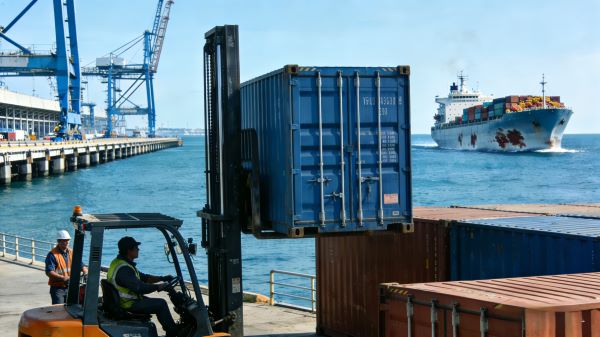
6. Destination Port Handling and Delivery: How to Ensure Final Delivery Completes the Cargo Flow?
Destination port handling and delivery involve unloading the cargo from the vessel, clearing customs at the destination port, and transporting the cargo to the consignee’s location (destination inland haulage). This is the final stage of the International Sea Freight Process and requires careful coordination to ensure a smooth handover.
According to the Port of Rotterdam 2026 Q1 data, the port handled 103 million tonnes of cargo in the first quarter of 2026, a slight 0.7% decrease year-on-year. Container throughput, measured in TEUs, increased by 0.3% year-on-year, while crude oil throughput rose by 1.7% to 25.2 million tonnes.
EU ports collectively handled significant volumes in early 2026, with Rotterdam, Antwerp-Bruges, and Hamburg remaining the top three ports. Forwarders operating in these regions should be familiar with the specific handling procedures and requirements of each port to avoid delays.
Unload Cargo at Destination Port: Forwarders must coordinate with port stevedores to unload the cargo from the vessel. The unloading process should be monitored to ensure that the cargo is not damaged and that containers are handled properly, with any damage documented in a Dock Receipt.
Complete Destination Customs Clearance: Forwarders must submit the required documents to the destination customs authorities and address any inquiries or inspections. This may involve paying customs duties, taxes, or other fees (e.g., port dues) on behalf of the shipper or consignee.
Arrange Destination Inland Haulage: Once customs clearance is complete, forwarders should arrange for local trucking to transport the cargo from the destination port to the consignee’s warehouse or facility. The delivery schedule should be coordinated with the consignee to ensure someone is available to receive the cargo and sign the Delivery Order (DO).
Confirm Cargo Delivery: Upon delivery, forwarders should obtain a Proof of Delivery (POD) from the consignee to confirm that the cargo has been received in good condition. This receipt serves as proof of delivery and is important for resolving any disputes that may arise.
What Common Bottlenecks Hinder Cargo Flow in the International Sea Freight Process, and How to Address Them?
Bottlenecks in the International Sea Freight Process can disrupt cargo flow, increase costs, and damage client relationships. Identifying these bottlenecks and implementing targeted solutions is essential for forwarders aiming to optimize their operations.
Forwarders should note that many bottlenecks stem from preventable errors, such as documentation discrepancies or poor coordination between stakeholders. By addressing these root causes, forwarders can significantly improve cargo flow and reduce delays.
Geopolitical and Weather-Related Disruptions
A common mistake is underestimating the impact of geopolitical tensions on shipping routes. For example, the 2025-2026 Red Sea and Suez Canal disruptions have led to a 72% drop in vessel tonnage crossing the Gulf of Aden, with dry bulk carrier diversion rates rising from 45% in 2024 to 56% in 2025, and oil tankers at 48%.
This has forced forwarders to reroute shipments and incur additional costs, while the 2026 closure of the Strait of Hormuz has further disrupted global energy shipping, though its impact on European ports like Rotterdam was limited in Q1 2026.
Other Key Bottlenecks and Solutions
Documentation Errors: To address documentation errors, the recommended approach is to implement a rigorous review process to check all documents for accuracy and consistency. Using digital documentation tools (e.g., CargoSmart, Descartes) can also reduce the risk of manual errors and speed up the customs clearance process.
Port Congestion: Forwarders can mitigate port congestion by booking vessels in advance, particularly during peak seasons (e.g., Christmas, Chinese New Year), and working with carriers that have priority access to port facilities. They should also coordinate with port authorities to ensure that cargo is processed efficiently.
Communication Gaps: Communication gaps between forwarders, shippers, carriers, and customs authorities often lead to delays. The recommended approach is to establish clear communication channels and provide regular updates to all stakeholders, ensuring everyone has access to accurate, real-time information about the shipment.
Cost Volatility: According to the Baltic Exchange 2026 data (as of April 30), the Baltic Dry Index (BDI) closed at 2686 points, with a year-to-date range of 1532 to 2686 points and an average of 2072.82 points—26.50% higher than the 2025 average. On May 14, 2026, the BDI rose to 3195 points, a five-month high.
Forwarders can help clients manage this volatility by leveraging rate data to negotiate long-term contracts with carriers and advising on cost-saving strategies, such as consolidating LCL (Less than Container Load) shipments into FCL (Full Container Load) shipments.
What Best Practices Help Forwarders Optimize Cargo Flow in the International Sea Freight Process?
Adopting best practices can help forwarders streamline the International Sea Freight Process, reduce bottlenecks, and deliver more reliable services to their clients. These practices focus on efficiency, compliance, and proactive management.
Forwarders should note that the role of freight forwarders is evolving, with many now operating as NVOCCs (Non-Vessel Operating Common Carriers) in addition to intermediaries. According to FIATA’s 2025 Best Practice Guide on Maritime Contracting, this dual role offers increased efficiency but also introduces complex legal risks, making it essential for forwarders to understand their rights and obligations under international shipping laws.
Leverage Digital Tools: The recommended approach is to use digital platforms for booking, documentation, and cargo tracking. Digital tools can automate manual tasks, reduce errors, and provide real-time visibility into the shipment’s status, improving efficiency and client communication. Examples include cloud-based TMS (Transportation Management Systems) and electronic Bill of Lading (eB/L) platforms.
Build Strong Partnerships: Forwarders should develop long-term partnerships with carriers, haulers, and customs brokers. Strong partnerships can lead to better rates, priority service, and faster resolution of issues that may arise during the shipping process, such as cargo delays or damage claims.
Invest in Staff Training: Training staff on the latest regulations (e.g., IMDG Code 2024 amendment), documentation requirements, and industry best practices is essential for ensuring compliance and reducing errors. Staff should also be trained to handle unexpected disruptions and provide exceptional customer service.
Implement Proactive Risk Management: Forwarders should conduct regular risk assessments to identify potential bottlenecks and develop contingency plans. This includes assessing the risk of cargo damage, delays, and regulatory non-compliance, and taking steps to mitigate these risks, such as purchasing cargo insurance or diversifying shipping routes.
In conclusion, visualizing and managing cargo flow is a critical skill for freight forwarders operating in the global logistics industry. By understanding each stage of the International Sea Freight Process, identifying bottlenecks, and adopting best practices, forwarders can streamline operations, minimize disruptions, and deliver reliable, efficient services to their clients. The International Sea Freight Process is the backbone of global trade, and mastering it is key to success in an increasingly complex and interconnected world.
Last
Rapid Logistics: Understanding the Full International Air Freight Process
In the fast-paced global logistics industry, mastering the International Air Freight Process is essential for freight forwarders a
Next
The Blue Artery: A Walkthrough of the International Sea Freight Process
Global trade relies heavily on the smooth operation of the International Sea Freight Process, which serves as the blue artery conn

