




How to Save Costs Using Transshipment Port Differences has become a vital cost-control strategy for global forwarders navigating volatile ocean freight markets and fluctuating port tariff structures. For international freight forwarding companies, ocean freight expenditure accounts for the largest proportion of cross-border logistics costs. Reliance on inflexible, fixed transit routes often triggers avoidable profit losses for logistics service providers. In recent years, growing competition across global shipping lanes and differentiated port tariff policies have created considerable cost optimization space for flexible route adjustment. Professional forwarders can effectively reduce overall logistics expenses and strengthen client competitiveness by analyzing tariff gaps between major and secondary transshipment hubs, matching cargo characteristics with port operational advantages, and mitigating diverse hidden port charges.
What causes tariff differences among global transshipment ports?
Transshipment port tariff differences represent structured gaps in Terminal Handling Charges (THC), container storage fees, transshipment service fees, and congestion-related surcharges across global maritime hubs. These pricing disparities create feasible conditions for forwarders to adjust transit routes and reduce ocean freight expenses in routine cross-border shipping operations.
According to UNCTAD 2025 global maritime logistics reports, tariff disparities between mainstream transshipment ports range from 15% to 40% for standard container transshipment services. Most secondary regional hubs present more favorable pricing terms compared with large-scale global core hubs. Multiple operational and policy-driven factors jointly shape the pricing mechanisms and cost structures of individual ports, leading to sustained tariff gaps in the global shipping network.
Port congestion and operational capacity gaps
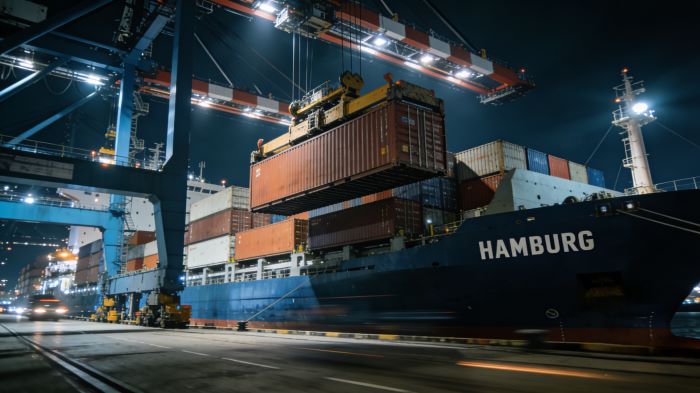
Large-scale core hub ports including Singapore Port and Shanghai Port handle over 40 million TEUs annually, resulting in persistent berth occupancy pressure and elevated equipment operation costs. To balance intensive cargo throughput, these ports impose congestion surcharges and higher standard terminal handling fees. Such additional charges are transferred to shipping lines and eventually borne by freight forwarders. In contrast, emerging secondary regional hubs maintain moderate congestion rates and sufficient idle operational capacity. These ports adopt preferential tariff frameworks to attract transshipment cargo and expand regional market share.
Regional trade policy and positioning differences
Regional trade policies and market positioning strategies create notable pricing gaps across transshipment ports. Many emerging regional ports launch tax reduction and fee exemption policies targeting transshipment cargo to build influential regional logistics distribution centers. Multiple Middle Eastern and Southeast Asian emerging hubs provide long-term container storage exemptions and reduced transshipment documentation fees. These preferential policy supports are not available at mature core hubs with saturated market layouts and stable cargo sources.
Infrastructure and service efficiency discrepancies
Infrastructure quality and service efficiency discrepancies generate implicit comprehensive tariff gaps. Certain ports offer low nominal transshipment fees but feature inefficient cargo turnover workflows. Slow terminal operations lead to extended container detention cycles and cumulative demurrage charges. Ports equipped with automated terminal systems and streamlined customs clearance procedures reduce auxiliary logistics expenditures effectively. These high-efficiency ports deliver lower comprehensive transshipment costs even with slightly higher basic service tariffs.
Why forwarders should prioritize transshipment port tariff optimization
Transshipment port tariff optimization assists global freight forwarders in lowering client shipping expenses and stabilizing operational profit margins amid volatile ocean freight rates and intensified industry competition.
The global freight forwarding industry has maintained a low-margin development trend in recent years, with homogeneous service competition continuously compressing profit spaces for single shipping orders. According to Freightos Baltic Index (FBX) mid-2025 statistical data, spot ocean freight rates remain fluctuating at moderate levels across most mainstream shipping lanes. Traditional cost reduction methods relying on freight rate negotiation have shown limited effectiveness in current market conditions. Under such industry backgrounds, exploring tariff differences between transshipment ports has become a stable and sustainable cost-saving approach for forwarders.
Forwarders should note that numerous small and medium-sized forwarding enterprises fail to fully leverage transshipment port tariff differences. These companies tend to adopt fixed transshipment route schemes in daily operations, which may cause 10% to 25% avoidable additional logistics costs for long-term bulk cargo shipments. Accumulated hidden cost losses weaken corporate quotation competitiveness and lower client repurchase willingness in cross-border logistics businesses.
Reasonable transshipment port selection also helps forwarders mitigate diverse operational risks. Mature core hubs are susceptible to unexpected congestion, labor schedule adjustments, and local policy updates. These uncertain factors may trigger temporary emergency surcharges and cargo delivery delays. Diversifying transshipment hub selections based on tariff differences enables forwarders to disperse operational risks, maintain stable cargo transportation cycles, and improve overall service reliability for global clients.
Tariff optimization also supports forwarders in upgrading customized service capabilities. Different cargo categories show distinct sensitivity levels to various port fees. Bulk general cargo is more sensitive to terminal handling charges, while high-value finished products focus more on reducing detention and demurrage risks. Matching cargo attributes with differentiated port tariff structures allows forwarders to design personalized logistics solutions and build differentiated service advantages in homogeneous market competition.
What key port tariff items affect transshipment cost margins?
Multiple measurable tariff items jointly determine the comprehensive transshipment cost of ocean freight shipments. Forwarders need to focus on core fee categories to identify viable cost-saving opportunities from port tariff differences.
Terminal Handling Charges (THC): As a major fixed expenditure in transshipment operations, THC presents obvious regional differences across global ports. According to Drewry 2025 port cost analysis reports, THC for 20-foot standard containers at Southeast Asian secondary hubs is around 22% lower than the standard rate at Singapore Port. European regional secondary hubs show an approximate 18% THC discount compared with Rotterdam Port. Such pricing differences create considerable cost optimization space for large-volume transshipment cargo businesses.
Container detention and demurrage fees: These variable fees constitute a primary source of hidden cost overruns in transshipment businesses. A common mistake is that many practitioners only focus on basic transshipment tariff standards while ignoring port-specific free time policies. Most emerging secondary ports provide 7 to 14 days of free container usage time, which is 3 to 7 days longer than the average level of traditional core hubs. Extended free time policies help reduce extra detention expenses caused by normal cargo turnover delays.
Transshipment documentation and auxiliary service fees: Regional policy variations lead to distinct gaps in auxiliary service fee standards. Ports with international logistics preferential policies waive transshipment declaration fees and routine cargo inspection service fees for eligible transshipment cargo. Traditional core hubs implement unified standard charging rules for all transshipment service links. Fee differences in auxiliary items will accumulate and affect overall costs for multi-link cross-border transshipment shipments.
Congestion and peak season surcharges: Most mature core hubs levy additional congestion surcharges during the annual global shipping peak season from June to October. Secondary regional ports maintain low cargo throughput pressure in most periods and rarely impose temporary surcharges. These ports deliver relatively stable comprehensive transshipment costs throughout the whole year.
How can forwarders implement cost-saving strategies via port tariff differences?
Standardized and scientific operational procedures enable forwarders to utilize transshipment port tariff differences effectively. Systematic strategy implementation supports replicable ocean freight cost reduction and steady profit margin stabilization.
Build a dynamic port tariff database: The recommended approach is to collect and sort real-time tariff data of mainstream and secondary transshipment ports on core shipping lanes on a monthly basis. The data scope covers THC standards, free time policies, temporary surcharge rules, and common auxiliary service fees. Forwarders should update data resources based on official port announcements and authoritative industry reports to ensure the accuracy and timeliness of cost comparison analysis.
Match optimal ports based on cargo attributes: Classify shipping cargoes by shipment volume, commodity value, and delivery cycle requirements. For low-value bulk cargo with flexible timeliness requirements, forwarders may prioritize secondary hubs with low basic tariffs and generous free time policies to reduce comprehensive logistics costs. For high-value time-sensitive cargo, moderately priced high-efficiency ports are suitable for balancing cost control and delivery stability.
Optimize multi-port combined transshipment routes: Reduce reliance on single fixed transshipment hubs for long-haul cross-border shipping businesses. Design combined transit routes integrating core and secondary ports according to lane characteristics. For instance, adopt cost-effective regional hub transshipment for long-distance ocean segments and connect with high-efficiency core hubs for final destination delivery to improve overall cost optimization effects.
Avoid peak season premium ports in advance: Referencing UNCTAD 2025 global port congestion statistical data, sort out regular peak congestion cycles of major global hubs. Adjust transshipment port selection schemes 1 to 2 months ahead of peak seasons. Replace temporarily high-cost core hubs with stable secondary ports to avoid extra peak surcharge expenditures.
Negotiate preferential cooperation policies with ports: Forwarders with stable monthly cargo throughput can initiate long-term cooperation negotiations with regional secondary hubs. Most ports provide customized tariff discounts and free time extension policies for sustained large-volume transshipment businesses, which help expand overall cost-saving space.
What common optimization mistakes do forwarders need to avoid?
Imbalanced and one-sided judgment of transshipment port tariff differences often prevents forwarders from obtaining ideal cost-saving outcomes. Improper route selection schemes may even cause unintended cost increases in actual operations.
Over-reliance on nominal low tariff standards: A common mistake among industry practitioners is selecting transshipment ports merely based on basic nominal tariff levels without calculating comprehensive operational costs. Some ports present low THC standards but implement strict free time restrictions and high detention fee rates. Slight delays in cargo turnover may lead to higher overall expenditures compared with medium-priced high-efficiency ports.
Ignoring port service efficiency risks: The recommended approach is to balance tariff advantages and practical operational efficiency in port selection. Several low-cost secondary ports have relatively backward terminal infrastructure and low cargo turnover efficiency. Slow terminal operations may trigger shipment delays, and subsequent client compensation costs and brand reputation losses can offset tariff savings substantially.
Blindly replacing traditional cooperative transshipment hubs: Long-term cooperative core ports usually have stable shipping line resources and mature transshipment link coordination mechanisms. Blindly switching to unfamiliar low-cost ports may cause shipping connection failures, cargo management confusion, and increased communication costs, which undermine overall operational efficiency.
Neglecting real-time policy and tariff adjustments: Transshipment port tariff standards and free time rules are dynamically adjusted along with regional trade policy updates and port operational planning changes. Forwarders who fail to track real-time policy iterations will continue applying outdated route schemes and miss feasible cost optimization opportunities.

How to balance cost savings and service stability in port optimization?
Sustainable transshipment cost optimization requires forwarders to coordinate tariff advantage utilization and service quality stability. Reasonable balance mechanisms prevent one-sided cost control from impairing client shipping experience.
Establish dual evaluation criteria for port selection
Forwarders can build a dual evaluation system covering cost control and operational efficiency for transshipment port screening. When selecting ports based on tariff differences, set clear threshold standards for cargo turnover efficiency, customs clearance speed, and shipping line connection stability. Ports with substandard service indicators can be excluded even with prominent tariff advantages to guarantee basic logistics service quality.
Reserve diversified transshipment hub resources
It is advisable for forwarders to reserve 2 to 3 qualified transshipment ports for each core shipping lane, forming a multi-level cost gradient port resource matrix. When individual ports encounter congestion, policy adjustments, or tariff fluctuations, teams can switch to alternative reserved ports rapidly. This operation mode maintains stable cost levels and continuous service quality for ongoing shipments.
Strengthen industry linkage and information synchronization
Maintaining long-term stable cooperative relationships with shipping lines and port operators helps forwarders obtain real-time early warnings of tariff adjustments, congestion risks, and policy changes. Timely information acquisition supports proactive route optimization adjustments rather than passive risk response, ensuring the sustainability of cost-saving effects.
Conduct regular scheme review and iteration
The tariff advantage gaps between different ports shift constantly along with global shipping market changes and port operational condition updates. Forwarders need to review transshipment route cost structures on a quarterly basis. Timely adjustment of port selection schemes helps capture stable cost optimization space in dynamic market environments.
In the fiercely competitive global freight forwarding market, rigid fixed route operation modes cannot adapt to continuously changing ocean freight cost structures. Mastering How to Save Costs Using Transshipment Port Differences serves as a practical professional capability for forwarders to reduce operational expenditures and build differentiated competitive strengths. By analyzing transshipment port tariff difference mechanisms in depth, standardizing cost optimization workflows, avoiding common operational mistakes, and balancing cost control and service stability, global forwarders can optimize transit route profit margins steadily and achieve sustainable business development in complex global logistics markets.
Last
Securing nvocc profit margins managing HBL release vs master MBL document switching using a practical operational guide
For NVOCC (Non-Vessel Operating Common Carrier) service providers, profit margin stability and operational standardization are the
Next
Masking true origin suppliers navigating hbl issuance vs direct mbl offshore switching via a practical forwarding guide
In cross-border freight forwarding and international trade confidentiality management, masking true origin supplier information ha

