




How to Handle Cargo Pickup if Freight Forwarder Disappears serves as a core operational and legal solution set for global logistics enterprises dealing with sudden NVOCC partner withdrawal amid evolving maritime compliance landscapes. In recent years, global container shipping markets have faced growing operational instability, with route diversions and rate fluctuations driving many small and mid-sized Non-Vessel Operating Common Carrier entities to suspend services abruptly. According to Drewry 2024 maritime monitoring data, unplanned NVOCC service suspensions and defaults contribute to a notable share of cargo detention cases on major east-west global shipping lanes, creating frequent supply chain disruptions for downstream forwarders and shippers.
What Unique Operational and Legal Risks Stem From NVOCC Disappearance?
NVOCC service abandonment generates distinctive maritime risks that differ from standard freight agent defaults due to the carrier-level legal status of registered NVOCC entities. These risks involve bounded cargo authorization, contractual liability, and regulatory compliance challenges unique to licensed non-vessel carriers.
Bound Cargo Authorization and Terminal Release Restrictions
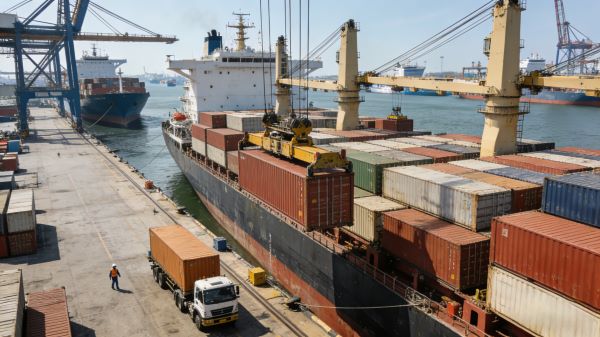
Registered NVOCCs hold independent qualification to issue HOUSE BILLS OF LADING and complete cargo booking with actual vessel carriers, forming exclusive authorization bindings with port terminals and customs authorities. When a cooperative NVOCC ceases operation without prior notice, all pre-registered cargo release permissions become invalid. Terminals and customs institutions strictly follow filed operator credentials, which blocks conventional pickup procedures and leads to continuous cargo storage and detention costs.
Multi Layer Contractual Liability Ambiguity
NVOCC business models involve multi-party contractual relationships covering shippers, forwarding firms, vessel carriers, and terminal operators. Forwarders should note that most generic logistics service contracts do not include targeted clauses addressing NVOCC operational suspension or unplanned exit scenarios. This structural gap creates unclear liability division and extends the cycle required for dispute resolution and loss recovery. According to UNCTAD 2024 maritime dispute review data, cases involving NVOCC default require moderately longer resolution cycles compared with conventional forwarder default incidents.
How Can Forwarders Distinguish NVOCC Default Liabilities From Regular Agent Risks?
Accurate liability classification lays a solid foundation for effective legal mediation, claim submission, and emergency cargo pickup after NVOCC service interruption. Clear risk differentiation helps forwarders adopt targeted disposal measures and avoid ineffective operational attempts.
Define legal subject responsibilities clearly: Licensed NVOCCs operate as contractual carriers rather than simple intermediary agents, which means they undertake direct liability for cargo transit safety, documentation authenticity, and scheduled delivery performance. A common mistake is classifying NVOCC abandonment as routine agency default, which may cause deviations in claim subject identification.
Distinguish bill of lading legal validity scope: NVOCC-issued HOUSE BILLS OF LADING carry independent contractual validity, separate from MASTER BILLS OF LADING released by vessel carriers. The recommended approach is to sort and verify all shipping documents to confirm dual cargo right bindings before initiating emergency pickup applications.
Sort multi-party contractual responsibility chains: Systematically organize contractual agreements among all participating parties, including cargo shippers, cooperative forwarders, default NVOCCs, and actual shipping carriers. Clarify segmented responsibilities for transit execution, fund settlement, and cargo release supervision to build structured claim logic.
Confirm industry supervision jurisdiction: Qualified NVOCCs complete public filing with maritime administrative authorities and industry supervision institutions. Their registered operational qualifications and credit records provide valid institutional basis for administrative mediation and emergency intervention.
What Pre-Claim Preparations Support Timely Emergency Cargo Pickup?
Sufficient pre-operation documentation and status verification synchronizes legal claim progress and on-site cargo pickup arrangements. Standardized preparation work reduces procedural delays and improves the pass rate of emergency cargo release applications at port terminals.
Compile complete NVOCC cooperation archives: Gather signed service contracts, electronic and offline payment vouchers, cargo booking confirmation records, and daily business communication archives. Integrated transaction and cooperation records serve as core evidence for proving contractual relationships and unperformed service obligations.
Apply for official operational abnormality certification: Submit applications to local maritime supervision departments to obtain official certification of NVOCC operational suspension or service interruption. Institutional certification is one of the commonly adopted credentials for port authorities to approve exception cargo pickup policies.
Calculate accumulated cargo detention losses dynamically: Count ongoing demurrage fees, bonded warehouse storage charges, and potential client compensation expenses caused by cargo stranding. According to Freightos Baltic Index 2024 operational monitoring data, real-time loss quantification supports reasonable claim amount formulation and structured dispute negotiation.
Verify cargo supervision status at terminals: Confirm whether stranded cargo is under routine warehousing, customs inspection, or temporary supervision status. Different cargo supervision states correspond to differentiated emergency approval procedures and legal remedy pathways.
How to Execute Compliant Urgent Pickup for Commercial Cargo After NVOCC Disappearance?
Standardized emergency pickup workflows enable forwarders to resume cargo handover under compliant premises while retaining complete rights for subsequent loss claims. This operational framework balances emergency efficiency and long-term legal benefit protection.
Submit emergency cargo release applications to port authorities: Prepare and submit application materials including NVOCC abnormality certification, cargo ownership proof, and enterprise qualification documents. The recommended approach is to elaborate commercial cargo operation demands and supply chain continuity requirements to secure priority procedural review.
Complete carrier side authorization adjustment procedures: Communicate with actual vessel carriers to terminate invalid pickup authorization bound to the default NVOCC and update qualified pickup entity information in terminal management systems. This step removes system-level obstacles for on-site cargo handover.
Supplement institutional guarantee documents for temporary release: Submit corporate guarantee letters or third-party liability guarantee materials in line with port and carrier requirements. Guarantee mechanisms are widely accepted in global mainstream ports for handling special emergency logistics scenarios.
Organize professional teams for on-site cargo inspection: Arrange experienced logistics operators to complete cargo quantity checking, packaging integrity inspection, and document signing confirmation on site. Complete handover records provide valid evidence for subsequent liability identification and loss settlement.
Implement incremental loss control strategies: Negotiate with port and warehouse operators for reasonable adjustment of overtime detention fees during emergency disposal cycles. A common mistake is focusing solely on cargo pickup progress while ignoring real-time cost control, which expands overall operational losses.
What Formal Maritime Claim Channels Are Available for NVOCC Default Losses?
Multiple standardized maritime remedy channels support forwarders in recovering economic losses triggered by NVOCC operational abandonment. Matching remedy approaches with dispute scale and cargo characteristics helps improve overall disposal efficiency.
Launch industry administrative mediation: Submit dispute mediation applications to local maritime bureaus and international logistics industry associations. Administrative mediation features moderate cost and streamlined procedures, suitable for resolving medium and small-value logistics default disputes.
Initiate maritime arbitration per contractual clauses: Most formal NVOCC cooperation agreements contain standardized arbitration clauses. Forwarders can initiate professional maritime arbitration following contractual provisions to obtain enforceable arbitration results for loss compensation.
Adopt judicial litigation for high-value disputes: For scenarios involving high-value commercial cargo losses and intentional default behaviors, formal maritime litigation serves as a feasible remedy method. According to ITC Trade Map 2025 cross-border trade dispute data, judicial intervention supports effective loss recovery in medium and large-scale logistics default cases.
Apply for industry credit supervision intervention: Report verified NVOCC default behaviors to maritime supervision institutions. Regulatory departments will incorporate abnormal operating entities into industry credit early warning lists, forming credit constraints to promote active dispute settlement.
How to Build Stable Long-Term NVOCC Risk Prevention Systems?
Proactive risk management mechanisms reduce the occurrence probability of cargo stranded incidents and legal disputes arising from NVOCC operational anomalies. Standardized partner management stabilizes cross-border logistics service reliability in fluctuating market environments.
Carry out rigorous pre cooperation qualification review: Verify NVOCC maritime operation certifications, regulatory filing records, and continuous market operation status before establishing formal cooperation relationships. Prior screening helps filter out entities with unstable operational conditions and incomplete qualifications.
Improve contractual default clause refinement: Add targeted clauses covering NVOCC service suspension, emergency cargo disposal authorization, and loss allocation standards in cooperation contracts. Forwarders should note that detailed contractual terms form the primary risk control barrier for NVOCC default scenarios.
Establish dynamic partner status monitoring: Conduct regular reviews of cooperative NVOCCs’ credit status, business adjustment dynamics, and service response stability. Timely capture abnormal operational signals to implement early risk intervention.
Deploy targeted maritime liability insurance: Purchase specialized insurance products covering NVOCC default risks and cargo detention losses. Insurance allocation helps disperse operational risks and reduce single-party loss pressure in emergency scenarios.
Build multi dimensional backup resource reserves: Reserve alternative NVOCC service providers and terminal operation resources for core shipping routes. Backup resource deployment supports continuous cargo operation when primary cooperative partners fail to fulfill service obligations.
Global freight forwarding enterprises engaged in commercial cargo shipping businesses can effectively mitigate supply chain disruptions by building systematic emergency disposal and risk control capabilities for partner defaults. Mature operational protocols surrounding How to Handle Cargo Pickup if Freight Forwarder Disappears allow forwarders to resolve NVOCC abandonment crises steadily, control incremental operational losses, and protect legitimate commercial interests in complex modern maritime trade systems.
Last
Securing cross border payments mapping how logistics networks to track affiliated overseas booking agent payment credit stability ratings
Cross-border payment security stands as the most critical core foundation for sustaining long-term, stable and mutually beneficial
Next
Recovering missing MASTER BILLS discovering how to handle abandoned cargo direct pickup if your assigned freight forwarder disappears
How to Handle Cargo Pickup if Freight Forwarder Disappears is a practical emergency operation framework for global freight forward

