




Destination customs clearance involves extensive upfront fee settlements and variable policy-driven costs, making reasonable control of ddp advance payment risk a core financial management task for forwarders delivering global DDP logistics solutions.
How Does Destination Customs Clearance Reshape DDP Advance Payment Risk Exposure?
Destination customs clearance covers declaration, duty settlement, and official inspection procedures in importing nations, which define the cost range and payment timeline of prepaid financial obligations under DDP trade terms.
Within standard DDP operational workflows, forwarders take full charge of destination clearance procedures and settle applicable tariffs and administrative charges prior to cargo release. Compared with EXW and FOB incoterms, DDP arrangements require logistics providers to cover all duty-related expenditures independently, resulting in continuous capital occupation throughout customs processing.
Customs clearance operations carry inherent uncertainties from cross-border tariff classification discrepancies, document verification delays, and routine customs audit activities. These variable operational factors extend capital lock-up duration for prepaid funds and increase the likelihood of reimbursement disputes with overseas buyers after shipment delivery.
A common mistake is the segregation of financial risk management and daily customs clearance operations. Many forwarding teams treat customs declaration as a purely operational process while overlooking its influence on capital recovery cycles, which gradually accumulates ddp advance payment risk in long-term cross-border service cooperation.
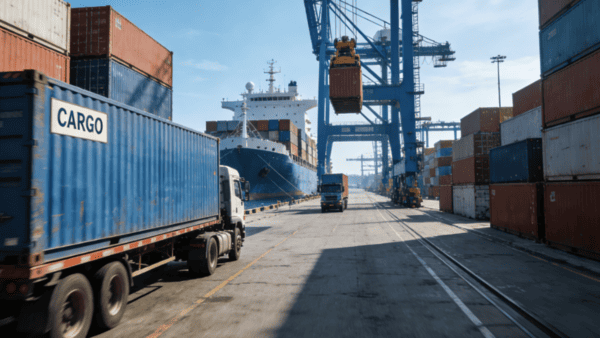
What Financial Vulnerabilities Arise During DDP Customs Clearance Operations?
DDP destination customs clearance generates distinct financial vulnerabilities for forwarding firms, arising from unstable clearance cycles, adjustable duty standards, and post-clearance commercial disputes in cross-border trade scenarios.
According to UNCTAD 2025 Review of Maritime Transport data, global seaborne trade expansion maintains a moderate growth rate amid rising geopolitical fluctuations and regional trade policy adjustments, leading to inconsistent customs supervision standards across major importing markets.
Evolving trade regulatory environments raise the frequency of temporary tariff adjustments, supplementary cargo inspections, and post-clearance duty reassessments. For forwarders undertaking DDP advance payment responsibilities, these unplanned regulatory changes produce unbudgeted incremental costs that prove difficult to transfer to cooperating clients in a timely manner.
Forwarders should note that most national customs authorities do not support instant refunds for overpaid or erroneously submitted import tariffs. Standard duty refund application procedures usually span multiple months, creating sustained cash flow pressure for forwarding enterprises during post-clearance follow-up work.
Inconsistent document review criteria across regional ports also trigger unpredictable clearance delays. Extended cargo detention periods do not waive forwarders’ advance payment liabilities, yet such disruptions often cause buyer dissatisfaction and passive resistance to reimbursement, aggravating overall financial exposure.
Why Are Targeted Financial Strategies Vital for DDP Clearance Risk Control?
Customized financial strategies standardize capital advance protocols and cost evaluation frameworks, helping forwarders avoid blind capital investment amid complex destination clearance scenarios.
Conventional DDP operational modes rely on empirical judgment to determine advance payment volumes and settlement timelines, without standardized pre-transaction financial evaluation systems. This extensive management model fails to adapt to ongoing fluctuations in global trade and customs supervision environments.
Structured financial strategies enable forwarders to quantify advance payment risks linked to customs clearance, implement differentiated capital control based on cargo categories and destination regions, and build stable risk early warning mechanisms.
The recommended approach is to integrate financial risk assessment into pre-clearance review workflows, rather than addressing capital-related issues only after disputes or financial losses occur. This proactive management model helps reduce overall risk exposure for corporate DDP service lines.
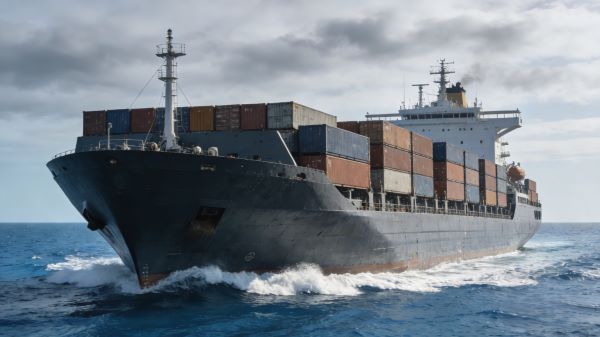
What Core Financial Strategies Reduce DDP Advance Payment Risk in Customs Clearance?
A set of practical financial measures covering pre-operation budgeting, in-process capital supervision, and post-clearance cost reconciliation helps mitigate advance payment risks throughout DDP destination clearance procedures.
Establish refined pre-clearance duty budgeting frameworks: Forwarders should develop standardized tariff calculation protocols based on destination tariff schedules, accurate HS code classification results, and prevailing local trade policies. Before initiating clearance and prepayment procedures, operational teams calculate detailed duty, tax and miscellaneous fee ranges and set aside reasonable risk provisions for potential policy changes, reducing capital occupation from underestimated operational costs.
Adopt tiered approval protocols for capital advances: A common mistake is applying identical approval procedures to all DDP clearance orders regardless of order scale. Forwarders can design tiered financial review benchmarks based on prepayment amounts, cargo duty brackets, and regional risk levels. Orders involving high-duty cargo and substantial capital advances require joint validation from operational and finance teams to regulate discretionary fund allocation.
Segregate service fees from duty advance funds in accounting: The recommended approach is to separate DDP logistics service charges and temporary tariff prepayments in corporate accounting systems and client contractual terms. Independent settlement clauses clarify that duty prepayments serve as temporary capital advances instead of operational service fees, creating clear foundations for fund recovery and dispute mediation.
Formulate graded capital occupation cycle standards: Forwarders can set unified capital occupation benchmarks for DDP clearance businesses with reference to average clearance durations of different destination regions. For orders with clearance delays exceeding preset cycles, teams initiate early client communication to confirm formal reimbursement arrangements and prevent uncontrolled long-term capital occupation.
Deploy third-party financial tools for risk diversification: Cooperation with professional trade financial institutions allows forwarders to access duty guarantee insurance and prepayment guarantee services. Such external financial tools offset partial capital losses triggered by policy adjustments or client reimbursement defaults, diversifying standalone operational risks for forwarding enterprises.
How to Align Financial Strategies with Customs Clearance Operational Rules?
Sustained risk mitigation requires effective alignment between financial control frameworks and on-site clearance operations, preventing disconnection between financial management and frontline business execution.
How to synchronize financial standards with regional clearance policies?
Independent tariff adjustment cycles and clearance supervision rules apply to different importing economies. Forwarders can build regional policy databases to update real-time tariff rates, duty refund regulations, and official inspection requirements across target markets.
According to WTO 2025 Mid-Year Trade Policy Review data, a large number of global economies have adjusted commodity tariff structures and clearance audit protocols in recent years. Timely policy updates support finance teams in formulating precise prepayment budgeting and risk control plans.
Forwarders should note that regions with frequent trade policy fluctuations demand rigorous financial oversight, including lowered single-order prepayment caps and elevated risk provision ratios, to adapt to unstable clearance environments.
How to connect clearance progress with fund settlement arrangements?
Forwarders can build interactive mechanisms linking clearance progress tracking and financial settlement planning. Real-time monitoring of declaration status, inspection procedures, and cargo release progress enables finance teams to evaluate capital recovery timeliness accurately.
For orders under customs audit or pending document supplementation, finance departments can suspend additional prepayment services for the same client to avoid cumulative financial risks. This dynamic linkage mode realizes synchronized management of business progress and capital safety.
What Long-Term Optimization Mechanisms Stabilize DDP Financial Risk Control?
Consistent reduction of DDP advance payment risks depends on normalized institutional optimization, which assists forwarders in maintaining stable profit margins amid repetitive daily clearance operations.
Forwarders can establish categorized client credit archives based on historical DDP clearance transaction records. Client groups with consistent reimbursement performance gain access to flexible prepayment terms, while entities with delayed payment records face tightened financial control thresholds.
The recommended approach is to conduct regular quarterly financial risk assessments for all ongoing DDP clearance businesses. Teams summarize abnormal cost fluctuations, overdue capital occupation cases, and policy-induced loss incidents to iterate and optimize internal budgeting and approval protocols.
Enterprises can also set up dedicated risk reserve funds for DDP businesses. These independent funds cover unexpected prepayment losses caused by sudden customs policy adjustments and unplanned clearance delays, maintaining stable overall corporate cash flow conditions.
Amid ongoing changes in global trade rules and customs supervision standards, destination clearance operations bring persistent financial uncertainties to corporate DDP businesses. Standardized and operationally compatible financial strategies help forwarders effectively regulate ddp advance payment risk, optimize corporate capital operation efficiency, and support steady long-term development of cross-border DDP logistics services.
Last
How automated freight payment verification tools stop billing discrepancies between forwarders and carriers
Persistent billing mismatches have long troubled settlement cooperation between freight forwarders and vessel carriers, and automa

Next
Adapting your accounting workflow to meet new regulations for freight payment verification and currency exchange
Modern cross-border freight logistics operations rely heavily on standardized financial compliance mechanisms, and freight payment

