




Standardized warehouse container stuffing procedures serve as a core operational standard to mitigate in-transit cargo loss and help freight forwarders reduce cargo damage claims drastically in global maritime supply chains. Seaborne containerized trade maintained steady growth in 2024 despite persistent Red Sea shipping disruptions and frequent route rerouting, bringing higher requirements for container loading operational standardization (UNCTAD, 2025).
According to the 2025 Review of Maritime Transport released by UNCTAD, global seaborne trade volume achieved a 2.2% year-on-year growth in 2024, with containerized cargo accounting for the largest share of cross-border commodity transportation. The World Shipping Council (WSC) 2024 official report indicates that improper container stowage and securing practices contribute to over 38% of non-catastrophic container cargo damage incidents worldwide. For global freight forwarders, cargo damage arising from substandard stuffing not only triggers financial compensation and order losses but also impairs long-term business credibility and client retention in the competitive logistics market. Adopting standardized warehouse stuffing guidelines enables forwarders to regulate field operations, minimize human errors, and effectively control cargo damage risks throughout container loading and transit.
Why does improper container stuffing lead to frequent cargo damage?
Improper container stuffing refers to non-compliant cargo stowage, lashing, and protective handling during warehouse container loading, which induces cargo extrusion, collision, and abrasion damage during ocean transportation. Most freight forwarding teams prioritize schedule coordination and document processing while underestimating the risk of irregular stuffing operations, resulting in avoidable cargo claims.
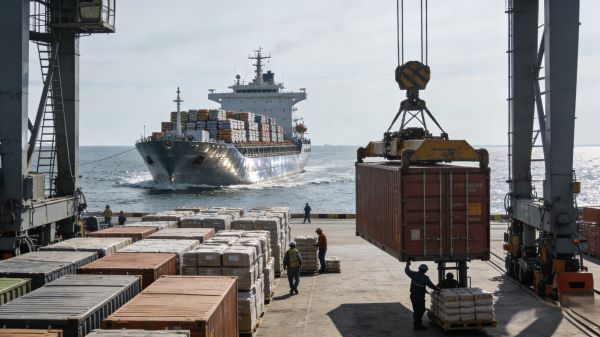
How operational negligence triggers transit cargo damage
A common mistake is that on-site warehouse operators pursue faster loading turnaround to meet tight vessel cut-off times at the cost of operational standardization. In daily warehousing operations, random cargo stacking, unregulated weight distribution, and omitted cushioning and securing measures are prevalent. These irregular practices do not cause visible defects in static warehouse environments. However, ocean containers undergo continuous vibration, pitching, and rolling during long-haul voyages. When vessels navigate rough sea zones or encounter adverse meteorological conditions, unrestrained cargo shifts frequently inside sealed containers, resulting in package rupture, commodity deformation, structural breakage, and total cargo loss in severe cases.
Why stuffing-related damage is controllable for forwarders
Forwarders should note that cargo damage caused by substandard stuffing is fully controllable, unlike uncontrollable maritime risks such as extreme storms and vessel mechanical failures. Most stuffing-related losses stem from unsynchronized operational standards and irregular manual operations rather than force majeure factors. For medium and small-sized freight forwarders, repetitive operational loopholes in container stuffing constitute the primary source of annual cargo compensation claims. The lack of unified standardized SOPs across different warehouse teams further exacerbates the recurrence of similar damage incidents.
Risks of unbalanced cargo weight distribution
Unreasonable weight distribution is another major cause of stuffing-induced cargo damage. Many frontline operators adopt irregular loading habits, such as placing heavy-density cargo on upper layers or concentrating all heavy goods on a single side of the container. This asymmetrical weight layout creates partial structural stress on container floors and side walls. During container lifting, stowage on vessel decks, and underway navigation, unbalanced pressure generates continuous tilting force, leading to cargo deformation, package cracking, and internal commodity damage. In addition, severely unbalanced cargo weight may affect container transportation stability and bring potential safety hazards to entire vessel stowage arrangements.
What pre-stuffing preparation checks can minimize hidden cargo damage risks?
Pre-stuffing inspection and preparation refer to systematic pre-loading verification work covering container condition, cargo packaging, and auxiliary tools, aiming to eliminate potential damage risks at the source. Industrial logistics data from 2025 shows that standardized pre-stuffing preparation can prevent more than 42% of conventional stowage-related cargo damage incidents.
Inspect container structural integrity and internal sanitation: Forwarders must conduct comprehensive pre-loading inspection on empty containers. Check internal surfaces for sharp burrs, rust protrusions, residual nail heads, and foreign debris that may cause cargo abrasion. Verify the tightness of container door seals, the intactness of waterproof rubber gaskets, and internal dryness to prevent moisture-induced cargo damage. Containers with deformed side panels, damaged floor planks, or failed waterproof performance should be rejected for cargo stuffing.
Verify cargo packaging quality and shipping mark compliance: The recommended approach is to conduct classified packaging inspection based on commodity characteristics and international shipping standards. Fragile goods require customized shockproof cushioning; sharp-edged metal cargo needs edge protection and anti-scratch wrapping; hygroscopic commodities must be packed with sealed waterproof materials. Operators also need to confirm the completeness and clarity of standard shipping marks, including fragile, keep dry, and this side up labels to guide compliant loading and handling.
Prepare professional stowage and cargo securing tools: A common mistake is relying solely on manual stacking without auxiliary securing equipment. Forwarders should equip cooperative warehouses with standardized loading accessories, including polyester lashing straps, container dunnage bags, corrugated partition boards, anti-slip rubber mats, and EPE buffer foam. These professional tools effectively fill cargo gaps, restrict lateral and longitudinal displacement, reduce friction between cargo units, and improve overall stowage stability.
Confirm cargo weight and volume parameters for stowage planning: Before formal stuffing, warehouse staff must accurately measure the gross weight, net weight, and external dimension of each cargo batch. Combined with the rated load capacity and internal space parameters of 20GP, 40GP, and 40HQ containers, formulate scientific stowage schemes. This operation avoids container overloading, irrational space occupation, and uneven weight distribution, ensuring basic cargo stability during transit.
How to implement standardized stacking rules to stabilize cargo status?
Standardized container stacking rules are scientific stowage specifications formulated according to cargo weight density, packaging hardness, and physical attributes, which determine the overall structural stability of loaded cargo. Standardized stacking is the core operational link to prevent cargo shifting and collision in ocean transportation and serves as a key risk control measure for warehouse stuffing management.
Adhere to high-density-bottom and lightweight-top stowage principle: Forwarders should note that heavy, hard-shell, and high-density cargo must be stowed flat on the container floor. Lightweight, fragile, and hollow commodities should be stacked on upper layers. This principle lowers the overall center of gravity of cargo piles, effectively preventing layer collapse and cargo crushing caused by vessel jolting and vibration.
Adopt compact stowage layout to eliminate redundant gaps: The recommended approach is to arrange cargo in neat rows and layered stacks to minimize gaps between cargo units and container inner walls. For irregular-sized cargo that cannot achieve close arrangement, fill residual gaps with inflatable dunnage bags or buffer fillers. Excessive internal gaps are the leading cause of cargo shaking and displacement during long-haul transportation, and gap filling significantly enhances integral stowage firmness.
Implement classified isolation for heterogeneous cargo: A common mistake is mixing different types of cargo without isolation, resulting in cross-contamination and collision damage. Hard sharp cargo such as hardware and mechanical components must be separated from soft-packaged goods via partition boards. Dust-prone, odorous, and pollutive commodities require independent sealed packaging and partitioned stowage to avoid contaminating adjacent cargo batches.
Control stacking height and bearing pressure per layer: Each type of cargo packaging has a definite pressure-bearing limit. Warehouse operators must formulate unified stacking height standards based on packaging structural strength. Excessive multi-layer stacking of carton-packaged fragile goods is prohibited to prevent bottom-layer carton compression deformation and internal commodity damage. Real-time flatness inspection of each cargo layer is required to avoid local overpressure and stack tilting.
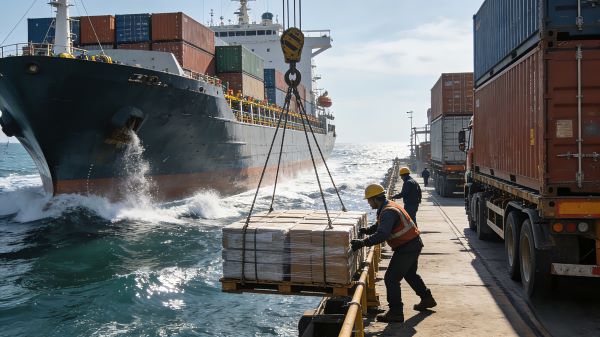
What cargo fixing and protection measures are essential for long-distance shipping?
Cargo securing and protective measures refer to post-stuffing reinforcement operations designed to resist external vibration, impact, and environmental erosion during transoceanic transportation. These targeted operations compensate for the stability defects of conventional stacking and reduce cargo damage risks in complex maritime environments.
Apply tension lashing for integral cargo fixation: After completing cargo stacking, adopt high-tensile polyester lashing straps to fix the entire cargo pile with container wall fixtures. Conduct horizontal and vertical cross binding at equal intervals to lock cargo positions, restrict multi-directional displacement, and prevent overall cargo sliding during vessel acceleration, deceleration, and jolting.
Deploy anti-slip and shockproof auxiliary protection: The recommended approach is to lay anti-slip rubber mats on container floors before loading to increase friction coefficients between cargo and container surfaces. For high-value fragile cargo, conduct full-wrap shockproof packaging with bubble film and arrange buffer foam at stack corners to absorb transit vibration and impact force.
Strengthen moisture and salt-fog protection for maritime transit: A common mistake is ignoring the high-humidity and salt-fog maritime environment. Long-distance ocean voyages expose containers to persistent humid and corrosive atmospheric conditions. Forwarders should lay waterproof tarpaulins inside containers, wrap hygroscopic cargo with waterproof films, and place industrial desiccants in reserved gaps to reduce internal humidity and prevent mildew, rust, and moisture damage.
Reinforce container door gaps and marginal cargo areas: The container door zone is the weakest link in cargo securing. Operators must fill the gap between the last cargo row and container doors with elastic dunnage bags to avoid cargo extrusion on door panels and seal failure. Discrete single cargo units need independent fixing to prevent collision damage in marginal container spaces.
How to establish standardized post-stuffing inspection and filing mechanisms?
Post-stuffing inspection and archival management are standardized closed-loop procedures for loading quality verification and operational evidence retention. Sound post-loading management helps forwarders trace damage causes, clarify liability attribution, and defend against unreasonable cargo damage claims.
Conduct full stability inspection before container sealing: Forwarders should note that warehouse supervisors must perform comprehensive quality inspection after loading and reinforcement completion. Inspect items include cargo stack stability, fastening tightness of all securing tools, adequacy of gap filling, and intactness of fragile cargo protection measures. All potential risks must be rectified before container sealing to eliminate hidden transit damage hazards.
Retain standardized visual records of full loading procedures: The recommended approach is to establish complete visual archives for each stuffing operation. Capture panoramic photos of empty container interiors, layered cargo stacking status, and final securing effects, and record short videos of key operational steps. These standardized records serve as valid evidence for cargo damage liability identification and claim arbitration.
Build operational filing and data statistical systems: A common mistake is neglecting daily operational data accumulation and retrospective analysis. Forwarders should classify and file stuffing records, cargo protection schemes, inspection reports, and visual materials of each shipment. Regularly summarize cargo damage cases caused by substandard stowage, sort out frequent operational errors, and iteratively optimize internal stuffing SOPs.
Organize regular professional training and operational assessment: Establish a long-term training mechanism for warehouse loading teams, focusing on standardized stowage specifications, professional cargo protection skills, and risk identification capabilities. Conduct regular operational skill assessments to standardize staff behaviors, reduce human errors, and improve the overall professional level of on-site loading operations.
In the dynamic global freight market with evolving maritime risks, standardized warehouse container stuffing management has become a vital component of forwarders’ supply chain risk control capabilities. Comprehensive pre-loading verification, compliant stacking operations, professional cargo securing solutions, and complete post-loading supervision systems work together to eliminate stowage-induced cargo risks and help freight forwarders reduce cargo damage claims drastically. By implementing these standardized guidelines in daily operations, freight forwarding enterprises can effectively cut operational loss costs, improve container transportation safety coefficients, and strengthen core service competitiveness in global cross-border logistics cooperation.
Last
Building a bulletproof container cargo damage evidence chain to secure full marine insurance payouts
A robust and complete container cargo damage evidence chain constitutes the fundamental prerequisite for freight forwarders to lod

Next
Training global operations managers to control transportation risks when moving high value hazardous materials
Targeted professional upskilling for global logistics operations managers builds standardized operational awareness and technical

