




Logistics Dispute Resolution for co loader conflicts has become an essential operational competency for global freight forwarders amid growing supply chain complexity and persistent maritime market volatility. Most international forwarding firms rely on co loader partnerships to expand service networks, consolidate vessel capacity, and optimize cross-border transport costs. According to UNCTAD 2025 maritime industry statistics, collaborative disputes between peer forwarder co loaders account for a substantial share of mid-stream operational conflicts in container shipping. Implementing standardized contractual dispute resolution frameworks enables forwarders to mitigate collaborative risks and sustain stable joint operational workflows.
What are co loader disagreements in freight forwarding operations?
Co loader disagreements refer to commercial and operational conflicts arising between partnering freight forwarders during joint vessel booking, capacity pooling, and cross-border cargo execution. These inter-forwarder conflicts occur in mid-stream logistics links and differ fundamentally from conventional shipper-carrier service disputes.
What core features distinguish co loader disputes from other logistics conflicts?
The majority of co loader frictions derive from undefined collaborative protocols rather than deliberate contractual breach. Typical conflicts cover profit distribution, operational liability apportionment, inconsistent procedural standards, and ad hoc cost adjustments in joint container freight operations.
A common mistake is that many forwarders treat co loader partnerships as informal relational collaborations without formal binding agreements. Verbal arrangements and casual confirmations lack legal enforceability, triggering frequent operational frictions during market fluctuations and service anomalies.
Forwarders should note that co loader cooperation involves dual-party operational participation and mutual benefit correlation. Unresolved mid-stream disputes undermine cargo delivery stability and erode long-term inter-firm collaborative credibility within the global forwarding ecosystem.
Why do standardized contractual frameworks support co loader dispute settlement?
Formalized contract dispute resolution frameworks establish unified procedural guidelines and liability adjudication benchmarks for co loader disagreements. They fill regulatory gaps inherent in loose, relationship-based collaborative models across the forwarding industry.
How do formal frameworks mitigate long-term collaborative operational risks?
The global maritime trade sector has entered a low-growth, high-volatility cycle in 2025. According to UNCTAD 2025 Review of Maritime Transport, global seaborne trade volume achieved 2.2% growth in 2024 but is projected to slow to merely 0.5% growth in 2025, driven by geopolitical route adjustments and rising operational costs.
Intensified market competition and shrinking profit margins render cost-sharing and revenue-allocation disputes between co loaders far more frequent than in previous stable market cycles. Informal cooperation structures can no longer balance bilateral interests amid market turbulence.
The recommended approach is to adopt specialized contractual frameworks to unify dispute judgment criteria, avoid subjective negotiation deadlocks, and ensure conflict handling follows consistent operational and legal logic.
Standardized Logistics Dispute Resolution protocols reduce repetitive collaborative frictions, cut internal coordination overhead, and improve the overall execution efficiency of joint freight projects.
What mainstream co loader disputes prevail in 2024–2025 freight operations?
Current co loader disputes exhibit distinct market-driven traits, closely associated with global route rerouting, freight rate volatility, and evolving port operational protocols. Categorizing prevalent dispute types supports targeted contractual clause optimization.
What key conflict categories dominate inter-forwarder co loader cooperation?
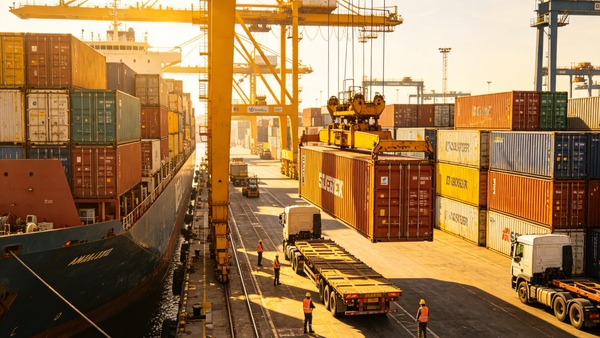
Based on 2024–2025 global forwarding operational cases and maritime dispute records, co loader conflicts concentrate in five core operational scenarios. Most disputes stem from ambiguous pre-cooperation terms and inconsistent post-incident disposal mechanisms.
Cost and profit allocation disputes: Geopolitically driven Red Sea rerouting and ongoing Panama Canal capacity constraints have increased average shipping distances and operational costs since 2024. Co loaders frequently dispute the apportionment of emergency surcharges, container demurrage and detention fees, and joint booking profit ratios.
Cargo liability apportionment conflicts: When cargo damage, quantity shortage, or schedule delay occurs during joint carriage, partnering forwarders often contest link-specific liability attribution. Vague liability segmentation leads to mutual buck-passing and delayed dispute finalization.
Operational standard inconsistency disputes: Divergent internal SOPs between co loaders cause mismatches in document submission, cargo handover, booking confirmation timelines, and exception handling, generating collaborative friction and cargo scheduling disruptions.
Capacity resource adjustment disagreements: Tight vessel capacity and frequent route revisions in 2025 make temporary capacity swapping and order reassignment routine in co loader collaboration. Disputes emerge rapidly without preapproved written adjustment protocols.
Collaborative breach disputes: Some forwarders unilaterally revise cooperation strategies in response to spot market freight rate fluctuations. Unilateral cancellation of joint booking plans results in idle capacity losses and subsequent compensation disputes.
Forwarders should note that most co loader disputes are predictable and preventable with rigorous contract design. Industry operational data indicates that comprehensive pre-cooperation contractual agreements mitigate the majority of routine collaborative frictions.
What contractual loopholes commonly trigger co loader operational conflicts?
Defective and incomplete cooperation contract provisions are the root cause of recurring co loader disagreements. Most informal inter-forwarder cooperation agreements lack structured dispute resolution mechanisms and enforceable liability clauses.
What structural flaws exist in mainstream co loader contract templates?
Many forwarders adopt simplified co loader agreements that prioritize short-term revenue distribution while neglecting risk allocation and liability restraint mechanisms. This imbalanced contract design creates unequal rights and obligations throughout long-term collaboration.
Absent dynamic cost adjustment clauses: Fixed static cooperation agreements fail to accommodate volatile 2025 maritime market conditions, lacking adjustable mechanisms for spot freight rate fluctuations and ad hoc port-level surcharges.
Unspecified segment-based liability benchmarks: Generic templates do not segment liabilities across booking, carriage, port operation, and destination delivery links, resulting in ambiguous responsible parties during operational anomalies.
Insufficient default restraint provisions: Agreements lack quantified penalty standards for unilateral cooperation termination, capacity abandonment, and delayed operational information synchronization, lowering default opportunity costs.
Vague dispute resolution procedural terms: Informal arrangements fail to define negotiation timelines, evidentiary submission standards, and third-party mediation channels, easily leading to prolonged dispute deadlocks.
Undefined cooperation exit mechanisms: Missing standardized termination clauses for abnormal cooperation suspension hinder timely dissociation from high-risk co loader partnerships.
A common mistake is that forwarders over-rely on long-term business trust while neglecting institutionalized contractual constraints. Market volatility consistently amplifies template loopholes, escalating minor operational frictions into formal commercial disputes.
How to build a robust contractual framework for co loader dispute resolution?
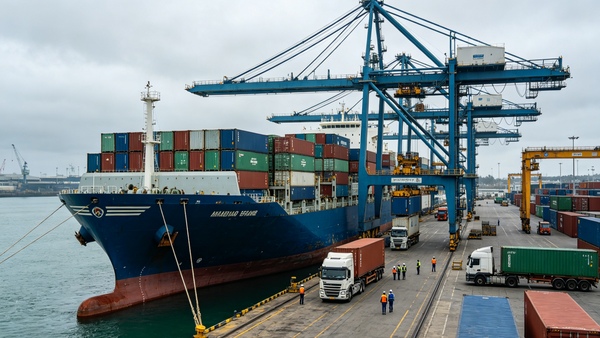
A specialized co loader dispute resolution framework covers pre-cooperation constraint, in-process operational supervision, and post-dispute remedy, forming a closed-loop risk control system for joint forwarding businesses.
What core modules constitute a reliable co loader contractual framework?
The recommended approach is to construct a multi-dimensional contractual system centered on liability clarification, procedural standardization, and default restraint. This structured framework enhances the enforceability of Logistics Dispute Resolution in inter-forwarder collaborative scenarios.
Standardized cooperation scope definition: Precisely define joint business boundaries including applicable trade lanes, permissible cargo categories, capacity pooling modes, and unified service quality benchmarks. Clarify exclusive and non-exclusive cooperation boundaries to eliminate cross-business conflicts.
Dynamic cost and profit allocation mechanisms: Formulate floating distribution rules linked to real-time spot market freight indices. Explicitly define responsible parties and proportional ratios for temporary surcharges, port miscellaneous charges, and unplanned operational losses.
Segmented link-based liability clauses: Divide operational liabilities across order intake, booking confirmation, terminal handover, ocean carriage, and destination delivery links. Specify the exclusive responsible party for anomalies occurring within each operational segment.
Hierarchical multi-stage dispute procedures: Establish tiered settlement workflows including bilateral amicable negotiation, industry association mediation, and commercial arbitration. Set clear time limits for each stage to avoid procedural delays.
Quantified default liability provisions: Define measurable compensation standards for unilateral breaches, including arbitrary cooperation cancellation, delayed data synchronization, and substandard service execution, to elevate default costs.
Periodic contract review mechanisms: Agree on regular operational reviews and contractual iteration cycles. Dynamically adjust clause details to align with evolving market conditions and practical operational demands.
Forwarders should note that co loader contractual frameworks must balance practicability and comprehensiveness. Overly complex clauses increase administrative overhead, while oversimplified terms fail to deliver effective risk restraint.
What standardized workflows resolve existing co loader disagreements efficiently?
Structured dispute handling workflows enable forwarders to mitigate conflict escalation, contain financial losses, and preserve sustainable co loader partnerships. Process standardization is critical for efficient post-incident remedy.
What step-by-step workflow adapts to inter-forwarder dispute scenarios?
Unlike traditional shipper-forwarder service disputes, co loader conflicts prioritize bilateral benefit balance and operational standard alignment. Disposal workflows must uphold contractual compliance while maintaining mutually beneficial collaboration.
Consolidate complete evidentiary chains promptly: Gather signed cooperation agreements, formal business correspondence, booking confirmations, settlement invoices, and anomaly records to form valid evidence for dispute adjudication.
Conduct targeted bilateral negotiation: Adopt solution-oriented communication attitudes, pinpoint core contradictions based on contractual terms, and distinguish subjective intentional breaches from objective market-driven operational exceptions.
Implement flexible benefit coordination strategies: For market-induced disputes without subjective malicious intent, propose reasonable loss-sharing and profit-adjustment schemes to stabilize cooperative relationships.
Engage third-party industry mediation: Introduce neutral logistics industry institutions to mediate deadlocked disputes, delivering professional, industry-aligned disposal suggestions that balance bilateral interests.
Initiate formal legal remedy procedures: For repeated defaults and disruptive malicious behaviors, launch contractual arbitration procedures to safeguard legitimate corporate economic interests.
A common mistake is adopting extreme disposal attitudes, either making excessive concessions to retain partnerships or implementing full confrontational strategies. Unbalanced handling leads to cumulative financial losses or irreversible partnership breakdowns.
How to prevent co loader disputes via standardized daily management?
Proactive routine operational management outperforms passive post-dispute resolution. Institutionalized collaborative mechanisms reduce the overall occurrence probability of co loader disagreements fundamentally.
What daily management norms enhance co loader cooperation stability?
Against the volatile 2025 global maritime trade landscape, forwarders must optimize full-cycle co loader management. Proactive risk control effectively reduces subsequent Logistics Dispute Resolution workload and operational pressure.
Enforce formal written contract protocols: Eliminate informal verbal cooperation modes. Sign standardized formal agreements for all co loader partnerships to clarify bilateral rights, obligations, and unified dispute settlement rules.
Establish real-time information synchronization channels: Build fixed daily and weekly communication mechanisms to synchronize capacity adjustments, route changes, and cost fluctuations, eliminating information-asymmetry disputes.
Unify cross-party operational execution standards: Align document production, cargo handover, booking operations, and exception disposal SOPs with co loader partners to reduce process-divergence frictions.
Implement dynamic cooperative credit management: Establish credit files for co loader partners, record historical defaults and dispute records, and adjust cooperation scales and modes based on credit performance.
Iteratively optimize contractual clauses: Summarize recurring cooperative disputes, feed practical problems into contract iteration, and continuously improve the completeness and adaptability of cooperative frameworks.
Forwarders should note that stable co loader cooperation relies on standardized institutional systems rather than personal business relationships. Institutionalized management adapts to long-term market changes and sustains consistent collaborative stability.
Conclusion
Co loader disagreements represent prevalent collaborative conflicts in global joint forwarding operations, testing the contractual standardization and risk response capabilities of freight forwarding enterprises. As outlined in the UNCTAD 2025 Review of Maritime Transport, the global maritime sector faces slowed trade growth and persistent supply chain turbulence, rendering informal co loader cooperation models increasingly unsustainable. Forwarders must replace experience-based relational cooperation with standardized contractual systems covering pre-emptive prevention, in-process supervision, and post-dispute remedy. Systematic framework construction and standardized daily management effectively reduce co loader conflict frequencies, control collaborative operational losses, and stabilize joint operation benefits. Mature, institutionalized Logistics Dispute Resolution systems serve as the core safeguard for forwarders to maintain long-term stable co loader partnerships and achieve sustainable cross-border logistics business development.
Last
How small forwarders survive volatile peak season rates on major sea freight trade lanes
Peak Season Sea Freight Tips deliver practical, cost-effective operational tactics for small and medium-sized freight forwarders t
Next
How breakdown formatting in a freight forwarder quotation builds trust with international buyers
Freight Forwarder Quotation Tipshelp logistics practitioners deliver transparent, credible pricing documents and foster stable lon

