






In cross-border logistics, the Bill of Lading (B/L) is not just a transport document, but a core legal instrument. Every word on it matters. A seemingly minor unit error can cascade into customs detention, surging costs, and even the breakdown of long-term partnerships.
This real-life case unpacks how a one-word difference — “LBS” vs. “KGS” — escalated into a costly international logistics dispute, and what it reveals about risk control in daily operations.
Case Background: Routine Cooperation with Hidden Risks
Company A and Company B had been long-term partners in the cross-border logistics sector.
In April 2025, they entered into another routine transaction: Company B was appointed to handle an export shipment on behalf of Company A.
Cargo: One 20’ container of garments
Route: Salt Lake City, USA → Beirut, Lebanon
Incoterm: EXW
Carrier: Mediterranean Shipping Company (MSC)
Correct gross weight: 15,800 KGS
All booking and container details were complete and accurate.
At the time, Company B also held an outstanding receivable of USD 9,456.44 against Company A from three unpaid invoices. Unexpectedly, it was this very shipment that turned the receivable into the core of a prolonged dispute.
The Incident: A Container Held Up by “Pounds”
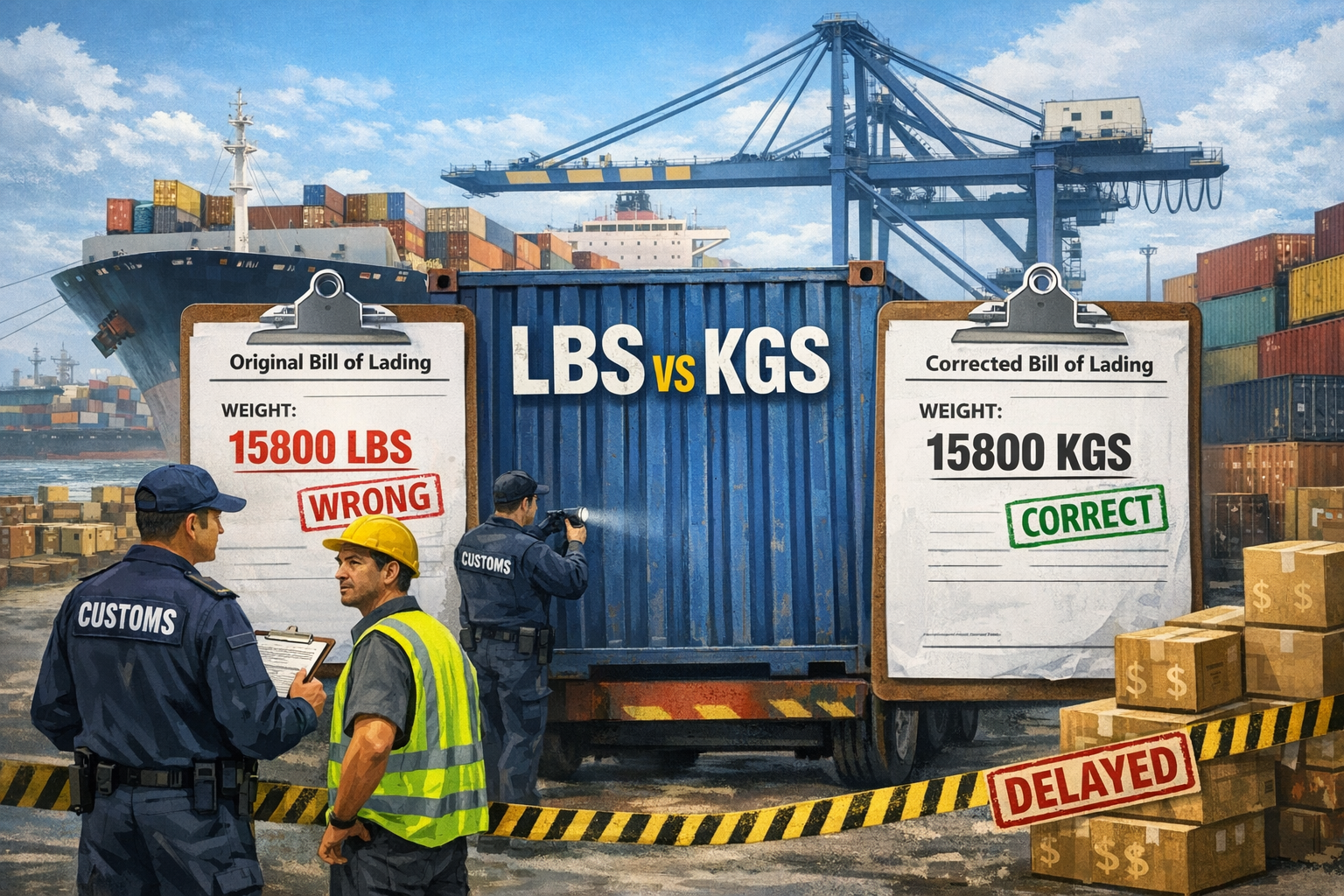
In June 2025, when Company B issued the Master Bill of Lading, the gross weight was mistakenly recorded as “15,800 LBS” instead of KGS.
Meanwhile, the House Bill of Lading correctly stated “15,800 KGS.”
Under mandatory maritime standards, the gross weight on a Master B/L must be declared in kilograms (KGS). This oversight planted a critical risk in the customs clearance process.
On 11 August 2025, the container arrived at Beirut Port. When Company A collected the Delivery Order (DO), they discovered the declared weight had become 7,166.7 KGS — the system had automatically converted 15,800 LBS into kilograms, creating a discrepancy of nearly 8.7 metric tons from the actual weight.
Lebanese Customs immediately detained the container and initiated a mandatory inspection.
Company A urgently contacted Company B. Although Company B paid the amendment fee and issued a corrected B/L on 19 August, MSC responded clearly:
“The amended Bill of Lading cannot modify the already-declared manifest. It may only be used to mitigate penalties. The discrepancy between the Delivery Order and the manifest cannot be rectified.”
As a result, the container was held for 30 days, finally clearing customs on 13 September. The delay generated verified additional costs, supported by official documents from customs and the carrier:
- Customs penalty: USD 2,800
- Demurrage: USD 3,400
- Port and storage charges: USD 1,200
- Total: USD 7,400
More damaging still, a key downstream client — previously shipping around 30 consignments per month — suspended cooperation entirely due to the delay.
Responsibility Dispute: 45 Days of Negotiation
Following the incident, Company A formally notified Company B.
While Company B acknowledged the amendment and paid the correction fee, the carrier’s position left no room to reverse the manifest error.
Negotiations over the USD 7,400 in additional costs quickly stalled:
- Company B initially offered to cover USD 2,000
- Later increased the offer to USD 3,000
In October 2025, Company A escalated the case to Platform C for dispute resolution. After reviewing the evidence, the platform concluded:
- Company B bore operational fault,
- Company A failed to conduct sufficient document verification,
- Both parties shared responsibility, with a recommendation to split the costs evenly.
At that point, a new shipment from Company A was about to arrive. To avoid further demurrage and operational losses, both parties opted for a pragmatic settlement:
- Company A offset USD 3,000 from the outstanding receivable of USD 9,456.44
- The remaining USD 6,456.44 was paid to Company B
- Upon receipt, Company B immediately released the B/L for the new shipment
What could have become a lose-lose dispute was temporarily resolved through compromise.
Risk Control Takeaways: No Detail Is Too Small in Cross-Border Logistics
1.The Bill of Lading is a legal document.
Core data — especially weight and units — must be reviewed through multiple layers of verification. Industry standards (e.g. KGS for ocean freight) should never be overridden by habit or assumption. One careless word can trigger a chain reaction.
2.When liability is disputed, prioritize preventing further losses.
Handling newly arrived cargo first helped both parties avoid escalating costs. Fixating on historical disputes often creates new ones; pragmatic decision-making protects both sides.
3.Set-offs and debt offsets must be clearly documented.
Any deductions arising from disputes should specify the amount, cause, and settlement terms in writing. Ambiguity only breeds secondary conflicts and turns simple settlements into prolonged battles.
Cross-border logistics involves complex chains and multiple stakeholders. Risks often hide in the smallest details.
A single reminder, a careful review, or a written confirmation can become the firewall that prevents major losses.
May this case serve as a practical reminder for industry professionals — and help ensure every shipment clears customs smoothly and reaches its destination safely.

Last
Beware: The Real Risks Behind FOB Misuse in Rail Transport
How can a single “FOB Shanghai” mismatch derail cooperation on the spot? In non-ocean transport scenarios, casually applying FOB i

Next
Post-Review of an All-in Price Dispute: How the Platform Determined Liability for the USD 800 EIS Charge
A recent Middle East route charging dispute handled by the platform has brought long-standing risk control pain points in the frei

