






“It was the client who asked us to pick up the container, yet when the truck arrived at the factory, they refused to load. Now we are stuck with a seven-thousand-dollar no-load fee?”
Recently, the platform has received a series of operation disputes under EXW terms, with most cases centered on responsibility for empty container pickup and the loading process. This has sounded a clear risk alert for all freight forwarders. This case provides a typical example, helping us break down the responsibility boundaries under EXW and extract key risk-mitigation practices for special equipment shipments.
I. Case Review: A Tarpaulin That Led to a USD 7,000 Loss
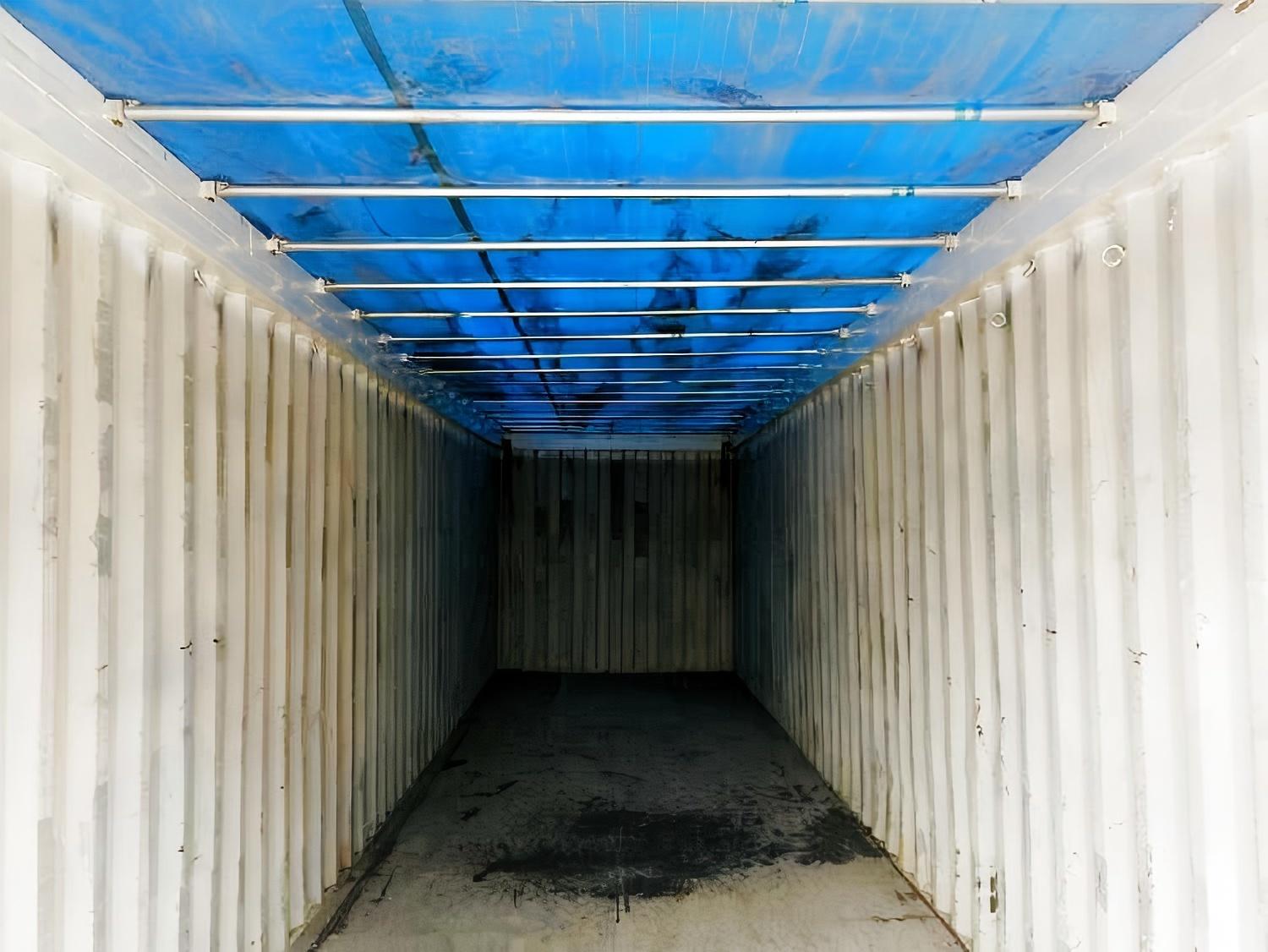
The root cause of the dispute was the parties’ misunderstanding of responsibilities under EXW (Ex Works). A freight forwarder in Indonesia (B) entrusted a UK forwarder (A) to handle a shipment of oversized equipment requiring two 40' open-top containers. After picking up the empty containers, A shared photos with the shipper, which clearly showed a tarpaulin covering the top of the container. The shipper did not raise any objections.
However, on the loading day, an unexpected problem arose. The shipper refused to load, claiming the tarpaulin had not been removed and therefore the oversized equipment could not be lifted into the container. The shipper also stated that they had neither the authority nor the capability to remove the tarpaulin, and they were unwilling to assume any operational risk.
Neither party accepted responsibility for removing the tarpaulin, resulting in the containers being returned empty and the incurrence of trucking no-load fees, chassis fees, and other costs totaling USD 7,000. A sharp dispute followed:
Forwarder A argued that under EXW, loading responsibilities rest with the shipper and that A had fulfilled its obligation by disclosing the container condition.
Forwarder B countered that the freight forwarder is responsible for ensuring that the equipment is suitable for the cargo, especially since the shipper had no ability to remove the tarpaulin.
The platform ruled that the USD 7,000 loss should be borne entirely by Forwarder A. Under the internationally accepted interpretation of EXW, a shipper’s responsibility is limited to making the goods available at the specified location. EXW does not include loading, securing, stuffing, or any additional services. In other words, the buyer or its agent must ensure the transport equipment is suitable and must arrange labor and additional work required for loading or lifting. The shipper has no obligation to guarantee that their cargo matches special equipment specifications.
Although the ruling may seem counterintuitive, it precisely highlights a common risk blind spot in freight forwarding operations.
II. Risk Insights: Three Non-Negotiable Rules for Special Equipment Operations
This case offers an important lesson for freight forwarders, especially when handling oversized cargo or special containers such as open-top or flat-rack containers. The following three rules must be strictly observed:
1.Always obtain written confirmation of loading and unloading conditions
Sending photos is not enough. Forwarders must obtain written confirmation from the shipper, depot, and carrier, clearly specifying the container condition (for example, whether tarpaulins or removable parts may remain in place) and assigning responsibility for loading and unloading operations. A standardized “Special Equipment Handling Confirmation” is strongly recommended to clearly define each party’s obligations and eliminate ambiguity.
2.Proactively assess container–cargo compatibility
A freight forwarder cannot simply execute booking instructions. You must understand the cargo dimensions, weight, and loading requirements, and confirm with the carrier the technical parameters of the special equipment (such as the maximum opening size and weight limits for an open-top container). This prevents loading failures caused by mismatched equipment.
3.Clearly define responsibility for additional handling
The service agreement must include a dedicated clause specifying responsibility and cost allocation for special equipment-related operations such as tarpaulin removal or flat-rack reinforcement. In this case, if Forwarder A had formally defined responsibility for tarpaulin removal at the outset, the USD 7,000 loss could have been avoided.
III. The Loading Stage: Forwarders Should Be Risk Managers, Not the Party Held Responsible
Although EXW clearly assigns loading responsibility to the buyer, this does not mean the forwarder can operate hands-off. Our role is to coordinate and provide risk oversight, not to physically load the cargo. Two points are essential:
1.Forwarder responsibilities: proactive coordination and full-process confirmation
Confirm loading times and on-site conditions in advance (availability of cranes, forklifts, lifting points, etc.). If the shipper lacks loading capacity, the forwarder should assist in contacting third-party loading teams andensure the buyer bear the cost. If loading issues arise due to container–cargo mismatch, the forwarder must immediately coordinate alternative solutions (such as arranging suitable equipment or requesting the depot to handle component removal).
2.Forwarder responsibility boundaries: no responsibility for loading failures caused by factors outside their control
If loading delays are caused by the shipper for not preparing the cargo on time, or if cargo packaging is unsuitable, the forwarder is not liable. However, this requires full documentation—communications, confirmations, and written acknowledgments—to demonstrate that the forwarder fulfilled all coordination duties.
IV. Conclusion: In EXW Operations, Written Confirmation Is the Most Effective Risk-Mitigation Tool
International freight forwarders are not just service providers but also risk managers. Through advance confirmation and thorough documentation, risks can be minimized. Even when disputes arise, proper documentation ensures the forwarder can respond confidently and avoid being unfairly held responsible.

Last
DDP Clearance Delay and Storage Fee Dispute: Risk Alert
Under DDP terms in cross-border logistics, freight forwarders frequently encounter disputes over storage charges arising from cust

Next
The Most Dangerous Step in FOB Shipments: The Overlooked Pitfall of Delivery Without Original Bills of Lading
In cross-border logistics, long supply chains and multiple stakeholders mean that significant risks often hide in the seemingly si

