


According to recent industry analysis, shipping alliances continue to dominate the world's major container trades,forcing their control of global container shipping capacity, while independent carriers are increasingly confined to niche roles.
On the major east-west trade routes, including Asia-Europe transpacific, and transatlantic trades, the alliances' networks now account for more than 80% of the deployed capacity, highlighting the increasing concentration of market power the world's major liner groups. Independent operators account for less than one-fifth of the total capacity on these routes, excluding Mediterranean Shipping.
This dominance is pronounced in the transpacific trade, where the alliances control nearly 85% of the market, leaving about 15% for independent operators, which mainly focus on services, charter tonnage, or short-term market opportunities.
Alliances shape the landscape
The current landscape of container shipping is defined by three major all:
The Ocean Alliance (CMA CGM, COSCO Shipping, Evergreen Marine, OOCL), which remains the largest in terms of size and coverage;
The 2M Alliance (comprised of Maersk and Hapag-Lloyd), which focuses on hub-and-spoke and schedule reliability;
The THE Alliance (ONE, Yang Ming, Hyundai Merchant Marine), which plays a significant role in the transpacific and intraAsia trades.
Although Mediterranean Shipping operates independently, its massive size, accounting for more than 20% of global container shipping capacity, makes it effectively comparable to aforementioned shipping alliances in terms of competitive influence.
Independent operators struggle to scale up
In the long-haul trades, independent carriers continue to face structural disadvantages as size, network density, and cost efficiency are critical in these trades. Analysts say that while some operators have maintained a foothold by deploying flexibly, specializing in cargo transport or focusing on regional markets, competing against the alliance networks on an ongoing basis remains challenging.
"Size and network breadth have become the deciding factors on the major trade routes" noted an industry analyst. "Independent operators can still compete but mainly outside of the core east-west routes or through differentiated services."
Impact on sh and regulators
For shippers, the dominance of shipping alliances provides greater port coverage and more frequent sailings but also raises concerns over reduced competition, capacity control, and freight volatility. Regulators in key markets are expected to continue closely monitoring alliance behavior, particularly against the backdrop of soft demand and ongoing geopolitical turmoil, as carriers adjust their network.
As 2026 approaches, shipping alliances are poised to maintain their dominance on the world's largest container trades – forcing independent carriers to either go the route ofization, seek cooperation, or further integrate in an increasingly concentrated liner shipping market.

Last
An Old Cargo Ship Ran Aground in Turkish Waters After Encountering a Strong Storm!
On December 30, the cargo ship "White Line" arrived near the Turkish port of Marmara and anchored At around 14:30 local time on Sa
Next
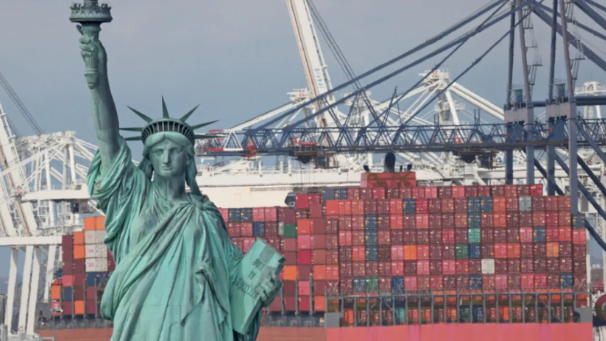
New York and New Jersey Ports Maintain the Second Busiest Container Port Position in the United States.
In November 2025, the Port of New York and New Jersey (PANYNJ) remained the second busiest gateway for container throughput in the

