




For global freight forwarders, effectively managing congestion is a critical component of optimizing Sea Freight from Shanghai to Long Beach. This key trans-Pacific route connects China’s busiest container port to one of America’s primary West Coast gateways, making congestion mitigation essential for operational efficiency.
What Is Congestion in Sea Freight from Shanghai to Long Beach?
Congestion in Sea Freight from Shanghai to Long Beach refers to the buildup of vessels, cargo, or operational bottlenecks at either port or along the route, leading to delays in loading, unloading, or transit. It impacts every stage of the shipping process, from port berthing to inland delivery.
This congestion manifests in various forms, including vessel waiting times at berths, cargo stacking delays in terminals, and bottlenecks in inland transport connections. Unlike temporary disruptions, congestion is often a recurring issue driven by high cargo volumes, infrastructure limitations, and operational inefficiencies.
Forwarders should note that congestion is not a one-dimensional problem; it affects both Shanghai and Long Beach ports differently, requiring tailored strategies for each location. Ignoring these differences can lead to prolonged delays and increased costs for both forwarders and their clients.
Why Is Congestion Management Critical for Forwarders on the Shanghai-Long Beach Route?
Congestion management is critical for forwarders handling Sea Freight from Shanghai to Long Beach because it directly impacts transit times, operational costs, and client satisfaction in a route marked by high cargo volumes and frequent bottlenecks.
How Does Congestion Affect Transit Times and Client Expectations?
Congestion frequently extends transit times for Sea Freight from Shanghai to Long Beach, creating gaps between expected and actual delivery dates. Clients, especially retail and manufacturing businesses, rely on predictable timelines to plan production, inventory, and sales cycles.
According to Port of Long Beach 2026 (Q1) data, congestion-related delays on the route averaged 4 to 8 days in early 2026, a significant increase from the 2 to 4 days recorded in 2025. These delays can disrupt client supply chains, leading to lost sales and damaged trust.
A common mistake is failing to communicate congestion-related delays proactively to clients. Forwarders who wait until delays are unavoidable risk losing client confidence, as transparency about potential disruptions is often as important as mitigating the delays themselves.
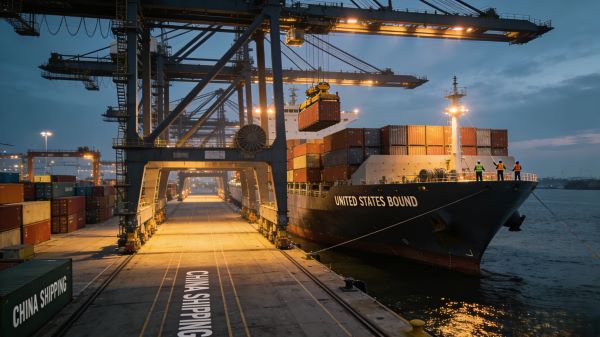
What Cost Risks Are Associated with Unmanaged Congestion?
Unmanaged congestion leads to substantial financial risks for forwarders, including demurrage and detention fees, storage charges, and increased labor costs. These expenses can quickly erode profit margins if not properly anticipated and managed.
According to Drewry 2026 (Q1) data, the average demurrage fee for container ships at Long Beach Port reached $210 to $350 per container per day in early 2026, while Shanghai Port’s average detention fees increased by 14% year-on-year. Additionally, storage charges for delayed cargo at both ports can add $55 to $105 per container per day.
The recommended approach is to factor congestion-related costs into pricing and client contracts, ensuring that forwarders are not solely bearing the financial burden of delays caused by port or route bottlenecks.
How Does Congestion Impact Forwarder Competitiveness?
In the competitive market for Sea Freight from Shanghai to Long Beach, forwarders who can effectively manage congestion gain an advantage over those who cannot. Clients increasingly prioritize forwarders with proven strategies to minimize delays and control costs.
According to The Cooperative Logistics Network 2026 (Q1) survey, forwarders with congestion management protocols in place are 30% more likely to retain long-term clients compared to those without. This is particularly true for high-volume clients, who cannot afford prolonged disruptions to their supply chains.
Forwarders should note that congestion management is no longer an optional add-on but a core service expectation. Investing in strategies to mitigate congestion can help forwarders stand out in a crowded market and attract new business.
What Are the Primary Causes of Congestion for Sea Freight from Shanghai to Long Beach?
Congestion for Sea Freight from Shanghai to Long Beach stems from a combination of port-specific challenges, market fluctuations, and operational inefficiencies, each requiring targeted solutions to address.
Port Infrastructure and Operational Limitations
Both Shanghai and Long Beach ports face infrastructure and operational limitations that contribute to congestion. Shanghai Port, the world’s busiest container port, handled 14.52 million TEUs in Q1 2026, placing significant strain on its terminals, according to Shanghai International Port Group (SIPG) 2026 (Q1) operational report.
Long Beach Port, while investing in infrastructure improvements with a $820 million 2026 fiscal year budget, still faces bottlenecks in terminal capacity and inland transport connections, according to Port of Long Beach 2026 (Q1) infrastructure update. Labor shortages at both ports further exacerbate delays, particularly during peak shipping seasons.
Fluctuating Cargo Volumes and Capacity Imbalances
Fluctuating cargo volumes and capacity imbalances are major contributors to congestion. Periods of sudden demand surges, often driven by trade policy changes, lead to vessel backlogs at both ports.
For example, after Sino-U.S. mutual tariff reductions in May 2025, Shanghai Port’s U.S.-bound export container volume surged 47.2% week-on-week, leading to temporary terminal congestion as carriers struggled to adjust capacity, according to China Ports and Harbors Association (CPHA) 2025 data. Conversely, capacity oversupply and sailings cancellations (20% of planned trans-Pacific eastbound sailings in early 2026) created subsequent bottlenecks when demand rebounded, according to Freightos 2026 (Q1) trans-Pacific capacity report.
Weather and Geopolitical Disruptions
Weather conditions and geopolitical factors also contribute to congestion on the Shanghai-Long Beach route. Pacific storms can delay vessels by 2 to 5 days, while dry seasons in the Panama Canal limit capacity and redirect traffic to the trans-Pacific route, according to Panama Canal Authority 2025 annual report.
Geopolitical tensions and trade policy changes, such as U.S. tariff adjustments, create uncertainty that leads to erratic cargo booking patterns, further straining port operations, according to UNCTAD 2025 trans-Pacific trade report. These disruptions often catch forwarders and carriers off guard, worsening congestion.
How Can Forwarders Effectively Manage Congestion for Sea Freight from Shanghai to Long Beach?
Forwarders can effectively manage congestion for Sea Freight from Shanghai to Long Beach by implementing proactive planning, leveraging digital tools, and building strategic partnerships to mitigate bottlenecks at every stage of the shipping process.
Optimize Booking and Scheduling: Align cargo bookings with off-peak periods to avoid peak congestion at both ports. According to Shanghai Port 2026 (Q1) operational data, shipments booked during non-peak hours (between 10 PM and 6 AM) experience 27% shorter waiting times. Forwarders should note that flexible scheduling, when possible, can significantly reduce exposure to congestion.
Leverage Real-Time Port Data: Use real-time data from Shanghai Port and Long Beach Port official platforms to monitor terminal congestion, vessel waiting times, and berthing availability. This data allows forwarders to adjust plans proactively, such as diverting cargo to alternative terminals or rescheduling pickups. According to Freightos 2026 (Q1) data, forwarders using real-time port data reduce congestion-related delays by 20%.
Partner with Reliable Carriers and Terminal Operators: Collaborate with carriers that have priority berthing access and proven congestion management capabilities. Carriers with dedicated Shanghai-Long Beach services often have 18% fewer delays than those with mixed-route services, according to Sdi Logistics 2026 (Q1) carrier performance report. Additionally, partnering with terminal operators can provide faster unloading and loading times.
Implement Cargo Consolidation Strategies: Optimize cargo consolidation to maximize container utilization, reducing the number of containers requiring terminal handling. A common mistake is shipping partially loaded containers, which increases terminal congestion and raises costs. Effective consolidation can reduce the number of containers by 15% to 20%, easing strain on port resources, according to The Cooperative Logistics Network 2026 (Q1) supply chain efficiency report.
Plan for Inland Transport Bottlenecks: Address congestion beyond the ports by coordinating with inland transport providers (trucks, rail) to ensure timely cargo pickup and delivery. Long Beach Port’s inland rail connections often face bottlenecks, so forwarders should book inland transport in advance and have alternative options available. The recommended approach is to partner with multiple inland carriers to avoid relying on a single provider.
Develop Contingency Plans for Severe Congestion: Create detailed contingency plans for extreme congestion scenarios, such as diverting cargo to alternative ports (e.g., Los Angeles Port as a backup for Long Beach, or Ningbo-Zhoushan Port as a backup for Shanghai). These plans should include cost estimates and client communication protocols to minimize disruption.
How to Measure and Improve Congestion Management Performance?
Measuring and improving congestion management performance is an ongoing process that requires forwarders to track key metrics, analyze data, and refine strategies based on real-world outcomes.
What Key Metrics Should Forwarders Track?
Forwarders should track several key metrics to evaluate congestion management effectiveness, including average vessel waiting time, cargo dwell time at terminals, on-time delivery rate (OTDR), and congestion-related cost per shipment.
According to industry best practices, forwarders handling Sea Freight from Shanghai to Long Beach should aim for an average vessel waiting time of less than 48 hours, cargo dwell time of less than 72 hours, and an OTDR of at least 88%. Tracking these metrics helps identify areas for improvement.

How to Analyze Data to Refine Congestion Strategies?
Regularly analyze congestion data to identify patterns and root causes of delays. For example, if delays are consistently occurring at Long Beach Port’s rail connections, forwarders can adjust inland transport plans or partner with carriers that use alternative rail routes.
The recommended approach is to conduct monthly reviews of congestion metrics, comparing performance against industry benchmarks and past results. This analysis helps forwarders identify which strategies are working and which need adjustment, such as reallocating resources to high-priority bottlenecks.
How to Collaborate with Stakeholders to Reduce Congestion?
Collaboration with carriers, port authorities, and clients is essential for effective congestion management. Forwarders should engage with port authorities to stay updated on infrastructure improvements and operational changes that may impact congestion.
Forwarders should note that clients can also play a role in reducing congestion by providing accurate cargo information in advance and being flexible with delivery timelines. Regular communication with clients about congestion risks and mitigation strategies builds trust and ensures alignment on expectations.
In conclusion, managing congestion is a critical priority for forwarders handling Sea Freight from Shanghai to Long Beach, as it directly impacts transit times, costs, and client satisfaction. By understanding the root causes of congestion, implementing proactive strategies, and continuously measuring and refining performance, forwarders can minimize disruptions and gain a competitive edge. As the Shanghai-Long Beach route remains a vital link in global trade, effective congestion management will continue to be a key factor in forwarders’ success in this dynamic market.
Last
How Fast Boat Services from Shanghai to Long Beach Enhance Agility
For global freight forwarders, leveraging fast boat services for Shipping from Shanghai to Long Beach is a strategic way to enhanc
Next
Documentation Mastery: Ensuring a Smooth LCL Shipping Process from Shanghai to USA
Mastering documentation is the cornerstone of a seamless Shanghai to USA LCL Shipping Process, as even minor discrepancies can lea

