




Introduction
Sea shipping from China to Japan is the core logistics method for Sino-Japanese bilateral trade, carrying over 80% of cross-border cargo flow with the advantages of low cost and large load capacity. However, the strictness of document inspection by Japanese Customs ranks among the highest in the Asia-Pacific region. Non-compliant documents have become the primary cause of container detention and demurrage fees for freight forwarders. This article reviews three real and typical cases, analyzes the root causes of violations and avoidance methods, and provides practical reference for global freight forwarders to avoid compliance risks.
Why Has Japanese Customs Become a High-Risk Checkpoint for Documents in Sea Shipping from China to Japan?
Japanese Customs implements a dual-track supervision mechanism of "preliminary document review + random physical inspection" and is one of the customs with the highest document compliance thresholds in the Asia-Pacific region. Its core supervision logic is "complete consistency between documents and goods, and accurate traceability of declared information".
According to the latest data from UN Comtrade in the first quarter of 2026, the revised Sino-Japanese bilateral trade volume in 2025 was 382 billion US dollars. Among these, the detention rate of sea shipping goods from China to Japan due to document issues increased by 11.8% year-on-year, far exceeding the average level of Southeast Asian routes (6.5%). In addition, according to an announcement on the official website of Japanese Customs in the first quarter of 2026, non-compliant documents accounted for 68.7% of all detention reasons, remaining the primary factor for Chinese containers being detained at Japanese ports.
Freight forwarders need to note that the core of Japanese Customs’ document inspection is not only to verify the completeness of information but also to focus on three dimensions: "data consistency, declaration accuracy, and qualification legality". Any minor deviation (such as incorrect spelling of goods names, deviations in HS Code classification, or false declaration of amounts) may trigger the container detention process. A common misunderstanding is that most freight forwarders only pay attention to filling out customs declarations, ignoring the detailed verification of supporting documents (such as packing lists and certificates of origin), which ultimately leads to the detention of the entire container and the generation of high demurrage and container detention fees.
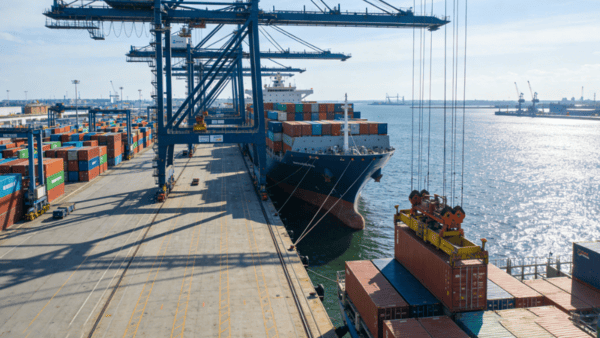
Case 1: Why Did False Declaration on Commercial Invoice Directly Lead to 7-Day Container Detention?
The Commercial Invoice is the most basic settlement and customs clearance document in sea shipping from China to Japan and also the core focus of Japanese Customs inspection. False declaration (including deviations in amount, goods name, and specifications) is the most common type of violation, which will directly trigger 100% physical inspection once discovered.
A Chinese freight forwarder undertook a batch of household goods (mainly solid wood tables and chairs) shipped from Ningbo Port to Yokohama Port in Japan. To help the shipper reduce tariff costs, it declared "solid wood tables and chairs" as "wood-based panel tables and chairs" on the commercial invoice, falsely reducing the declared amount from the actual 120,000 US dollars to 80,000 US dollars, and failed to mark the wood origin information and the corresponding HS Code classification explanation.
After the container arrived at the port, Japanese Customs found that the material of the tables and chairs was inconsistent with the declaration through physical inspection, and there was an obvious difference between the declared amount and the market price of similar products. It directly initiated the container detention process. In the end, the freight forwarder spent 7 days supplementing the authentic commercial invoice, wood origin certificate, and HS Code classification explanation, paid a fine of 12,000 US dollars (equivalent to 10% of the actual goods' value), and also bore 3,000 US dollars in demurrage and 2,000 US dollars in container detention fees, with a total loss of more than 17,000 US dollars. This directly affected the long-term cooperative relationship between the shipper and the Japanese buyer.
Root Causes of Violations and Countermeasures for Freight Forwarders
Core Violations: The declared goods name was inconsistent with the actual goods, the declared amount was falsely reported, and the wood origin mark and HS Code classification explanation were missing. This violated Article 17 of the "Rules for the Administration of Declaration of Imported and Exported Goods" of Japanese Customs (the currently valid provisions of official Japanese Customs).
Freight Forwarders Need to Note: Falsely reporting or underreporting commercial invoice information to reduce tariffs is strictly prohibited. Japanese Customs’ verification accuracy for declared amounts can reach two decimal places, and it will judge the rationality of the declared amount based on the Freightos Baltic Index (FBX) and local Japanese market conditions.
The Recommended Approach is: The commercial invoice shall truthfully fill in the goods name, specifications, material, and amount. For goods with special materials such as wood and metal, the origin and corresponding HS Code must be marked; the amount must be completely consistent with the customs declaration and packing list, avoiding minor issues such as "inconsistent uppercase and lowercase", "currency errors", and "missing amounts".
Case 2: How Did Missing Information on Packing List Lead to Customs Clearance Failure of Special Containers?
The Packing List is the core auxiliary document used to verify the quantity, weight, and packaging specifications of goods in sea shipping from China to Japan. Especially for special containers (such as refrigerated containers and dangerous goods containers), the lack of key information will directly lead to customs clearance obstruction and container detention.
A freight forwarder undertook a batch of refrigerated food (frozen seafood) shipped from Shanghai Port to Osaka Port in Japan, using a 40-foot refrigerated container for transportation. However, the submitted packing list only filled in the total quantity and total weight of the goods and did not mark the specific weight of each package, the refrigeration temperature control range, nor the shelf life, storage conditions, or food inspection and quarantine number of the goods.
During the inspection by Japanese Customs, it was unable to confirm whether the goods met the refrigerated transportation standards and could not verify the quantity and weight of each package one by one, so it directly detained the goods and required supplementary complete documents. Since seafood is a perishable commodity, the refrigerated container continued to operate during the detention period, resulting in high electricity costs, and some of the goods deteriorated. The shipper ultimately lost nearly 50,000 US dollars. The freight forwarder bore 70% of the loss for failing to fulfill its document inspection obligation and was terminated from long-term cooperation by the shipper.
Key Points for Compliant Filling of Packing List
Required Basic Information: The goods name, specifications, quantity, unit price, total price, and packaging method (such as cartons, wooden boxes, foam boxes) must be completely consistent with the commercial invoice and customs declaration, and no information deviation is allowed.
Additional Requirements for Special Containers: For refrigerated containers, the refrigeration temperature range, temperature control requirements, and temperature control records during transportation must be marked; for dangerous goods containers, the dangerous goods category, UN number, emergency measures, and dangerous goods packaging certificate number must be marked.
Detailed Supplementary Information: For perishable and fragile goods, the shelf life, storage conditions, and inspection and quarantine number must be marked; for multi-package goods, the weight and quantity of each package must be marked to avoid the problem of "consistent total weight but inconsistent single packages".
Case 3: Why Did Non-Compliant Certificate of Origin Lead to Doubled Tariffs + Container Detention?
The Certificate of Origin is the core document for goods to enjoy preferential tariffs under the China-Japan Free Trade Agreement in sea shipping from China to Japan and also a key inspection document of Japanese Customs. Non-compliant declaration (such as false origin and incorrect document filling) will lead to doubled tariffs and even direct container detention and blacklisting.
According to the latest data from UNCTAD in 2026, about 42% of the goods shipped by sea from China to Japan can enjoy preferential tariffs under the China-Japan Free Trade Agreement with the Certificate of Origin, with a preferential range of 5%~15%. To help the shipper illegally obtain the preferential treatment, a freight forwarder forged a Chinese Certificate of Origin for a batch of non-Chinese origin electronic products (actually produced in South Korea and consolidated in China for transshipment), marked "Made in China" during declaration, and tried to avoid high tariffs.
During the inspection, Japanese Customs confirmed that the batch of electronic products was not of Chinese origin by checking the filing information of the Chinese Customs Certificate of Origin, the production batch of the goods, and the raw material source certificate through online checks, and determined that the Certificate of Origin was forged. In the end, the container was detained for 10 days, the shipper had to pay double tariffs (increased from 5% to 10%) and a fine of 80,000 US dollars. The freight forwarder was blacklisted by Japanese Customs for forging documents and was prohibited from undertaking sea shipping business from China to Japan within 1 year.
Core Points for Compliance of Certificate of Origin
Forgery and Tampering of Documents are Strictly Prohibited: The Certificate of Origin must be issued by the China Council for the Promotion of International Trade (CCPIT) or an institution designated by the General Administration of Customs. Forgery and tampering are strictly prohibited. Japanese Customs will verify the authenticity of the documents through online connection with Chinese Customs, and the risk of forgery is extremely high.
Truthfully Declare the Origin: The country of origin of the goods must be consistent with the actual place of production. For goods transshipped through China but not produced in China, "Transshipment Country (China)" must be marked, and it is not allowed to falsely declare them as "Made in China". Transshipped goods need to provide additional transshipment certificates.
Detailed Filling Specifications: The Certificate of Origin shall fill in the goods name, HS Code, production enterprise, export enterprise, and other information, which must be completely consistent with the commercial invoice and customs declaration, avoiding problems such as spelling errors, HS Code deviations, and missing signatures and seals.
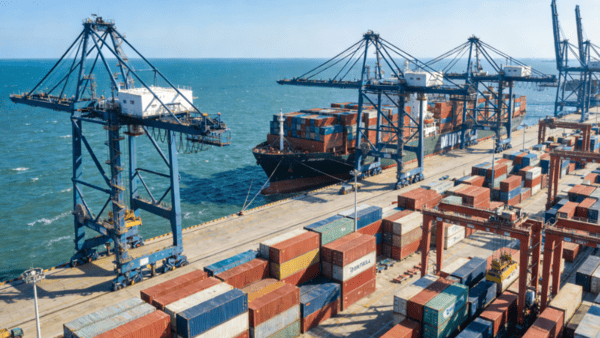
Overall Compliance Avoidance Strategy for Shipping Documents in Sea Shipping from China to Japan
Combined with the above three cases, to reduce the risk of document violations in sea shipping from China to Japan, freight forwarders need to establish a full-process compliance system of "pre-inspection, in-process verification, and post-review" to fundamentally avoid detention losses.
Freight forwarders need to note that Japanese Customs’ document inspection focuses more on "detailed compliance". Many seemingly minor errors (such as incorrect spelling of goods names, deviations in HS Code classification, and missing signatures and seals on documents) may become the cause of container detention. The recommended approach is to establish a special document inspection team to conduct double inspections on the documents of each sea shipping shipment from China to Japan, focusing on verifying the "three consistencies": consistency between documents and goods, consistency of information between various documents, and consistency between declared information and market conditions.
In addition, freight forwarders need to pay close attention to policy updates from Japanese Customs. According to the latest announcement from Japanese Customs in 2026, starting from the second quarter of 2026, electronic products and food goods shipped by sea from China to Japan need to additionally submit product testing reports and compliance declarations. Those who fail to submit them will directly trigger 100% inspection. A common misunderstanding is that freight forwarders ignore policy updates, leading to missing documents and ultimately causing container detention.
Conclusion
As the core logistics channel for Sino-Japanese bilateral trade, sea shipping from China to Japan requires document compliance to ensure the smooth customs clearance of containers. The above three container detention cases were all caused by freight forwarders’ insufficient attention to the document inspection requirements of Japanese Customs and inadequate control of details, which not only caused high economic losses but also affected the enterprises’ industry reputation. When undertaking sea shipping business from China to Japan, global freight forwarders must adhere to the bottom line of compliance, improve the document inspection process, and avoid violation risks to achieve stable business development and provide guarantee for the smooth flow of Sino-Japanese bilateral trade.
Last
In-Depth Review_ Container Control Techniques and Free Demurrage Application for Full Container Load (FCL) Exports to Germany by Sea
With the continuous deepening of Sino-German trade, China to Germany sea freight FCL exports have become a core business for freig
Next
Stability Is the Top Priority_ In-Depth Evaluation of Shipping Timelines of Five Major Carriers for Sea Shipping from China to Germany
For freight forwarders, the stability of shipping timelines for sea shipping from China to Germany directly determines customer re

