



In 2026, the global ocean shipping market is undergoing a major transformation, with a wave of capacity restructuring sweeping the US line routes. As the core route for Sino-US trade, ocean freight from Shanghai to Los Angeles has been significantly affected. For the numerous small and medium-sized ocean freight forwarders, this capacity restructuring is not only a test of survival pressure but also hides development opportunities. How to make accurate judgments and take proactive responses has become the key to breaking through the situation.
What Are the Specific Performances of the 2026 Shanghai to Los Angeles Ocean Freight Capacity Restructuring?
The capacity restructuring of ocean freight from Shanghai to Los Angeles is the core content of the US line market pattern adjustment in 2026. It refers to shipping companies reconstructing the capacity supply system of this route through route optimization, space allocation, alliance restructuring, and other methods. Its core purpose is to alleviate port congestion, balance supply and demand, and reduce operating costs.
According to the latest "Global Maritime Transport Development Report" released by the United Nations Conference on Trade and Development (UNCTAD) in May 2026, the overall capacity of the US West Route in the first half of 2026 has been adjusted by 12% compared with the same period in 2025, among which the capacity optimization rate of the Shanghai to Los Angeles ocean freight route has reached 15%, mainly showing three major characteristics.
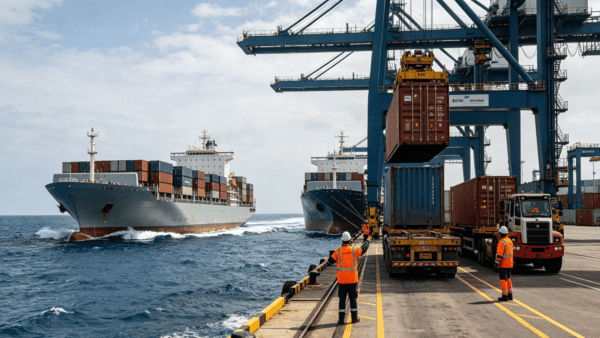
Characteristic 1: Shipping Companies Optimize Routes and Further Streamline Calling Ports?
Leading shipping companies have successively optimized the Shanghai to Los Angeles ocean freight routes, reducing the number of calling ports, adjusting the port order, and improving the route punctuality rate. Among them, Mediterranean Shipping Company (MSC) announced in May 2026 that it would optimize the Asia-US West route network. The Orient service from Shanghai to Los Angeles will remove the call at the Port of Oakland and add transshipment at the Port of Busan, with the route punctuality rate expected to increase by 18%.
Freight forwarders need to note that although route optimization can improve timeliness, it may also lead to adjustments in some feeder connections. If they fail to keep up with changes in shipping company routes in a timely manner, there may be a discrepancy between the booked route and expectations after booking, which will affect the delivery of customer goods.
Characteristic 2: Structural Adjustment of Capacity Supply, Increased Weight of 40ft Containers?
According to the latest announcement of the Shanghai Shipping Exchange in May 2026, the weight of 20ft and 40ft container types on the US West Route in 2026 has been adjusted from 10% and 90% in 2025 to 5% and 95% respectively. This adjustment directly affects the space allocation structure of Shanghai to Los Angeles ocean freight. Currently, the capacity ratio of 40ft containers (FEU) for Shanghai to Los Angeles ocean freight has reached 92%, and the capacity of 20ft containers has been further reduced.
The recommended approach is that small and medium-sized freight forwarders should focus on 40ft container space resources, connect with shipping companies in advance, give priority to locking in space for customers' 40ft container goods, and reasonably guide customers with 20ft container needs to adjust their cargo volume to avoid booking failures due to insufficient capacity.
Characteristic 3: Intensified Alliance Restructuring, Obvious Trend of Head Concentration?
The restructuring of the three major maritime alliances (2M, THE Alliance, Ocean Alliance) is imminent in 2026. To consolidate their market positions, shipping companies have successively increased their capacity concentration by merging routes, sharing space, and other methods. The Shanghai to Los Angeles ocean freight route, as a core route, has become a key area for alliances to compete for. Currently, the capacity ratio of the three major alliances on this route has reached 88%, and the market share of small and medium-sized shipping companies has been further squeezed.
Why Has Capacity Restructuring Occurred in Shanghai to Los Angeles Ocean Freight in 2026?
The capacity restructuring of Shanghai to Los Angeles ocean freight in 2026 is not accidental. It is the result of the combined effect of multiple factors such as global supply chain adjustment, cost pressure transmission, and port operation optimization. The core is the active adjustment of shipping companies to adapt to market changes and improve core competitiveness.
Core Reason 1: Port Congestion Forces Route Optimization?
Data released by the Shanghai Shipping Exchange in May 2026 shows that the average port stay time of ships at the US West Port of Long Beach (LB Port) is 4.32 days, a decrease of 4.2% month-on-month. Although it has been alleviated compared with 2025, it still has a significant impact on route timeliness. By streamlining calling ports and adjusting route layouts, shipping companies can effectively reduce the ship's port stay time and improve route operation efficiency.
Core Reason 2: Rising Fuel Costs Drive Capacity Optimization?
Since May 2026, the geopolitical conflict in the Middle East has continued to ferment, leading to sharp fluctuations in international oil prices. The price of global marine Very Low Sulfur Fuel Oil (VLSFO) has soared by 30%—35% in a single week, and the price at major refueling hubs such as Singapore has exceeded 1,180 US dollars per ton, an increase of as high as 180% compared with the beginning of the year. The proportion of fuel costs in the total ship operation cost has soared to more than 72%. By restructuring capacity and optimizing routes, shipping companies can reduce fuel consumption and alleviate cost pressure.
Core Reason 3: Market Supply-Demand Imbalance Requires Capacity Restructuring?
According to data released by the Shanghai Shipping Exchange on May 12, 2026, the Shanghai Export Container Freight Index (SCFI) stood at 1986.32 points, an increase of 95.55 points or 5.06% from the previous period, achieving a four-week consecutive rebound, but the overall freight rate is still at a relatively low level. By actively controlling capacity and restructuring routes, leading shipping companies can adjust the market supply-demand relationship, maintain stable freight rates, and maximize profits.
What Are the "Shuffle Pressures" Faced by Small and Medium-sized Freight Forwarders Under Capacity Restructuring?
For small and medium-sized ocean freight forwarders, the shuffle pressures brought by the capacity restructuring of Shanghai to Los Angeles ocean freight are mainly concentrated in three aspects: space acquisition, cost control, and customer retention. If they fail to respond in a timely manner, they are likely to be eliminated by the market.
Increased Difficulty in Space Acquisition: After capacity restructuring, leading shipping companies give priority to allocating space to large freight forwarders and long-term cooperative customers. The space quota for small and medium-sized freight forwarders has been greatly reduced, and they lack advantages in booking prices. Some small and medium-sized freight forwarders even face the situation of "no space available for booking", especially during the peak season, when the problem of tight space is more prominent.
Continuous Rise in Operating Costs: The increase in fuel costs, fluctuations in space prices, and the addition of various surcharges by shipping companies (such as Bunker Adjustment Factor BAF and Port Congestion Surcharge PSS) have led to a significant increase in the operating costs of small and medium-sized freight forwarders. At the same time, to keep up with route adjustments and connect with shipping company resources, freight forwarders need to invest more manpower and material resources, further compressing profit margins.
Increased Risk of Customer Churn: Large freight forwarders continue to seize the customer resources of small and medium-sized freight forwarders by virtue of their space and price advantages. If small and medium-sized freight forwarders cannot provide stable space and efficient services, customers are likely to turn to more competitive large freight forwarders, especially long-term cooperative core customers, with an extremely high churn risk.
Higher Requirements for Professional Capabilities: After capacity restructuring, routes change frequently and the space structure is adjusted, requiring freight forwarders to have stronger route analysis, resource integration, and emergency response capabilities. A common misunderstanding is that some small and medium-sized freight forwarders still use traditional operation models, fail to timely learn new route knowledge and connect with new resources, resulting in a decline in service quality and difficulty in meeting customer needs.
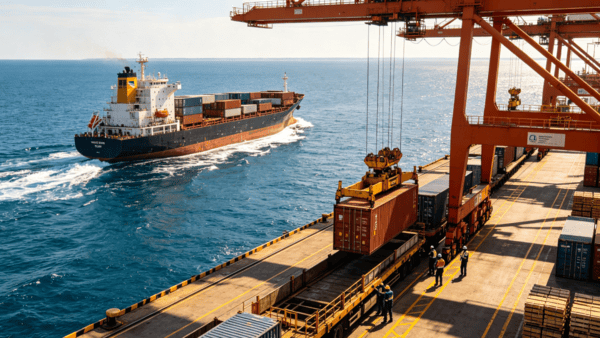
Where Are the "Development Opportunities" for Small and Medium-sized Freight Forwarders Behind Capacity Restructuring?
Opportunities coexist with challenges. Although the capacity restructuring of Shanghai to Los Angeles ocean freight brings shuffle pressure, it also provides small and medium-sized freight forwarders with opportunities for differentiated development and overtaking on curves. The key lies in finding the right position and making precise efforts.
Opportunity 1: Exploitable Niche Markets to Create Differentiated Advantages?
Large freight forwarders mainly focus on Full Container Load (FCL) and large-volume cargo transportation, while small and medium-sized freight forwarders can focus on exploring niche markets such as Less than Container Load (LCL), sensitive goods, and special goods to create differentiated services. For example, they can provide personalized LCL solutions for small and medium-sized cargo customers of Shanghai to Los Angeles ocean freight; provide professional declaration and customs clearance services for sensitive goods such as those with electricity or magnetism, forming their own core competitiveness.
Freight forwarders need to note that although niche markets have less competition, they have higher requirements for professional capabilities. They need to be familiar with the transportation specifications and customs clearance requirements of relevant goods in advance to avoid customer losses caused by non-standard operations.
Opportunity 2: Rely on Shipping Company Resources to Establish Stable Cooperative Relationships?
After capacity restructuring, some small and medium-sized shipping companies (such as Yang Ming Marine Transport and Wan Hai Lines) will take the initiative to cooperate with small and medium-sized freight forwarders to provide more flexible space and more preferential prices to seize market share. The recommended approach is that small and medium-sized freight forwarders can select high-quality small and medium-sized shipping companies, sign long-term cooperation agreements to lock in space resources, and at the same time, strengthen communication and connection with shipping companies to timely obtain route changes and space information, and plan transportation schemes for customers in advance.
Opportunity 3: Optimize Service Processes to Improve Customer Stickiness?
The core advantage of small and medium-sized freight forwarders lies in flexible services and rapid response. They can rely on this advantage to optimize the whole-process service of Shanghai to Los Angeles ocean freight. For example, they can provide customers with one-stop services such as real-time cargo tracking, customs clearance agency, and inland transportation connection; customize exclusive transportation schemes according to customers' personalized needs to improve customer experience and enhance customer stickiness.
What Are the Practical Strategies for Small and Medium-sized Freight Forwarders to Respond to the 2026 Shanghai to Los Angeles Ocean Freight Capacity Restructuring?
Faced with the market pattern of capacity restructuring, small and medium-sized freight forwarders need to abandon traditional operation thinking, take the initiative to adjust strategies, and make efforts in four aspects: space, service, resources, and professional capabilities to achieve sustainable development.
Strategy 1: Diversify Space Layout to Reduce Single Dependence: Do not limit cooperation to a single shipping company. Instead, diversify space resources, connect with leading shipping companies to strive for stable space, and also cooperate with small and medium-sized shipping companies to obtain price advantages. At the same time, predict the tight space situation in the peak season in advance and lock in space in advance to avoid passivity in temporary booking.
Strategy 2: Focus on Niche Services to Create Core Competitiveness: Combine their own resources to focus on 1-2 niche areas, such as LCL, sensitive goods, and inland transshipment, to form differentiated service advantages. For example, focus on the Shanghai to Los Angeles ocean freight LCL business, optimize the LCL process, improve LCL timeliness, and create a brand image of "LCL Expert".
Strategy 3: Strengthen Resource Integration to Improve Service Efficiency: Integrate the resources of local agents in Shanghai Port and Los Angeles, optimize the customs clearance and inland transportation connection processes, and shorten the cargo transportation cycle. At the same time, use digital tools to realize the onlineization of cargo tracking, booking, and quotation, improve operation efficiency, and reduce labor costs.
Strategy 4: Improve Professional Capabilities to Respond to Market Changes: Organize employees to learn the latest route knowledge, space structure, and customs clearance policies of Shanghai to Los Angeles ocean freight, and timely grasp information on shipping company route adjustments and capacity changes. At the same time, strengthen emergency response capability training to deal with emergencies such as tight space, route changes, and port congestion, ensuring service stability.
What Are the Common Misunderstandings of Small and Medium-sized Freight Forwarders in Responding to the 2026 Shanghai to Los Angeles Ocean Freight Capacity Restructuring?
In the process of responding to capacity restructuring, some small and medium-sized freight forwarders fall into development misunderstandings due to cognitive deviations and strategic mistakes, which not only prevent them from seizing opportunities but also may increase survival pressure and need to be avoided.
Conclusion: What Is the Key for Small and Medium-sized Freight Forwarders to Break Through Under the Shuffle?
The 2026 capacity restructuring of Shanghai to Los Angeles ocean freight is essentially a "survival of the fittest" in the US line market. For small and medium-sized ocean freight forwarders, it is both a shuffle and an opportunity. Those who rely on traditional models and lack core competitiveness will be shuffled out, while opportunities are left for those who take the initiative to adjust, accurately position themselves, and focus on services and professional capabilities.
Freight forwarders need to note that the competition in the US line market will be more fierce in 2026. The model of simply reselling space is no longer sustainable. Only by creating differentiated advantages, improving service quality, integrating high-quality resources, and strengthening professional capabilities can they stand firm in the wave of capacity restructuring. In the future, with the continuous optimization of the Shanghai to Los Angeles ocean freight route and the continuous adjustment of the global trade pattern, as long as small and medium-sized freight forwarders find the right position and take active actions, they can find their own development space in the market, achieve the leap from "survival" to "development", and seize a place in the new pattern of the US line.
Last
From Yantian to Bremen: In-Depth Analysis of an Efficient Direct Shipping Route from China to Germany
Against the backdrop of increasingly close Sino-European international trade, shipping from China to Germany has become one of the
Next
What is ISF Filing? Why is it Required for Shipping from China to the USA?
In the specialized field of sea freight from China to USA, mastering the Importer Security Filing (ISF) is a cornerstone of risk m