




With the continuous deepening of Sino-U.S. trade relations, shipping from China to the U.S., as the core carrier for goods transportation between the two countries, has timeliness stability that is directly related to the operational costs and customer experience of freight forwarders and foreign trade enterprises. Recently, affected by multiple factors such as port congestion, route adjustments, and policy changes, the delay issue in shipping from China to the U.S. has once again become the focus of the industry. Combining the latest authoritative data from April 2026, this article will comprehensively analyze the current delay status and core causes of shipping from China to the U.S., and put forward targeted response suggestions to provide professional references for industry practitioners.
What Is the Overall Delay Status of Shipping from China to the U.S. Currently?
The current delays in shipping from China to the U.S. are characterized by "route differentiation and time fluctuation". The overall delay duration has been alleviated compared with 2025, but regular delays still exist on core routes, and there are significant differences in delays between different routes and ship types. According to the preview version of UNCTAD's Q2 2026 Maritime Report, the average total transit time for shipping from China to the U.S. is 27 days, with an average delay of 3-5 days compared to the normal transit time (22-24 days). Among these, delays on the U.S. West Coast routes are relatively controllable, while delays on the U.S. East Coast routes are more prominent.
Specifically, the current average transit time for the U.S. West Coast routes (Shanghai, Shenzhen to Los Angeles, Long Beach) is 17-22 days, with a normal transit time of 14-21 days and an average delay of 3-4 days; the current average transit time for the U.S. East Coast routes (Shanghai, Ningbo to New York, Savannah) is 34-40 days, with a normal transit time of 28-35 days and an average delay of 6-9 days. The delay duration for some transit routes even exceeds 12 days.
In addition, delays for Less than Container Load (LCL) goods are generally more severe than those for Full Container Load (FCL) goods, with an average delay of 5-8 days longer. According to the latest data from Freightos on April 7, 2026, the average delay for LCL goods from China to the U.S. West Coast is 4.2 days, and that for LCL goods to the U.S. East Coast is 7.8 days, both higher than the delay level for FCL goods.
Freight forwarders need to note that the current delays are not caused by a single factor but by the superposition of multiple factors such as port efficiency, route adjustments, and customs inspections. Moreover, the delay duration will change dynamically with factors such as shipping peak seasons, holidays, and weather, so it is necessary to make predictions and responses in advance. A common misunderstanding is that some freight forwarders blindly promise customers "no delays" without fully informing them of the delay risks, leading to customer complaints and compensation disputes later, which harms their own reputation.
Why Is There Such a Significant Difference in Delays Between the U.S. West Coast and U.S. East Coast Routes?
The current delays in shipping from China to the U.S. show a pattern of "controllable on the U.S. West Coast and more serious on the U.S. East Coast". The core reasons lie in differences in three factors: route distance, port efficiency, and route adjustments. The specific situation can be analyzed based on the actual conditions of the two routes.
U.S. West Coast Routes: Controllable Delays, Core Influencing Factors Are Port Congestion and Vessel Type Selection
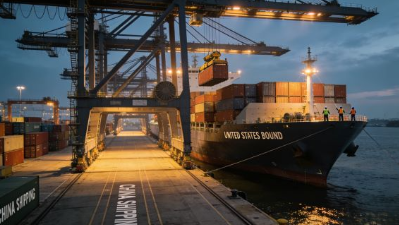
With the advantage of shorter distance, the U.S. West Coast routes are the fastest for shipping from China to the U.S. Currently, delays are mainly concentrated in the port berthing and loading/unloading links. According to the latest data from the official website of the Port of Los Angeles on April 8, 2026, as of April 7, the number of container ships waiting to berth at the outer anchorage of the Port of Los Angeles was 10, with an average waiting time of about 3-4 days—significantly improved compared to 7-8 days in the same period of 2025, but still causing a 1-3 day delay for goods.
In addition, the choice of vessel type also directly affects delays on the U.S. West Coast routes. According to the dynamic data on the U.S. West Coast routes released by the Shanghai Shipping Exchange on April 7, 2026, the average transit time for express ships such as Matson is 12-15 days, with basically no obvious delays; while the average transit time for ordinary slow ships (such as COSCO, EMC) is 19-22 days, and delays can reach 3-4 days due to port congestion.
The recommended approach is that when recommending U.S. West Coast routes to customers, freight forwarders should reasonably select vessel types based on the customers' timeliness needs: for urgent goods, priority should be given to express ships such as Matson and ZIM. Although the freight is 5%-10% higher (according to Freightos' quotation in April 2026, the freight for Matson express ships is about 8% higher than that for ordinary slow ships), it can effectively avoid delay risks; for non-urgent goods, ordinary slow ships can be selected, but a buffer time of 3-5 days should be reserved in advance to avoid delivery delays caused by port congestion.
U.S. East Coast Routes: Prominent Delays, Route Diversion and Transit Efficiency Are the Main Causes
Due to the longer distance, the U.S. East Coast routes themselves have a longer transit time. In addition, the recent limited navigability of the Panama Canal caused by drought has led to the diversion of some routes, which has further aggravated delays. According to information released by Ennews on April 5, 2026, affected by the draft restrictions of the Panama Canal and the decline in port operation efficiency, some ships on the U.S. East Coast routes from China to the U.S. were forced to detour, resulting in a 7-10 day increase in voyage time, which directly prolonged the overall transit time.
At the same time, most U.S. East Coast routes adopt a transit mode, and the efficiency of transit ports directly affects the delay duration. According to the latest data from the Freightos Baltic Index (FBX) on April 7, 2026, the average transit time for the U.S. East Coast routes from China to the U.S. is 7-11 days. If transit ports (such as Busan, Yokohama) are congested, the transit time can be extended to more than 14 days, leading to an overall delay of more than 10 days.
Freight forwarders need to note that the delay risk for the U.S. East Coast routes is much higher than that for the U.S. West Coast routes. When undertaking orders for the U.S. East Coast routes, they need to confirm with the shipping company in advance whether there is a route diversion, clarify the operation efficiency of the transit port, and truthfully inform the customer of the delay risk to avoid disputes caused by concealing information. A common misunderstanding is that some freight forwarders deliberately shorten timeliness commitments to secure orders, without considering sudden situations such as route diversion and transit congestion, resulting in failure to fulfill their commitments.
What Are the Core Factors Causing the Current Delays in Shipping from China to the U.S.?
In addition to differences in the routes themselves, the current delays in shipping from China to the U.S. are also affected by the superposition of four core factors: port efficiency, customs inspection, weather factors, and holiday impacts. These factors interact with each other and further amplify delay risks.
Insufficient Port Efficiency: Bottlenecks Exist in Both U.S. West Coast and U.S. East Coast Ports
Port congestion is the most direct factor leading to delays in shipping from China to the U.S. In addition to the berthing problem at the Port of Los Angeles, the Port of Long Beach and the Port of New York also have varying degrees of congestion. According to real-time monitoring data from Lloyd's List on April 8, 2026, the number of container ships waiting to berth at the outer anchorage of the Los Angeles-Long Beach Port is maintained at 10-12, with an average waiting time of about 3-4 days; the average loading and unloading efficiency of the Port of New York has decreased by 28% compared to the normal level, resulting in goods being unable to be unloaded in a timely manner after arriving at the port, with an average detention time of 2-3 days.
The recommended approach is that freight forwarders should closely monitor the real-time dynamics of major U.S. ports, obtain the latest congestion information through port official websites, shipping company announcements, and other channels, and adjust the booking plan in advance. For example, when the Port of Los Angeles is severely congested, the Port of Oakland can be preferred as the destination port to reduce waiting time; at the same time, communicate with the local U.S. customs clearance agent in advance to ensure that goods can go through customs clearance procedures in a timely manner after arriving at the port, shortening the detention time.
Strict Customs Inspection: Significant Increase in Delay Risks for Sensitive Goods
Since 2026, U.S. Customs has strengthened inspections of goods imported from China, especially increasing the inspection rate for under-declared, ambiguously named, and sensitive goods, which directly leads to delays in customs clearance. According to the latest statistical data from U.S. Customs in Q2 2026, the average inspection rate for goods shipped from China to the U.S. by sea is 8.5%, an increase of 2.8 percentage points compared to 5.7% in the same period of 2025. Among these, the inspection rate for electronic, textile, and hardware goods exceeds 12.5%.
A common misunderstanding is that some freight forwarders assist customers in under-declaring goods and using ambiguous names to help them save costs, resulting in goods being detained by customs, with delays of 1-2 weeks or even the risk of return. Freight forwarders need to note that they must declare goods according to actual information, clarify key details such as product name, value, and purpose to avoid inspection delays caused by declaration issues; for sensitive goods, relevant supporting documents should be prepared in advance, and proactive communication with customs should be conducted to improve customs clearance efficiency.
Other Factors: Weather and Holidays Further Aggravate Delays
Severe weather in the Pacific Ocean is also an important factor leading to delays in shipping from China to the U.S. Since 2026, extreme weather such as winter storms and tropical depressions in the Pacific Ocean has occurred frequently, resulting in slower ship sailing speeds and even ship detention on some routes. According to the latest data from UNCTAD in Q2 2026, affected by severe weather, the average delay duration for shipping from China to the U.S. has increased by 1-2 days.
In addition, shipping peak seasons before and after U.S. holidays (such as Thanksgiving, Christmas, and Independence Day) also lead to port congestion and tight shipping space, thereby causing delays. According to the latest data from the Shanghai Shipping Exchange in April 2026, 4 weeks before and after holidays, the shipping space utilization rate for shipping from China to the U.S. reaches more than 86%, and even exceeds 91% on the U.S. West Coast routes. Phenomena such as ship overloading and container skipping occur from time to time, further prolonging transit time. According to the container shipping weekly report released by NetEase News on April 8, 2026, the current freight rate for the U.S. West Coast routes is 2359 US dollars/FEU, and that for the U.S. East Coast routes is 3354 US dollars/FEU. The rising freight rates also indirectly reflect the tight shipping space.
How Can Freight Forwarders Deal with the Current Delay Problem in Shipping from China to the U.S.?
Faced with the current delay situation in shipping from China to the U.S., freight forwarders need to establish a response system of "advance prediction, flexible adjustment, and risk prevention and control", and formulate targeted solutions according to the needs of different routes and customers to minimize losses caused by delays.
Advance Planning: Lock Shipping Space and Avoid Peak Periods
The recommended approach is to plan booking times in advance, avoiding shipping peak seasons and holiday peaks. For the U.S. West Coast routes, book at least 15 days in advance; for the U.S. East Coast routes, book at least 25 days in advance to ensure that shipping space can be locked, avoiding container skipping and delays caused by tight shipping space. According to the guide released by Langxu International Logistics on April 7, 2026, advance booking can reduce the container skipping risk by more than 30%.
At the same time, reasonably select shipping companies and routes, giving priority to shipping companies with stable schedules and rich port resources (such as Maersk, Mediterranean Shipping Company); for the U.S. East Coast routes, try to choose direct routes to reduce delay risks caused by transit links.
Strengthen Communication: Real-Time Tracking and Timely Feedback of Dynamics
Strengthen three-party communication with customers, shipping companies, and customs clearance agents, track goods dynamics in real time, timely feedback delay situations to customers, and put forward solutions. For example, when goods are delayed, take the initiative to communicate with the shipping company to understand the cause of the delay and the estimated time of arrival (ETA), and inform the customer simultaneously to negotiate and adjust the delivery time, avoiding customer dissatisfaction due to lack of information.
Risk Prevention and Control: Clarify Responsibilities and Reduce Economic Losses
Establish a risk prevention and control mechanism. Before signing a transportation contract with a customer, clarify delay liabilities and compensation terms to avoid disputes caused by delays; at the same time, purchase cargo transportation insurance for goods to reduce economic losses caused by delays, lost goods, and other situations. Freight forwarders need to note that they should not blindly promise customers "zero delays" but provide reasonable timeliness expectations based on the latest market dynamics and data to enhance customer trust.
Conclusion
The current delays in shipping from China to the U.S. present an overall pattern of "controllable on the U.S. West Coast and more serious on the U.S. East Coast", with an average delay duration of 3-5 days. The core causes include multiple factors such as port congestion, route diversion, customs inspection, weather, and holidays. For freight forwarders, the current delays are both challenges and opportunities. Only by predicting risks in advance, optimizing operational processes, and strengthening communication and cooperation can we effectively avoid losses caused by delays and improve core competitiveness.
In the future, with the improvement of U.S. port efficiency, the optimization of route layouts, and the enhancement of the Panama Canal's navigability, the delay situation in shipping from China to the U.S. is expected to be further alleviated. However, freight forwarders still need to remain vigilant, continuously pay attention to market dynamics, and constantly optimize response strategies to provide customers with more efficient and stable freight services, and promote the healthy and orderly development of the shipping from China to the U.S. industry.
Last
What is the Minimum Shipment Volume for LCL Shipping from China to the US?
With the continuous growth of cross-border logistics demand, sea freight from China to the US has become the mainstream choice for
Next
China to US Sea Freight_ Sea Freight vs Air Freight, How to Choose?
In an era of increasingly frequent cross-border trade, China to US sea freight and air freight, as the two core cross-border logis

