



Against the backdrop of the in-depth advancement of global trade integration and supply chain restructuring, ports, as core hubs of international logistics, have efficiency that directly determines the service quality and market competitiveness of freight forwarders. Dynamic changes in customs policies and procedures are even more crucial variables affecting port efficiency and logistics timeliness. Accurately grasping adjustments to customs policies worldwide has become a core prerequisite for freight forwarders to reduce costs and increase efficiency.
I. Core Cognition: What is the Intrinsic Relationship Between Customs Procedures and Port Efficiency?
Customs procedures refer to the standardized processes through which customs conducts a series of regulatory operations, such as declaration, inspection, taxation, and release, for import and export goods. Port efficiency is reflected in the total time consumption and smoothness of goods from their arrival at the port to their pick-up. The two are positively correlated, and changes in customs policies directly lead to process adjustments and affect timeliness.
1.1 Why Do Changes in Customs Procedures Directly Affect Logistics Timeliness?
Freight forwarders need to note that as the core authority for supervising import and export goods, every adjustment to customs procedures—whether it is the optimization of declaration methods, changes in inspection standards, or upgrades to regulatory policies—will directly change the length of time goods stay at the port. According to UNCTAD Q1 2026 data, the fluctuation range of the average customs clearance time of global ports due to changes in customs procedures reaches 18%-25%, which directly affects freight forwarders' space planning, customer commitments, and cost control.
A common misunderstanding is that some freight forwarders simply attribute low port efficiency to port congestion, ignoring the chain reaction caused by changes in customs procedures. In fact, more than 60% of port cargo detention cases are related to freight forwarders' failure to timely adapt to processes after changes in customs policies, rather than merely insufficient port operation capacity.
1.2 What Are the Core Customs Procedure Links Affecting Port Efficiency?
The recommended approach is that freight forwarders should focus on the four core links in customs procedures. Changes in these four links have the most significant impact on logistics timeliness and are also the key entry points for freight forwarders to optimize their services.
Declaration Link: This includes declaration methods, requirements for declaration documents, and declaration review timeliness. It is the starting point of customs supervision and the most frequently changed link in the process.
Inspection Link: Adjustments to the inspection ratio, inspection methods, and layout of inspection sites directly determine the additional stay time of goods and are the core bottleneck affecting timeliness.
Taxation Link: Changes in tax rates, optimization of tax payment methods, and adjustments to tax reduction and exemption policies not only affect costs but also may cause delays in release due to process adaptation issues.
Release Link: Changes in release conditions, release documents, and follow-up supervision requirements directly determine whether goods can be smoothly picked up from the port, making it the final checkpoint for timeliness control.
II. Analysis of Changes in Customs Procedures at Core Global Ports: Which Adjustments Have the Greatest Impact?
Due to differences in regional trade policies and regulatory models, the direction of changes in customs procedures at core global ports varies. Freight forwarders need to make targeted adaptations based on the characteristics of target ports to minimize the impact on timeliness. The following focuses on the latest changes in benchmark ports in three core regions: Asia-Pacific, Europe and America, and the Middle East.
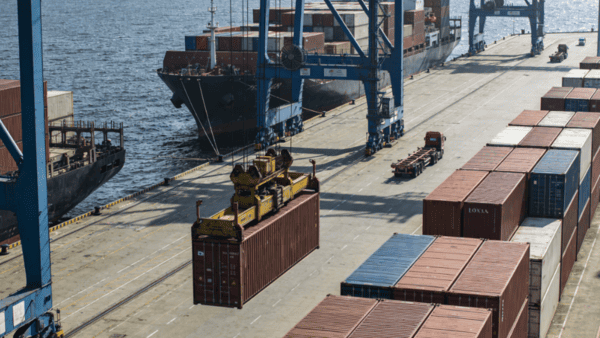
2.1 Asia-Pacific Region: Digitization Transformation as the Guide, with Parallel Process Simplification and Regulatory Upgrade
As the core hub of global trade, port customs in the Asia-Pacific region generally promote digital transformation, and their procedures exhibit the dual characteristics of "simplified declaration and strengthened supervision". Among these, the changes in ports in China, Singapore, and Japan are the most representative and have the greatest impact on freight forwarders' operations.
2.1.1 Core Chinese Ports: Deepening "Two-Step Declaration" and Highlighting the Impact of Credit Supervision
Since April 1, 2026, China Customs has deepened the "Two-Step Declaration" supervision model at core ports such as Shanghai Port, Shenzhen Port, and Ningbo-Zhoushan Port, further simplifying customs clearance procedures while strengthening enterprise credit supervision, which directly affects freight forwarders' declaration efficiency and customs clearance timeliness.
According to China Customs Q1 2026 data, after the implementation of the upgraded "Two-Step Declaration", the average customs clearance time for general goods has been shortened from 2.8 days to 1.2 days. Among these, freight forwarders with a Class A credit rating can further shorten the customs clearance time to 0.8 days. However, freight forwarders need to note that after the policy adjustment, the scope of application of "Two-Step Declaration" has been tightened; it is only applicable to enterprises that have completed customs registration and have good credit, as well as specific types of goods. Unregistered enterprises still need to make full declarations in accordance with traditional procedures.
The recommended approach is that freight forwarders should upgrade their enterprise credit rating as soon as possible to ensure that both they and their cooperative customers meet the applicable conditions for "Two-Step Declaration"; at the same time, they should sort out cargo information in advance and accurately fill in core information during the "Summary Declaration" stage to avoid delays in subsequent supplementary declarations due to missing information, which would affect timeliness.
A common misunderstanding is that some freight forwarders believe "Two-Step Declaration" can simplify all processes and ignore the time limit requirements for supplementary declarations. In fact, the "Complete Declaration" must be completed within the specified time after the "Summary Declaration". Failure to supplement within the time limit will result in risks such as cargo detention and fines, which will instead increase logistics costs.
2.1.2 Singapore Port: Full-Process Digitization, with Paperless Customs Clearance Becoming a Mandatory Requirement
As one of the most efficient ports in the world, Singapore Port has fully implemented the "Paperless Customs Clearance" policy since March 2026, canceling all paper declaration documents. All full-process operations, such as declaration, review, and inspection, are completed through Singapore Customs' "TradeNet" system. These process changes place higher requirements on freight forwarders' digital operation capabilities.
According to data from the official website of Singapore Port in April 2026, after the implementation of the paperless customs clearance policy, the average port customs clearance time has been shortened from 1.5 days to 0.6 days, and the pass rate of declaration review has increased to 98.2%. However, freight forwarders need to note that the policy requires all declaration documents (including commercial invoices, packing lists, bills of lading, etc.) to be digitally filed, and the format must comply with unified customs standards. Declarations that do not meet the requirements will be directly rejected, causing delays in timeliness.
Step 1: Complete the registration of enterprise and customer information in the TradeNet system in advance to ensure the information is accurate and correct;
Step 2: Sort out digital declaration documents and standardize their format in accordance with customs requirements to avoid rejection due to format errors;
Step 3: Arrange special personnel to be responsible for system operations, track the declaration progress in real time, and promptly handle abnormal issues feedback by customs.
2.2 Europe and America Region: Strict Supervision as the Main Trend, with Process Refinement and Increased Compliance Requirements
Customs supervision in Europe and America has always been strict. Since 2026, the customs procedures at core ports in the EU and the United States have been further refined, focusing on strengthening safety supervision and compliance review. These process changes place higher requirements on freight forwarders' compliance operation capabilities, and their impact on timeliness is mainly concentrated in the inspection and declaration links.
2.2.1 Rotterdam Port (EU): Optimization of T1 Transit Procedures and Stricter Compliance Review
As the largest port in Europe, Rotterdam Port has optimized the T1 transit process since February 2026, simplifying inland transit links while strengthening the compliance review of cargo origin and HS codes, which directly affects freight forwarders' transit operation timeliness and compliance costs.
According to the EU Customs Policy Guidelines in March 2026, after the optimization of the T1 transit process, the average inland transit time has been shortened by 30%, but the error rate of HS code declaration shall not exceed 0.5%; otherwise, the transit qualification will be suspended. According to data from the official website of Rotterdam Port, in Q1 2026, there were 127 cases of transit delays caused by incorrect HS code declarations, with an average delay of 4.5 days, bringing additional demurrage and detention costs to freight forwarders.
Freight forwarders need to note that for T1 transit business at Rotterdam Port, they need to check the cargo HS code in advance (adopting the 2026 version of the HS code standard) to ensure consistency with the certificate of origin and commercial invoice information; at the same time, they should understand the regulatory requirements for EU inland transit in advance to avoid process delays due to compliance issues. The recommended approach is to cooperate with local customs brokers to leverage their professional capabilities to control compliance details and reduce the risk of delays.
2.2.2 Los Angeles Port (USA): ACE System Upgrade and Dynamic Adjustment of the Inspection Ratio
As the core port on the west coast of the United States, Los Angeles Port completed the upgrade of the ACE (Automated Commercial Environment) system in January 2026, optimizing the declaration review process while implementing a "dynamic inspection ratio" mechanism that adjusts the inspection ratio based on cargo type, origin, and enterprise credit rating, which has a significant impact on logistics timeliness.
According to US CBP Q1 2026 data, after the upgrade of the ACE system, the average review time for normal declarations has been shortened from 4 hours to 2 hours, but the inspection ratio for sensitive goods (such as electronic products and textiles) has increased from 12% to 18%, and the inspection ratio for some goods from high-risk regions is even as high as 35%. The increase in the inspection ratio directly leads to an increase of 1-2 days in the average stay time of goods, bringing challenges to freight forwarders' timeliness control.
The recommended approach is that when undertaking business related to Los Angeles Port in the United States, freight forwarders should understand the inspection risk level of the cargo category in advance. For goods with a high inspection ratio, they should prepare complete auxiliary inspection documents (such as product manuals and test reports) in advance to avoid inspection delays due to missing documents; at the same time, they should strengthen communication with customers to ensure the authenticity and accuracy of cargo information and reduce the risk of inspection.
2.3 Middle East Region: Frequent Policy Changes and Increased Difficulty in Process Adaptation
Due to frequent adjustments in regional trade policies, the customs procedures at ports in the Middle East (such as Jebel Ali Port in Dubai and Jeddah Port in Saudi Arabia) are relatively flexible, mainly focusing on declaration requirements and tariff policies. These changes place higher requirements on freight forwarders' process adaptation capabilities, resulting in large fluctuations in timeliness.
2.3.1 Jebel Ali Port (Dubai): Upgrade of Declaration Document Requirements and Dynamic Adjustment of Tariff Policies
As the largest port in the Middle East, Jebel Ali Port has adjusted customs declaration requirements since April 2026, adding a "cargo traceability information" declaration item and dynamically adjusting the tariff rates of some types of goods. These process changes directly affect freight forwarders' declaration efficiency and cost control.
According to the latest announcement from Dubai Customs in 2026, all import and export goods need to declare cargo traceability information, including raw material origin, manufacturer, transportation route, etc. Goods that fail to declare in accordance with the requirements will be detained, with an average delay of 3-5 days. At the same time, the tariff rates of some electronic products and mechanical equipment have been adjusted from 5% to 8%. Freight forwarders need to update their quotes in a timely manner to avoid losses due to tariff changes.
Freight forwarders need to note that for business at Jebel Ali Port, they need to communicate with customers in advance to collect complete cargo traceability information to ensure the completeness of declaration documents; at the same time, they should establish a tariff policy tracking mechanism to timely grasp changes in tariff rates and adjust quotes and cost budgets in advance. A common misunderstanding is that some freight forwarders ignore the declaration of cargo traceability information, leading to cargo detention and additional costs.
III.Practical Strategies for Freight Forwarders to Respond to Changes in Customs Procedures: How to Reduce the Impact on Timeliness?
Faced with frequent changes in customs procedures worldwide, freight forwarders need to establish a full-process response mechanism of "policy tracking - process adaptation - risk prevention and control" and make targeted optimizations based on their own business characteristics to minimize the impact on timeliness and improve service competitiveness.
3.1 How to Establish an Efficient Customs Policy Tracking Mechanism?
The recommended approach is that freight forwarders need to establish a multi-channel, regular customs policy tracking mechanism to ensure they grasp information on process changes worldwide in the first place, gain time for process adaptation, and avoid timeliness delays due to lagging policy information.
Channel Construction: Focus on official channels such as the official websites of customs at core ports, UNCTAD, US CBP, and EU Customs, and establish cooperation with local customs brokers and industry associations to timely obtain policy interpretations and practical suggestions.
Special Personnel Responsible: Arrange special personnel to be responsible for policy tracking, sort out policy changes at core global ports every week, classify and organize them (by region and process link), and synchronize them to the business department and operation team.
Dynamic Update: Establish a policy change file, update the process adaptation guide in a timely manner, and organize internal training for major policy adjustments to ensure all relevant personnel master the latest operation requirements.
Freight forwarders need to note that policy tracking should not only focus on the process changes themselves but also on the policy's implementation time, scope of application, penalty standards, and other details to avoid operational errors due to misunderstandings. For example, some customs policies will set a transition period. Freight forwarders need to complete process adaptation during the transition period to avoid being penalized for failing to meet standards after the transition period ends.
3.2 How to Targetedly Adapt to Changes in Customs Procedures at Different Ports?
The characteristics of changes in customs procedures at ports in different regions are different. Freight forwarders need to optimize their operation processes in a targeted manner according to port policy orientations, avoid a "one-size-fits-all" adaptation method, and improve the accuracy of timeliness control.
Ports in the Asia-Pacific Region: Focus on improving digital operation capabilities, adapt to policies such as paperless customs clearance and two-step declaration, optimize the sorting and submission process of declaration documents, and ensure accurate information and standardized formats.
Ports in the Europe and America Region: Focus on strengthening compliance operations, strictly check HS codes, certificates of origin, and other documents, assess inspection risks in advance, prepare complete auxiliary inspection documents, and reduce the probability of inspection delays.
Ports in the Middle East Region: Focus on strengthening communication with customers, timely collect complete cargo information (such as traceability information), establish a tariff policy tracking mechanism, and flexibly adjust quotes and cost budgets.
3.3 How to Prevent and Control Timeliness Risks Caused by Changes in Customs Procedures?
A common misunderstanding is that some freight forwarders only focus on adjusting operation processes when adapting to changes in customs procedures, ignoring risk prevention and control, which leads to timeliness impacts due to abnormal situations (such as declaration rejection, cargo inspection, and policy interpretation deviations). The recommended approach is to establish a full-process risk prevention and control mechanism to predict risks in advance and respond to abnormalities in a timely manner.
Pre-event Prediction: Before undertaking business, assess the timeliness risk based on the policy changes of the target port, clearly inform customers of possible delays and response measures, and avoid subsequent disputes.
In-event Monitoring: After cargo declaration, track the declaration progress and inspection status in real time, and promptly handle abnormal issues feedback by customs (such as missing documents and incorrect information) to avoid delays due to escalating problems.
Post-event Review: For each business, review the problems arising during the adaptation to customs procedures, summarize experience and lessons, optimize the process adaptation guide, and improve the accuracy and efficiency of subsequent operations.
In addition, freight forwarders can also reduce economic losses caused by timeliness delays and improve service stability by purchasing logistics insurance and establishing cooperation with port warehousing enterprises.
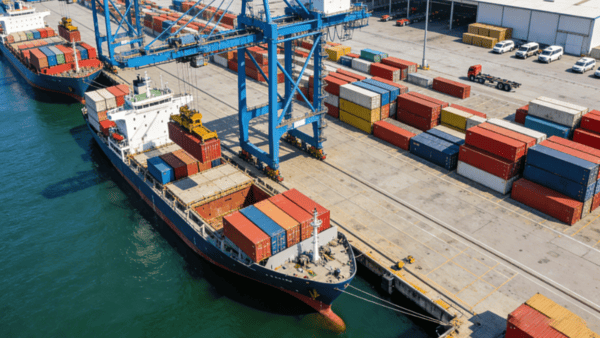
IV. Future Trends: How Will Changes in Customs Procedures Affect Global Port Efficiency?
With the advancement of global trade digitalization and intelligent transformation, customs procedures worldwide will show a development trend of "digitalization, refinement, and collaboration" in the future. This will further optimize port efficiency but also place higher requirements on freight forwarders' comprehensive capabilities.
According to the forecast in UNCTAD's 2026 Global Maritime Report, in the next 3-5 years, more than 80% of core global ports will realize full-process digital customs clearance. Links such as declaration, inspection, taxation, and release will implement intelligent review, and the average customs clearance time will be shortened to less than 1 day. At the same time, customs supervision will become more refined, implementing differentiated supervision for different types of goods and different risk levels, and process changes will be more flexible and accurate.
Freight forwarders need to note that in the future, changes in customs procedures will place greater emphasis on "equal emphasis on compliance and efficiency". Digital operation capabilities, compliance control capabilities, and policy interpretation capabilities will become the core competitiveness of freight forwarders. The recommended approach is to lay out digital transformation in advance, optimize internal operation processes, strengthen the training of professional talents, and improve the ability to interpret and adapt to customs policies to gain an advantage in future market competition.
V. Conclusion
The level of global port efficiency depends not only on the port's infrastructure and operation capabilities but also on changes in customs policies and procedures worldwide. For global freight forwarders, customs policies are not only core variables affecting logistics timeliness but also important starting points for reducing costs, increasing efficiency, and improving service quality. Only by establishing an efficient policy tracking mechanism, making targeted adaptations to changes in customs procedures worldwide, and strengthening compliance operations and risk prevention and control can freight forwarders minimize the impact on timeliness and improve their own market competitiveness. In the future, with the continuous optimization and digital transformation of customs procedures, freight forwarders need to continuously improve their comprehensive capabilities and accurately grasp the orientation of customs policies to achieve sustainable development in the complex international logistics environment.
Last
2026 Global Outbound New Pattern: In-depth Insight into China's Export-related Policies Supporting High-quality Trade Development
In 2026, the global trade pattern continues to restructure. China is optimizing its outbound ecosystem with high-quality developme
Next
Behind Rejections and Seizures: The Overlooked New International Customs Supervision Policies by Freight Forwarders
In an era of increasingly frequent global trade, freight forwarders, as the core link connecting shippers and overseas markets, fa