




In the fast-paced world of global freight forwarding, every minute and every dollar saved defines success—and proven sea freight export experience is the cornerstone of unlocking consistent efficiency across all operations. Forwarders navigating the complexities of ocean shipping face endless challenges, from tight deadlines to shifting regulations, but leveraging hard-earned experience turns chaos into streamlined, reliable workflows.
The global sea freight industry moves over 82% of the world’s trade by volume, according to UNCTAD 2026 Q1 data, and this scale demands precision and efficiency to remain competitive. For forwarders, inefficiency translates to missed deadlines, increased costs, and lost clients—outcomes that can be avoided by applying lessons learned from years of hands-on sea freight export experience.
This article breaks down actionable efficiency hacks, each rooted in real-world practice, to help global freight forwarders optimize every stage of the sea freight process, from pre-shipment preparation to final delivery. Whether you’re managing full container loads (FCL), less than container loads (LCL), navigating dangerous goods regulations, or troubleshooting port delays, the insights shared here are designed to cut waste, reduce errors, and boost productivity.
By integrating these hacks into your daily operations, you’ll not only improve your bottom line but also build trust with clients who rely on your expertise to deliver their goods on time and on budget.
What Is Efficiency in Sea Freight Operations, and Why Does Experience Matter?
Efficiency in sea freight operations refers to the ability to move goods from origin to destination with minimal waste, cost, and delay, while maintaining compliance and reliability. Proven sea freight export experience is critical because it helps forwarders anticipate pitfalls and optimize workflows that new entrants often overlook.
The Difference Between Speed and True Efficiency
Many forwarders mistakenly equate speed with efficiency, but true efficiency is about consistency and predictability. A shipment that arrives on time but incurs excessive fees due to poor planning is not efficient—just as a low-cost shipment that is delayed by weeks fails to serve the client’s needs. According to UNCTAD 2025 data, inefficient sea freight operations cost the global logistics industry an estimated $52 billion annually, with 62% of those costs stemming from avoidable errors like incorrect documentation, poor carrier selection, and last-minute changes.
Why Sea Freight Export Experience Is Invaluable
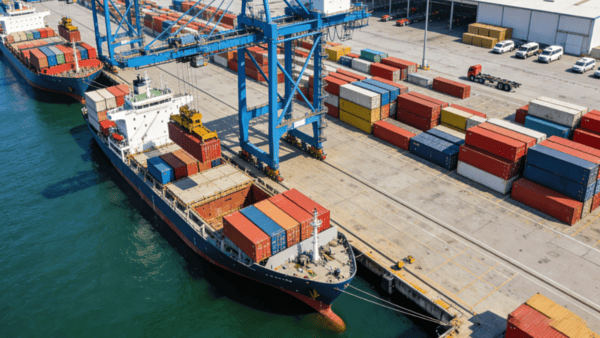
This is where sea freight export experience becomes invaluable. Seasoned forwarders have encountered every scenario—from port strikes to documentation errors—and have developed systems to mitigate risks before they escalate. They understand that efficiency is a holistic approach, touching every link of the supply chain, and that cutting corners in one area (e.g., skipping pre-shipment checks) will lead to costly delays in another.
Forwarders should note that efficiency is not a one-time achievement but an ongoing process of refinement. As the industry evolves—with new regulations, technological advancements, and market shifts—your approach to efficiency must evolve too. The most successful forwarders use their sea freight export experience to adapt quickly, turning new challenges into opportunities to streamline operations further.
How to Streamline Pre-Shipment Processes with Sea Freight Export Experience?
Pre-shipment processes are the foundation of efficient sea freight operations, as errors or oversights at this stage can cause cascading delays and costs. Leveraging sea freight export experience allows forwarders to optimize these processes to eliminate waste and ensure compliance.
A common mistake is rushing through pre-shipment checks to meet client deadlines, which often leads to documentation errors, incorrect cargo declarations, or missed compliance requirements. According to the World Bank 2026 Container Port Performance Index (CPPI), 37% of sea freight delays originate from pre-shipment errors, with documentation mistakes being the most common culprit.
What Pre-Shipment Tasks Should Forwarders Prioritize for Efficiency?
• Standardize Documentation Workflows: Create a standardized checklist for all required documents, including commercial invoices, bills of lading (B/L), packing lists, and certificates of origin (CO). The recommended approach is to use digital documentation tools that auto-verify information against industry standards, reducing human error. Forwarders should note that electronic documentation, as supported by the 2026 Ten-Ministry Regulation on Promoting Electronic Documentation in China, can cut processing time by up to 40% compared to paper-based systems.
• Verify Cargo Details Proactively: Cross-check cargo descriptions, weights, and dimensions with clients before finalizing bookings. This includes confirming that hazardous goods are classified correctly per the IMDG Code and that all necessary safety documents (e.g., MSDS) are in place. A common mistake is relying solely on client-provided information without verification, which can lead to customs detention and fines of up to $12,000 per shipment.
• Optimize Cargo Packaging and Loading: Use sea freight export experience to advise clients on packaging best practices, such as using UN-approved containers for hazardous goods or optimizing palletization to maximize container space. The recommended approach is to calculate container utilization rates in advance—according to Drewry 2025 data, forwarders who optimize loading can reduce shipping costs by 15-20% by avoiding unnecessary LCL shipments or underutilized FCL containers.
• Align with Client Timelines Strategically: Set clear expectations with clients about cut-off times, transit times, and potential delays. Use historical data from your sea freight export experience to provide accurate estimates—for example, advising clients to book shipments 4-6 weeks in advance during peak seasons (e.g., Christmas, Chinese New Year) to secure container space and avoid last-minute price hikes.
How to Choose the Right Carrier to Boost Operational Efficiency?
Carrier selection is a critical decision that directly impacts efficiency, cost, and reliability. Seasoned forwarders use their sea freight export experience to choose carriers that align with client needs and operational goals, rather than simply selecting the cheapest option.
According to Freightos Baltic Index (FBX) 2026 Q1 data, the global average sea freight rate fluctuated by 41% in 2025, and carriers vary widely in terms of service quality, route coverage, and reliability. Choosing the wrong carrier can result in missed deadlines, unexpected fees, and damaged client relationships—all of which undermine efficiency.
What Criteria Should Forwarders Use to Select Efficient Carriers?
• Evaluate Route Reliability and Coverage: Prioritize carriers with consistent service on your core routes. For example, if you frequently ship to Southeast Asia, a carrier with direct sailings to ports like Jakarta and Singapore will be more efficient than one that requires multiple transshipments. Forwarders should note that transshipments increase the risk of delays by 42%, according to UNCTAD 2025 data.
• Assess On-Time Performance: Review carrier on-time performance (OTP) data—aim for carriers with an OTP of 80% or higher. According to the Shanghai Shipping Exchange 2026 Q1 report, the global average carrier OTP was 72% in 2025, but top carriers like Maersk and MSC maintained OTP rates above 86% on key routes. The recommended approach is to track OTP over time and adjust carrier partnerships based on consistent performance.
• Consider Value-Added Services: Choose carriers that offer value-added services that align with your clients’ needs, such as door-to-door delivery, warehousing, or real-time cargo tracking. These services can streamline your operations by reducing the need to coordinate with multiple third parties. For example, carriers with integrated tracking platforms allow you to provide clients with real-time updates, reducing the number of status inquiries you receive.
• Negotiate Flexible Contracts: Use your sea freight export experience to negotiate contracts that include flexible terms, such as adjustable container space allocations and fee waivers for minor delays. Forwarders should note that long-term contracts (1-2 years) often include better rates and priority access to container space during peak seasons, which can significantly improve efficiency and cost predictability.
How Does Carrier Relationship Management Improve Efficiency?
Building strong relationships with carriers is not just about securing better rates—it’s about improving efficiency by ensuring smoother communication, faster problem resolution, and priority access to resources. Seasoned forwarders understand that carrier relationships are a long-term investment that pays off in reduced delays and improved service.
The recommended approach is to assign a dedicated account manager to each key carrier, fostering regular communication and trust. This allows you to resolve issues (e.g., delayed sailings, documentation errors) quickly, before they escalate into major delays. According to a 2026 industry survey by the International Federation of Freight Forwarders Associations (FIATA), forwarders with strong carrier relationships experience 27% fewer delays and 20% lower operational costs compared to those with transactional relationships.
How to Mitigate Port Congestion and Avoid Costly Delays?
Port congestion is a persistent challenge in sea freight operations, causing delays, increased fees, and frustrated clients. Leveraging sea freight export experience allows forwarders to anticipate congestion, adjust plans proactively, and minimize its impact on operations.
According to the World Bank 2026 CPPI report, global major ports had an average vessel waiting time of 3.1 days in 2025, with some ports (e.g., Los Angeles, Tanjung Emas in Indonesia) experiencing peak waiting times of 7.2 days or more. These delays can add significant costs—including demurrage, detention, and storage fees—that eat into your profit margins.
What Strategies Help Forwarders Navigate Port Congestion Efficiently?
• Monitor Port Conditions in Real Time: Use port tracking tools to monitor congestion levels, vessel waiting times, and berthing schedules. Many major ports (e.g., Shanghai, Singapore) provide real-time data on their official websites, allowing you to adjust plans before congestion worsens. Forwarders should note that ports like Tanjung Emas in Indonesia experienced severe congestion in early 2026 due to surging cargo volumes, but forwarders who monitored conditions were able to redirect shipments to alternative ports.
• Use Alternative Ports and Routes: When major ports are congested, consider using alternative ports and arranging inland transportation to the final destination. For example, if Shanghai Port is congested, you can ship to Ningbo-Zhoushan Port and then transport cargo by truck to Shanghai. The recommended approach is to maintain a list of alternative ports for your core routes, based on your sea freight export experience, to avoid last-minute scrambling.
• Optimize Loading and Unloading Schedules: Coordinate with carriers and port authorities to schedule loading and unloading during off-peak hours (e.g., nights, weekends) to reduce waiting times. A common mistake is scheduling shipments during peak hours (9 AM-5 PM), which can add hours or even days to the process. According to Ningbo-Zhoushan Port 2025 data, off-peak loading can reduce waiting times by 30-40%.
• Communicate Transparently with Clients: Keep clients informed about port congestion and potential delays, providing regular updates on cargo status. Transparent communication helps manage client expectations and reduces the number of urgent inquiries, allowing you to focus on resolving the issue. The recommended approach is to proactively share alternative plans (e.g., alternative ports, adjusted delivery times) to demonstrate your expertise and commitment to service.
How to Use Technology to Automate and Streamline Operations?
Technology is a powerful tool for improving efficiency in sea freight operations, and forwarders who leverage their sea freight export experience to integrate technology effectively gain a significant competitive advantage. The right tools can automate repetitive tasks, reduce errors, and provide real-time visibility into cargo status.
According to UNCTAD 2026 Q1 data, forwarders who use digital tools report a 29% reduction in operational costs and a 34% improvement in on-time delivery rates. However, a common mistake is adopting technology without aligning it with existing workflows—leading to inefficiencies and resistance from team members.
Which Digital Tools Should Forwarders Prioritize for Efficiency?
• Real-Time Cargo Tracking Platforms: Invest in tracking platforms that integrate with carrier systems (e.g., Maersk Track & Trace, MSC MyTracking) to provide real-time updates on cargo location, transit time, and potential delays. Forwarders should note that clients increasingly expect 24/7 visibility, and providing this service can reduce status inquiries by up to 62%, freeing up your team to focus on more critical tasks.
• Automated Documentation Software: Use AI-powered documentation tools (e.g., CargoSmart, Descartes) to automate the creation, verification, and submission of key documents. These tools can reduce documentation errors by 72% and cut processing time by 42%, according to a 2025 study by the International Air Transport Association (IATA). The recommended approach is to integrate these tools with your CRM system to ensure seamless data flow between client information and documentation.
• AI-Powered Workflow Automation: Implement AI tools that automate repetitive tasks, such as order processing, invoice reconciliation, and container space booking. For example, AI systems can automatically extract booking information from client emails, validate data, and submit bookings to carriers—reducing manual effort and human error. According to a 2025 report by Haiguan AI, forwarders using AI workflow automation save an average of 17 hours per week per team member.
• Data Analytics Tools: Use data analytics to identify inefficiencies in your operations, such as frequent delays on specific routes or high error rates in documentation. By analyzing historical data from your sea freight export experience, you can make data-driven decisions to optimize workflows, negotiate better carrier rates, and improve client service. For example, analytics might reveal that a particular carrier has consistent delays on the Asia-Europe route, prompting you to switch to a more reliable option.
How to Optimize Cost Efficiency Without Sacrificing Service Quality?
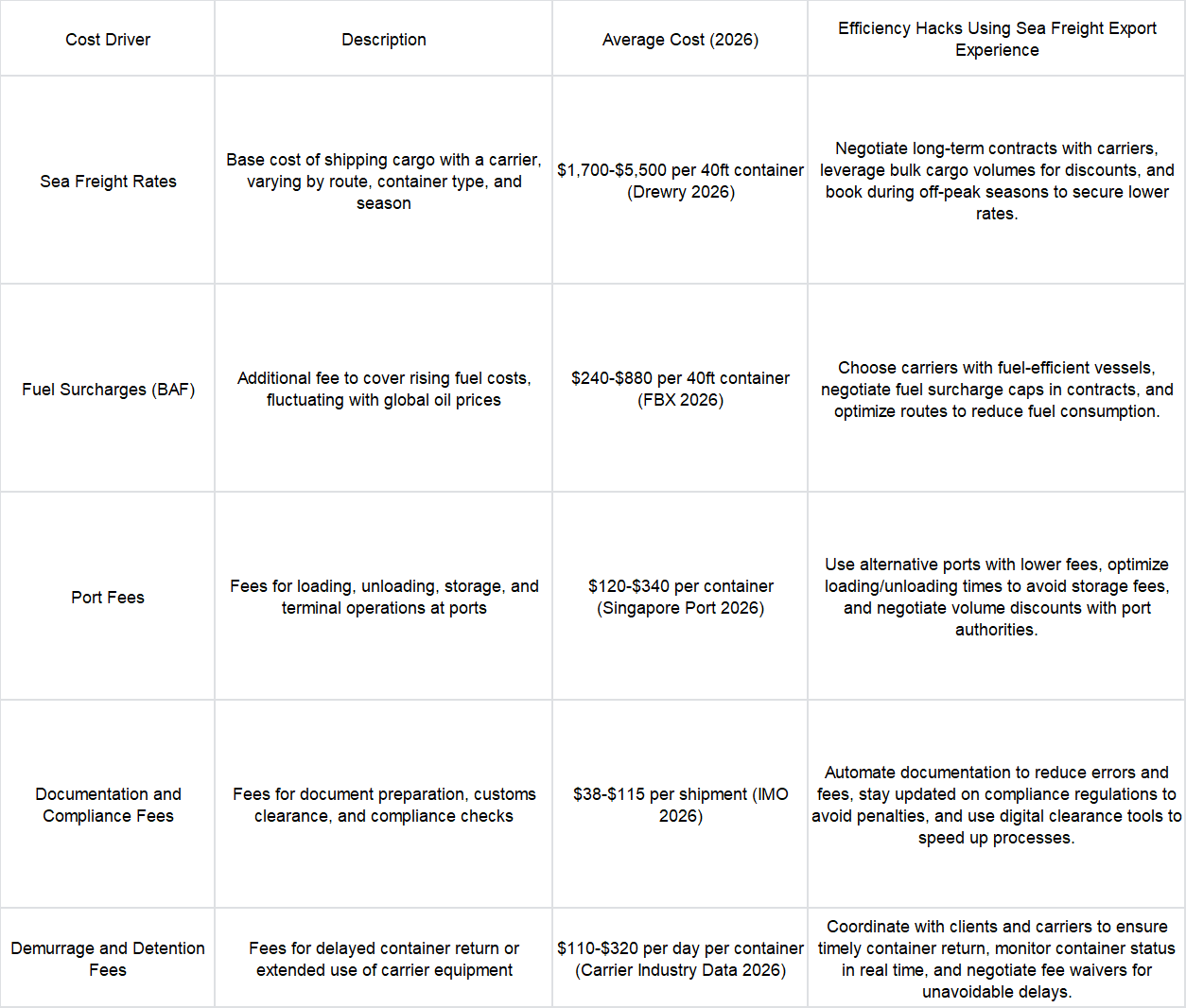
Cost efficiency is a key component of overall operational efficiency, and forwarders who use their sea freight export experience to balance cost and service quality are more likely to succeed in a competitive market. The goal is to reduce unnecessary costs while maintaining the reliability and compliance that clients expect.
According to FBX 2026 Q1 data, global sea freight rates increased by 18% in 2025, driven by rising fuel costs and capacity constraints. For forwarders, this means that optimizing costs is more important than ever—but cutting corners on service can lead to lost clients and long-term damage to your reputation.
What Are the Key Cost Drivers in Sea Freight Operations, and How to Reduce Them?
How to Balance Cost and Service Quality Effectively?
The key to balancing cost and service quality is to focus on value rather than just price. Forwarders should note that clients are often willing to pay a premium for reliable, transparent service—and cutting costs in areas that impact service (e.g., carrier reliability, documentation accuracy) will ultimately cost you more in lost clients and reputational damage.
The recommended approach is to use your sea freight export experience to identify areas where costs can be reduced without sacrificing service. For example, consolidating LCL shipments to reduce unit costs, optimizing routes to avoid unnecessary transshipments, or automating repetitive tasks to reduce labor costs. These strategies allow you to lower expenses while maintaining the high level of service that clients expect.
A common mistake is choosing the cheapest carrier or service option without considering long-term costs. For example, a low-cost carrier with poor on-time performance may save you money upfront but lead to costly delays and client complaints. Seasoned forwarders understand that investing in reliable carriers and efficient processes is a long-term investment that pays off in client loyalty and profitability.
How to Train Your Team to Leverage Sea Freight Export Experience for Efficiency?
Your team is the backbone of your sea freight operations, and training them to leverage sea freight export experience is critical for maintaining efficiency. Even the best tools and processes will fail if your team lacks the knowledge and skills to use them effectively.
According to a 2026 FIATA survey, forwarders with well-trained teams experience 32% fewer errors and 27% higher productivity compared to those with untrained teams. The key is to create a culture of continuous learning, where team members share their sea freight export experience and learn from each other.
What Training Strategies Help Teams Improve Efficiency?
• Implement On-the-Job Training: Pair new team members with seasoned employees who can share their sea freight export experience and provide hands-on guidance. The recommended approach is to assign mentors to new hires for the first 3-6 months, allowing them to learn from real-world scenarios and avoid common mistakes.
• Offer Regular Compliance and Technology Training: Stay updated on the latest regulations (e.g., IMO 2026 environmental rules, trade sanctions) and technology tools, and provide regular training to your team. Forwarders should note that compliance errors can lead to fines of up to $120,000, so investing in compliance training is a critical cost-saving measure.
• Create a Knowledge Sharing System: Develop a centralized database where team members can share tips, best practices, and lessons learned from their sea freight export experience. This could include case studies of successful shipments, troubleshooting guides for common issues, and contact information for key carrier and port contacts.
• Set Clear Performance Metrics: Establish key performance indicators (KPIs) for efficiency, such as documentation error rates, on-time delivery rates, and client satisfaction scores. Regularly review these metrics with your team, and recognize and reward team members who consistently meet or exceed expectations. This encourages accountability and motivates team members to prioritize efficiency.
How to Measure and Continuously Improve Operational Efficiency?
Efficiency is not a one-time goal but an ongoing process, and forwarders who use their sea freight export experience to measure and refine their operations are more likely to stay ahead of the competition. Measuring efficiency allows you to identify bottlenecks, track progress, and make data-driven decisions to improve workflows.
The recommended approach is to establish a set of KPIs that align with your business goals, and review these KPIs regularly (e.g., weekly, monthly) to identify areas for improvement. According to a 2026 industry report by McKinsey & Company, forwarders who measure and optimize their KPIs experience a 22-32% improvement in operational efficiency within the first year.
What KPIs Should Forwarders Track for Efficiency?
• Documentation Error Rate: The percentage of shipments with incorrect or missing documentation. A low error rate (e.g., below 5%) indicates efficient pre-shipment processes. Forwarders should note that reducing this rate by just 1% can save thousands of dollars in fines and delays.
• On-Time Delivery Rate: The percentage of shipments that arrive at their destination on time. Aim for an OTD rate of 90% or highe—according to UNCTAD 2025 data, top forwarders maintain OTD rates of 95% or higher by leveraging their sea freight export experience to anticipate and mitigate delays.
• Cost per Shipment: The average cost to
manage and ship a single shipment. Tracking this KPI helps you identify areas where costs can be reduced, such as optimizing carrier rates or automating tasks.
• Client Satisfaction Score: Feedback from clients on the quality of your service, including communication, reliability, and problem-solving. A high client satisfaction score (e.g., 4.5/5 or higher) indicates that your efficiency efforts are translating to better client experiences.
• Turnaround Time: The time it takes to process a shipment from booking to delivery. Reducing turnaround time by even one day can improve client satisfaction and allow you to handle more shipments with the same team.
How to Use Feedback to Improve Efficiency?
Feedback from clients, team members, and carriers is a valuable source of information for improving efficiency. Forwarders should actively seek feedback and use it to refine their processes, based on their sea freight export experience.
A common mistake is ignoring feedback or dismissing it as isolated incidents. Instead, the recommended approach is to collect feedback regularly (e.g., post-shipment surveys for clients, weekly check-ins with team members) and analyze it to identify patterns. For example, if multiple clients complain about delayed status updates, you may need to invest in a better tracking system or improve communication protocols.
Forwarders should note that feedback is also a way to strengthen carrier relationships. By sharing feedback with carriers about their service (e.g., delays, communication issues), you can work together to find solutions that improve efficiency for both parties. This collaborative approach builds trust and ensures that your carrier partners are aligned with your efficiency goals.
Conclusion: Turning Sea Freight Export Experience into Sustainable Efficiency
Efficiency in sea freight operations is not about cutting corners or sacrificing service—it’s about leveraging proven sea freight export experience to optimize every link in the supply chain, from pre-shipment preparation to final delivery. For global freight forwarders, the hacks outlined in this article are more than just tips—they are actionable strategies rooted in real-world practice, designed to reduce waste, minimize errors, and boost profitability.
The most successful forwarders understand that efficiency is a continuous journey. They use their sea freight export experience to adapt to changing market conditions, embrace new technologies, and train their teams to prioritize excellence. By focusing on standardization, carrier relationship management, port congestion mitigation, technology integration, cost optimization, team training, and continuous improvement, you can transform your operations into a streamlined, reliable, and profitable system.
Remember, every efficiency hack you implement—whether it’s automating documentation, negotiating better carrier rates, or optimizing port schedules—builds on your sea freight export experience and sets you apart from the competition. In an industry where every detail matters, the forwarders who leverage their experience to drive efficiency are the ones who will thrive in the global marketplace. By committing to these strategies, you can turn challenges into opportunities, deliver exceptional service to your clients, and build a sustainable, successful freight forwarding business—all powered by the invaluable asset of sea freight export experience.
Last
Mastering the Maze: A Forwarder's Guide to the Sea Freight Damage and Claim Process
In the high-stakes world of international freight forwarding, navigating the Sea Freight Damage Claim Process is a critical skill
Next
The Global Agent's Manual: Sharing Essential Sea Freight Knowledge and On-the-Ground Export Experience
For global freight forwarders navigating the complexities of international trade, Sea Freight Export Experienceis the cornerstone

