




A Maersk container ship was recently intercepted in the Atlantic Ocean, approximately 640 nautical miles off the coast of Portugal. Portuguese law enforcement officers boarded the vessel by helicopter and discovered approximately 5 tonnes of cocaine in an unoccupied area of the ship.
The vessel had previously called at ports in Ecuador, Colombia, and Panama before crossing the Atlantic toward Europe. The case attracted further attention after an Indian crew member who had been arrested died in a Portuguese detention facility. The relevant authorities are continuing to investigate both the case and the cause of his death.
Key Highlights
• Offshore interception: Maersk Nokwanda was intercepted in the Atlantic Ocean, approximately 640 nautical miles off the coast of Portugal.
• Drug seizure: Law enforcement officers discovered approximately 5 tonnes of cocaine in an unoccupied area of the vessel.
• International cooperation: The operation was led by Portugal’s Judiciary Police, with the participation of law enforcement agencies from multiple countries.
• New development: An Indian crew member who had been arrested subsequently died in a Portuguese detention facility. The cause of death remains under investigation.
• Implications for freight forwarders: Maritime regulatory oversight, customer compliance, and supply chain security risks on Latin America–Europe routes require continued attention.
Why Was the Maersk Container Ship Intercepted in the Atlantic?
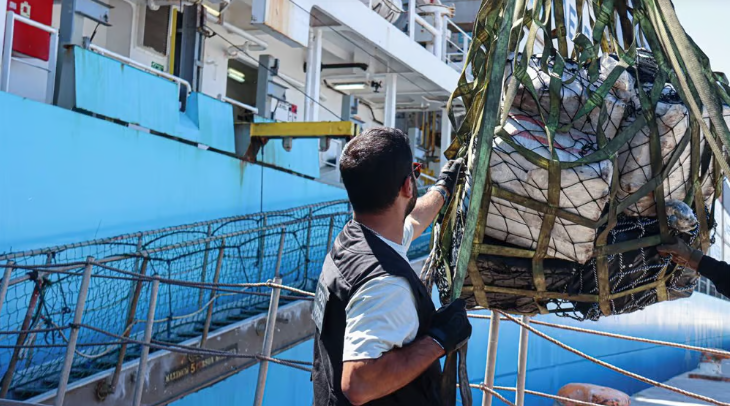
In early August, Portuguese authorities located the vessel in the Atlantic Ocean and deployed maritime and air assets to intercept it. Law enforcement officers rappelled from a helicopter onto the vessel and inspected the ship and those on board.
During the search, officers found two stowaways, approximately 5 tonnes of cocaine in an unoccupied area of the vessel, and items suspected of being used for transportation, navigation, and transfers at sea.
Notably, the drugs were not concealed inside ordinary containers but were found in an unoccupied area of the ship. Portuguese authorities suspect that those involved may have planned to transport the drugs over a long distance aboard an ocean-going vessel before transferring them to high-speed boats.
Which Ports Had the Vessel Previously Called At?
The vessel involved was Maersk Nokwanda, a Hong Kong-flagged container ship built in 2005 with a publicly reported capacity of approximately 4,500 TEU.
According to recent voyage information, the vessel had called at Posorja and Machala in Ecuador, Buenaventura in Colombia, and Balboa and Colón in Panama before crossing the Atlantic toward Europe.
These ports are important nodes in the trade network connecting Latin America and Europe, and the vessel’s route has also become a focus of the case.
Following the interception, Maersk Nokwanda proceeded to the Port of Sines under Portuguese naval escort and berthed there on August 4. The seized drugs were subsequently unloaded.
Why Did the Arrested Crew Member Die in Custody?
Two stowaways and one Indian crew member were arrested during the operation. The crew member was subsequently found dead in a Portuguese detention facility on August 5.
The relevant authorities have opened an investigation into his death. Media reports have raised questions about the circumstances, but the official cause of death remains subject to the findings of the investigation.
Some media outlets have also reported that the crew member may have possessed important information relating to the case. However, this claim has not yet been officially confirmed.
What Does This Case Mean for Global Freight Forwarders?
For freight forwarders, the significance of this case extends beyond the seizure of 5 tonnes of cocaine. It also indicates that maritime regulatory oversight is expanding beyond conventional port inspections to include offshore risk detection.
Freight forwarders operating on Latin America–Europe routes need to monitor not only freight rates, shipping capacity, and sailing schedules, but also route security, port regulatory oversight, and customer and cargo compliance.
Portuguese authorities stated that the country has seized approximately 28 tonnes of cocaine since the beginning of 2026, already exceeding the total recorded for the whole of 2025. As Europe continues to intensify enforcement against transatlantic smuggling networks, regulatory scrutiny of the relevant routes may increase further.
For global freight forwarders and trading companies, customer due diligence, cargo information verification, unusual order identification, and supply chain risk management are becoming increasingly important.
Sources
Official institutions and publicly available sources
Disclaimer
This article is based on publicly available information and is provided solely for reference within the international logistics industry. It does not constitute a final determination of responsibility concerning any company, vessel, or individual mentioned.
Last
Israel Raises Strong Objections to Hapag-Lloyd's USD 4.2 Billion Acquisition of ZIM Ahead of Key September 9 Regulatory Meeting
Hapag-Lloyd’s proposed USD 4.2 billion acquisition of Israeli shipping company ZIM is entering a critical stage of regulatory revi
Next
Car Carrier Catches Fire in the Eastern Pacific: Engine Room Fire on China-South America Route, 22 Crew Members Rescued After Abandoning Vessel
A car carrier operated by COSCO Shipping Specialized Carriers caught fire in the eastern Pacific while sailing from Tianjin, China

