




Shipping security risks in the Red Sea and Gulf of Aden have risen again. On August 5, local time, the Houthis announced attacks on two Saudi vessels over two consecutive days as they continued their maritime blockade targeting Saudi shipping. Meanwhile, the United Kingdom Maritime Trade Operations (UKMTO) issued several security notices, confirming an explosion in the Gulf of Aden and officially confirming for the first time that a recently sunken Indian cargo vessel was attacked by an unmanned surface vessel. The latest incidents show changes in both attack targets and methods, further increasing uncertainty for shipping in the Red Sea and Gulf of Aden.
Key Highlights
• Consecutive attacks: Two Saudi vessels were targeted with ballistic missiles over two consecutive days.
• New attack method: UKMTO confirmed that an unmanned surface vessel (USV) was involved in the sinking of a merchant vessel, highlighting the threat from close-range surface attacks.
• Blockade impact: The Houthis claim that 29 Saudi tankers have turned back since the blockade began and that eight have been targeted.
• Expanded target area: Attacks have extended to waters near Yanbu in the northern Red Sea, with Saudi energy vessels becoming a key target.
• Logistics impact: War-risk insurance premiums and rerouting costs on Red Sea routes are rising, requiring closer monitoring of Asia–Europe and Middle East shipping plans.
Two Saudi Vessels Targeted in Consecutive Attacks
The latest attacks took place over two consecutive days. On August 4, the Houthis launched multiple ballistic missiles at the chemical tanker NCC Wafa while it was sailing near Yanbu, Saudi Arabia.
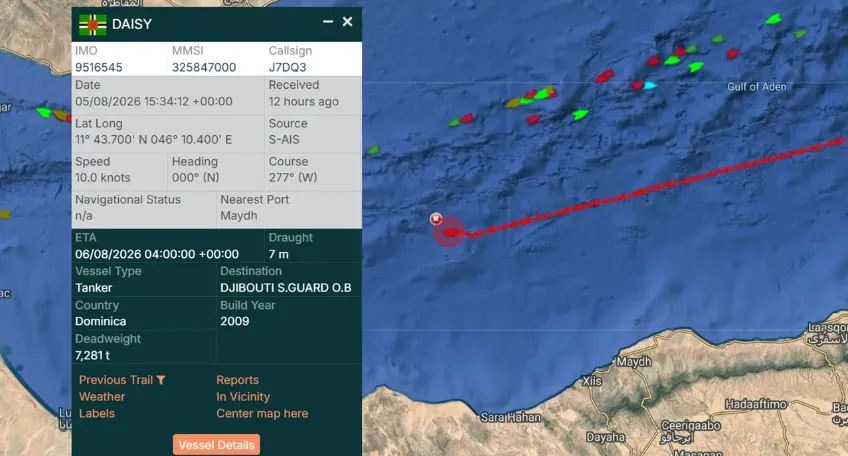
On August 5, the Houthis launched another ballistic missile attack on the Saudi tanker Daisy in the Gulf of Aden. The group claimed that the vessel was hit and forced to end its voyage and turn back. Damage to either vessel has not been independently confirmed by Saudi authorities or the shipowners.
UKMTO also reported a strong explosion approximately 95 nautical miles southeast of Aden in the Gulf of Aden. The explosion occurred about 40 meters off the vessel’s port side, and the blast affected the vessel. No casualties or significant damage were reported. Maritime security firm Vanguard Tech assessed that the vessel involved was highly likely to be the Daisy named in the Houthi statement.
UKMTO Confirms USV Attack on Sunken Merchant Vessel
UKMTO has also confirmed a new attack method in the latest Red Sea incidents. According to its latest notice, the Indian cargo vessel Faize Noore Oliya, which previously sank near Yemen, was attacked by an unmanned surface vessel (USV). The vessel caught fire following the attack and later sank.
All 14 crew members, including 13 Indian nationals, were safely rescued. This is the first recent case officially confirmed by authorities in which an unmanned surface vessel was used in an attack that resulted in the sinking of a merchant vessel.
Merchant vessels in the Red Sea have previously faced threats mainly from long-range missiles and aerial drones. The addition of close-range USV attacks makes threat detection and defensive measures more difficult and further increases navigation risks.
Houthis Claim 29 Saudi Tankers Have Turned Back
According to figures released by the Houthis, since the group announced its maritime blockade against Saudi shipping in late July, eight Saudi tankers have been targeted and another 29 have halted their voyages or turned back because of security risks.
The figures have not yet been independently verified by third-party maritime organizations.
Several international maritime security organizations have also raised their risk alerts, advising merchant vessels transiting the Red Sea, Bab el-Mandeb, and Gulf of Aden to remain on high alert, closely monitor official security notices, and exercise caution when planning routes.
Attack Targets and Methods Continue to Change
Recent incidents indicate two notable changes in Houthi operations and the risks facing commercial shipping.
First, the target area has expanded from vessels linked to Israel to Saudi energy vessels operating near Yanbu in the northern Red Sea. As Saudi tankers have shifted toward the northern Red Sea to avoid risks along the main Red Sea route, Houthi operations have also extended into the area, increasing risks to regional energy shipments.
Second, attack methods have become more varied. Merchant vessels now face threats from long-range missiles, aerial drones, and close-range unmanned surface vessels. The use of multiple attack methods makes existing vessel risk-avoidance measures more difficult to apply under current conditions.
Operational Alerts and Recommended Actions for Freight Forwarders and Trading Companies
The Red Sea route has not been completely disrupted, but shipping risks continue to spread and intensify. Frequent attacks are pushing up war-risk insurance premiums on Red Sea routes and increasing the likelihood of vessel rerouting. Reduced speeds, security-related waiting, and other precautionary measures are also contributing to longer transit times and higher operating costs.
Freight forwarders and trading companies involved in Asia–Europe and Middle East trade should continue to assess route security, insurance arrangements, and schedule reliability and adjust transportation plans as conditions change. Particular attention should be paid to cargo damage, port delays, and schedule disruptions resulting from attacks on merchant vessels.
Sources
UKMTO official notices, public statements issued by the Houthis, and maritime security information from Vanguard Tech
Timeliness Note
As of August 7, 2026, the risk of attacks on merchant vessels in the Red Sea and Gulf of Aden remains elevated. Further developments and navigation requirements are subject to the latest official notices.
Disclaimer
The information in this article is sourced from publicly available channels and is provided solely for industry reference. It does not constitute commercial advice, booking guidance, or logistics operating guidance.

Last
FESCO and Kalyon Suspend Black Sea Russia Services as Logistics Capacity Through Novorossiysk Tightens
Shipping security risks in the Black Sea continue to rise, prompting changes to regional logistics operations. Following a series
Next
8 Million Barrels of Crude Oil Gather in the Arctic as Russia's Northern Sea Route Tanker Fleet Reaches Record Scale
Energy transportation along Russia’s Northern Sea Route (NSR) has recently increased sharply. According to industry information pu

