




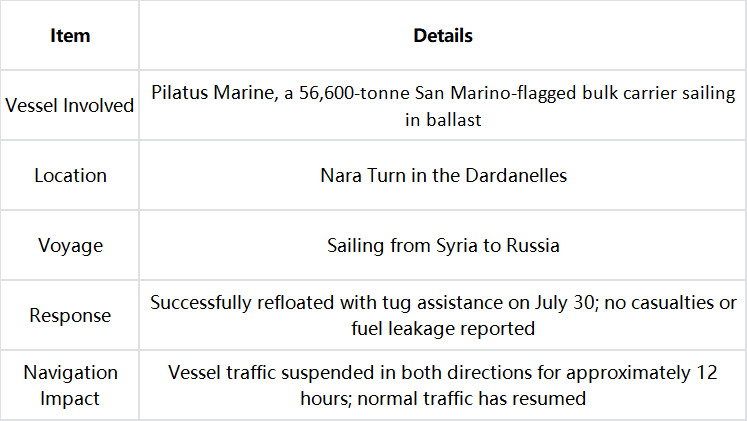
A key shipping passage serving the Black Sea was temporarily disrupted. On July 29 local time, a San Marino-flagged bulk carrier suffered a main engine failure and ran aground in the Dardanelles, resulting in the suspension of vessel traffic in both directions for approximately 12 hours. Traffic resumed after the vessel was successfully refloated. The incident once again highlights the vulnerability of navigation through the Turkish Straits. Freight forwarders handling bulk cargo on Black Sea and eastern Mediterranean routes should continue to monitor navigation risks in the area.
Key Highlights
• Navigation Incident: A bulk carrier lost propulsion and ran aground, temporarily suspending traffic through the Dardanelles in both directions
• Vessel Deficiencies: Two PSC inspections conducted this year identified deficiencies involving the vessel’s machinery
• Response Outcome: No hull damage or fuel leakage was reported, and traffic resumed after a temporary suspension
• Industry Alert: The reliability of vessel propulsion systems in narrow waterways directly affects schedule reliability on Black Sea routes
Key Information on the Grounding
Main Engine Failure Causes Grounding as Previous Deficiency Records Draw Attention
Introduction: The grounding was caused by a main engine failure. Previous port state control inspections had also identified deficiencies involving the vessel’s machinery.
The vessel suffered a main engine failure while navigating a key bend in the Dardanelles, lost propulsion, and ran aground. Türkiye’s Directorate General of Coastal Safety quickly deployed tugboats and divers for the salvage operation. An underwater inspection confirmed that the hull remained intact and that no pollution had occurred. After being refloated, the vessel continued its voyage under pilot escort.
Port state control records show that the Pilatus Marine was found with equipment deficiencies during two inspections this year. An inspection in Türkiye in January identified five deficiencies, while an inspection in Russia in March identified seven, including deficiencies involving the main engine and auxiliary machinery. Authorities have not confirmed a direct connection between the grounding and the previous deficiencies, and the investigation remains ongoing. Freight forwarders may use the Company Directory to screen Agents and reduce operational risks.
The Dardanelles: An Essential Maritime Passage for Black Sea Trade
Introduction: The narrow waterway and complex currents mean that a vessel casualty can quickly obstruct traffic.
The Dardanelles connects the Aegean Sea with the Sea of Marmara and forms part of the only maritime route linking the Black Sea with the Mediterranean. It is an essential passage for grain, mineral, and energy cargoes moving to and from Black Sea countries. The waterway has numerous bends and complex currents, and large vessels depend heavily on pilotage and reliable propulsion systems. If a vessel loses propulsion and runs aground, the limited space available for diversion can quickly cause extensive congestion.
In recent years, mechanical failures involving vessels have repeatedly disrupted traffic through the Suez Canal and the Turkish Straits. The response to this incident was swift and did not result in a prolonged closure. However, it again shows that reliable vessel propulsion is essential for maintaining supply chain schedules when navigating narrow waterways.
Limited Short-Term Market Impact, but Further Incidents Could Cause Chain Delays
Introduction: The incident has not affected the overall supply-demand balance, but a similar event during a peak traffic period could cause widespread schedule delays.
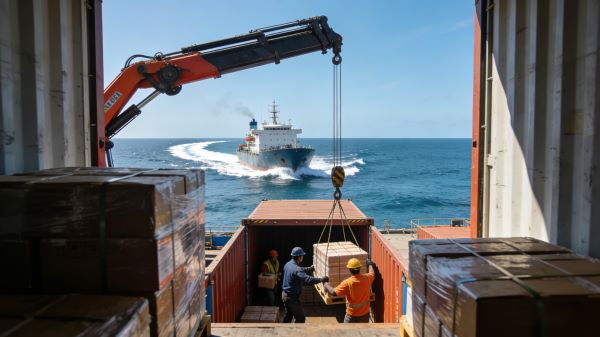
The relatively short suspension had limited impact on global shipping capacity. However, if a similar incident occurs during a peak shipping period, vessels may be forced to queue, causing widespread delays on Black Sea and eastern Mediterranean routes, as well as port delays and additional costs. Logistics companies handling Black Sea bulk cargo should continue to monitor traffic conditions in the Turkish Straits.
Operational Self-Check List for Freight Forwarders
• When handling cargo on Black Sea routes, are you paying close attention to the carrier vessel’s previous PSC inspection records?
• Have you allowed sufficient schedule buffer to manage unexpected traffic suspensions in the Turkish Straits?
• Are you promptly informing customers of navigation risks and discussing contingency plans for possible delays in advance?
• Are you continuing to monitor real-time traffic updates for the Dardanelles and the Bosphorus?
Action Summary: The grounding in the Dardanelles once again demonstrates the vulnerability of key shipping waterways. When handling business on Black Sea and eastern Mediterranean routes, freight forwarders should pay close attention to vessel seaworthiness, allow sufficient schedule buffer, and closely monitor unexpected navigation incidents to reduce the risk of cargo delays caused by traffic suspensions and vessel groundings.
Sources: Türkiye’s Directorate General of Coastal Safety and publicly available information from maritime and shipping media
Disclaimer: All information is sourced from publicly available channels and is provided for industry reference only. It does not constitute commercial or logistics operational guidance.

Last
August Container Shipping Market Shifts: Spot Rates Decline for a Third Consecutive Week as MSC and Maersk Adjust Charges Across Major Trade Lanes
The container shipping market is entering a key period of structural change in August. Global spot freight rates have declined for
Next
Container Shipping Cycle Turns: HMM Pauses Container Ship Expansion and Shifts Investment Toward Energy Shipping
A major strategic change is emerging in the global container shipping market. HMM, the world’s eighth-largest liner operator and S

