




Environmental compliance requirements in global shipping continue to tighten, with marine pollution incidents prompting countries and ports to update their maritime regulations. On July 28, Lloyd’s List reported that India’s Directorate General of Shipping (DGS) had issued Shipping Circular No. 19/2026, introducing stricter requirements for the maritime transport of plastic pellets. The rules took immediate effect and apply to all plastic pellet exports and transshipment cargoes handled through Indian ports. The policy change was prompted by weaknesses exposed by the 2025 sinking of the MSC Elsa 3 and the resulting marine pollution. It brings an end to the previous general cargo handling model for plastic pellets, raises compliance requirements for exports on India routes, and has significant implications for cross-border freight forwarders and foreign trade companies handling chemical and plastic products.
Key Highlights
• Mandatory Rules Take Effect: India’s DGS introduces new maritime requirements for plastic pellets, covering loading and packaging standards
• Major Change to Loading Rules: On-deck carriage of plastic pellets is prohibited, and all cargo must be stowed below deck to reduce the risk of marine pollution
• Higher Packaging Standards: Packaging must meet requirements comparable to those under the IMDG Code to reduce the risk of leakage and spillage
• Incident Drives Regulatory Change: The marine pollution caused by the MSC Elsa 3 incident prompts India to revise shipping rules for plastic raw materials
• Stricter Global Compliance: The IMO has begun work on amendments to MARPOL, and the maritime transport of plastic pellets may eventually be subject to unified international controls
Policy Review: India Tightens Maritime Compliance Requirements for Plastic Pellets
Core Conclusion: India has introduced mandatory rules for the maritime transport of plastic pellets, tightening controls over both stowage location and packaging and significantly raising compliance requirements for exports on India routes.
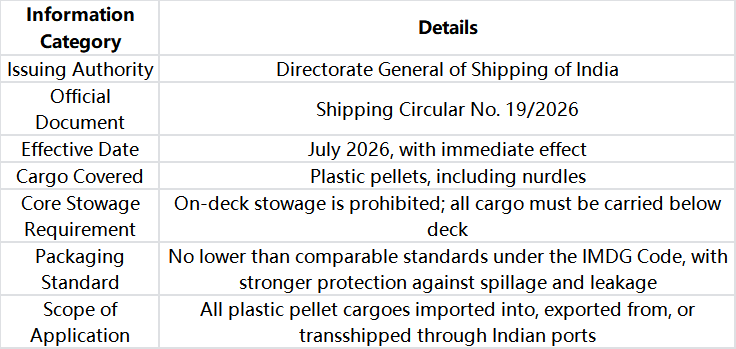
Under DGS Shipping Circular No. 19/2026, the new requirements apply to plastic pellet cargoes imported into, exported from, or transshipped through Indian ports. There is no transition period, and the rules took immediate effect. They are intended to address pollution risks associated with the maritime transport of plastic pellets. The circular introduces mandatory stowage requirements and prohibits the carriage of plastic pellets on deck. All containerized and bulk plastic pellet cargoes must be stowed below deck to reduce the risk of cargo being washed overboard, exposed to seawater, or lost during heavy weather.
For packaging compliance, the Indian authorities have significantly raised the required standard. Packaging for all exported plastic pellets must meet requirements no lower than comparable standards under the International Maritime Dangerous Goods Code, with stronger sealing, resistance to damage, and protection against spillage. Compared with the previous model, under which plastic pellets were handled as ordinary general cargo, the new rules place them under stricter environmental controls. This changes the compliance requirements for shipping plastic raw materials on India routes.
Although the official circular does not directly identify a specific incident, its reference to recent pollution incidents along the Indian coast, together with the timing of the policy, indicates that the 2025 sinking of the MSC Elsa 3 was a key factor behind the new rules, according to Lloyd’s List. This means that a single marine pollution incident has prompted changes to India’s national shipping regulations, shifting industry risk management from post-incident liability to preventive controls.
Key Requirements Under India’s New Rules for the Maritime Transport of Plastic Pellets
Long-Term Impact of the Incident: MSC Elsa 3 Continues to Reshape the Maritime Transport of Plastic Pellets
Core Conclusion: The sinking of the MSC Elsa 3 caused extensive marine pollution and major claims disputes. It also directly prompted India to tighten controls on the maritime transport of plastic pellets, reflecting a growing pattern of incidents driving regulatory changes.
In May 2025, the large container vessel MSC Elsa 3 sank in waters off India, releasing a large quantity of plastic pellets into the sea. South Asian monsoon conditions and ocean currents caused the small pellets to spread over a wide area. The pollution seriously affected Indian coastal waters and extended to surrounding areas, including waters near Sri Lanka, creating a large-scale and long-term marine environmental problem that is difficult to address. The incident exposed the environmental risks associated with plastic pellet spills.
The consequences of the incident remain unresolved. The government of Kerala has filed an environmental damage claim exceeding USD 1 billion against the ship interests and protection and indemnity insurers. The International Group of P&I Clubs has continued to follow the liability assessment, while substantial compensation, administrative penalties, and further legal action may still follow. The incident has led the global shipping industry to reassess the risks associated with transporting plastic pellets by sea.
The longer-term impact of India’s new rules may extend beyond the immediate claims dispute. Plastic pellets have traditionally been treated as standard industrial raw materials, with relatively limited shipping reviews, low carriage requirements, and straightforward operating procedures. The MSC Elsa 3 incident exposed weaknesses in this handling model and prompted India to establish specific controls for the maritime transport of plastic pellets, moving pollution prevention earlier in the shipping process.
Regulatory Rationale: Why Plastic Pellets Are Becoming a Priority Cargo Under Maritime Environmental Controls
Core Conclusion: Plastic pellets are small, easily dispersed, and difficult to recover once released into the sea. They can cause long-term marine pollution and substantial compensation claims, making them a priority under maritime environmental compliance controls.
Plastic pellets, also known as nurdles, are key raw materials used in plastics processing and chemical manufacturing. Individual pellets are small and lightweight and have traditionally been classified as ordinary general cargo in foreign trade shipments. From a maritime environmental perspective, however, they present a significant risk. If released into the sea because of a vessel casualty, damaged packaging, or heavy weather, the pellets can spread widely with ocean currents. Recovery, cleaning, and ecological restoration are extremely difficult, and residual plastic pellets can remain in the marine environment for extended periods and continue to damage marine ecosystems.
From a cross-border logistics risk management perspective, the potential chain of events is clear: a vessel incident leads to plastic pellets entering the sea, followed by widespread marine pollution, environmental enforcement action, high cleanup costs, substantial compensation claims, and legal proceedings. India’s new rules address the source of this risk by prohibiting on-deck stowage and raising packaging requirements to a level comparable to the relevant IMDG standards. These measures move pollution prevention and compliance checks into the booking, loading, and transportation stages and reduce the risk of further pollution.
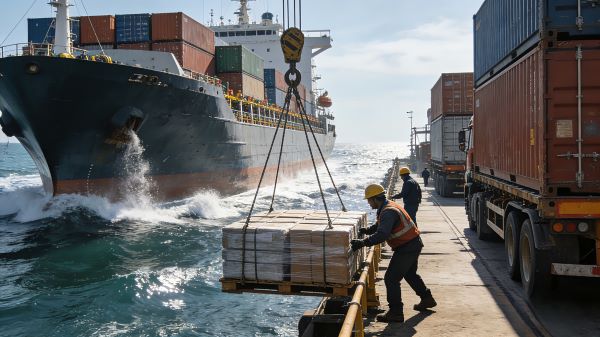
Operational Changes: Freight Forwarders and Carriers Upgrade Shipping Standards on India Routes
Core Conclusion: Following the introduction of India’s new rules, the previous general cargo handling model is no longer applicable. Booking reviews, cargo packaging, and stowage plans must all be upgraded, increasing compliance costs for plastic pellet shipments on India routes.
After the rules took effect, operating requirements changed for all plastic pellet cargoes imported into, exported from, or transshipped through Indian ports. Previously, freight forwarders mainly needed to confirm space and sailing schedules. They must now complete several compliance checks before shipment, including verifying whether the packaging meets the required standards, confirming that the carrier will stow the cargo below deck, checking for additional restrictions at transshipment ports, and preparing compliance documents for possible port inspections. Failure to meet any requirement may result in cargo rejection, port delays, or return of the shipment.
Major carriers are also tightening their review standards for plastic pellet cargoes on India routes. Packaging compliance and stowage plans are subject to stricter checks, and non-compliant cargo may be rejected to avoid port penalties and pollution liability. Freight forwarding companies that regularly handle chemical products and plastic raw materials on India routes must update their operating procedures and establish dedicated compliance review systems.
The policy change also reflects a key trend in cross-border logistics: cargo compliance now takes priority over space and sailing schedules. As environmental regulation in global shipping becomes stricter, destination-specific compliance requirements are becoming a key condition for shipment, and detailed compliance services are becoming an important capability for freight forwarders. Freight forwarders seeking compliant space on India routes and looking to reduce the risks associated with plastic pellet shipments may use the Inquiry Board to identify suitable freight forwarding resources and arrange compliant shipments.
Long-Term Industry Trend: Global Standards for the Maritime Transport of Plastic Pellets May Be Unified
Core Conclusion: India’s new rules mark the beginning of broader industry changes. The IMO has begun work on global regulatory amendments, and the maritime transport of plastic pellets may eventually be subject to unified and stricter international standards.
India’s tighter controls are not an isolated regional policy but part of broader international efforts to address marine pollution. According to Lloyd’s List, the International Maritime Organization has begun work on amendments to Annex III of MARPOL. The proposed changes are expected to cover stowage requirements, packaging standards, pollution liability, and incident response procedures for plastic pellets, with the aim of reducing differences between national regulatory systems.
This means that the cross-border maritime transport of plastic pellets may move toward unified global controls. For shipowners, freight forwarders, and foreign trade companies handling plastic products, competition will no longer be limited to freight rates, sailing schedules, and space availability. Compliance management, risk control, and standardized operating procedures will become key competitive requirements, while logistics providers that adapt to the new standards earlier will gain an advantage in this market.
Operational Self-Check List for Freight Forwarders
• Are you familiar with the latest DGS requirements and implementing the core rules on below-deck stowage and compliant packaging for plastic pellets?
• Have you established a pre-shipment compliance review process for plastic pellet cargoes on India routes to control cargo compliance and reduce the risks of rejection and port delays?
• Have you informed customers of the latest shipping standards and arranged the necessary changes to packaging and stowage plans to meet local regulatory requirements?
• Are you continuing to monitor IMO regulatory developments and preparing a long-term compliance management system?
Overall, the long-term impact of the MSC Elsa 3 pollution incident continues to expand, moving from a single casualty and claims case to changes in regional shipping regulations and potentially broader global controls on the maritime transport of plastic pellets. India’s new DGS rules bring an end to the previous general cargo handling model and make environmental compliance and preventive risk control mandatory requirements for plastic pellet exports on India routes. Freight forwarders and foreign trade companies handling India routes must adapt quickly, improve compliance procedures, and update service standards to reduce operational risks, maintain customer relationships, and strengthen their position in this market.
Action Summary: Freight forwarders should promptly adapt to India’s new maritime rules, place compliance reviews and standardized operations at the center of their procedures, improve the shipment process for plastic pellet exports, and continue monitoring changes in global maritime regulations to strengthen business risk controls.
Sources: Directorate General of Shipping of India circular, Lloyd’s List, the International Maritime Organization, and authoritative cross-border logistics industry platforms
Disclaimer: All information is sourced from publicly available channels and is provided for industry reference only. It does not constitute commercial or logistics operational guidance.
Last
Chattogram Port Suspends Storage Fee Increase: Bangladesh Route Logistics Costs Stabilize as Freight Forwarders Review the Policy Change
The latest logistics policy development at Chattogram Port has been confirmed. Bangladesh’s largest port and key logistics hub has
Next
Maersk Takes Delivery of Its First VLAC: First Very Large Ammonia Carrier Marks a Shift in Clean-Energy Shipping
Global clean-energy shipping is developing rapidly, with the maritime transport of liquefied ammonia and other new-energy gases be

